
Talas
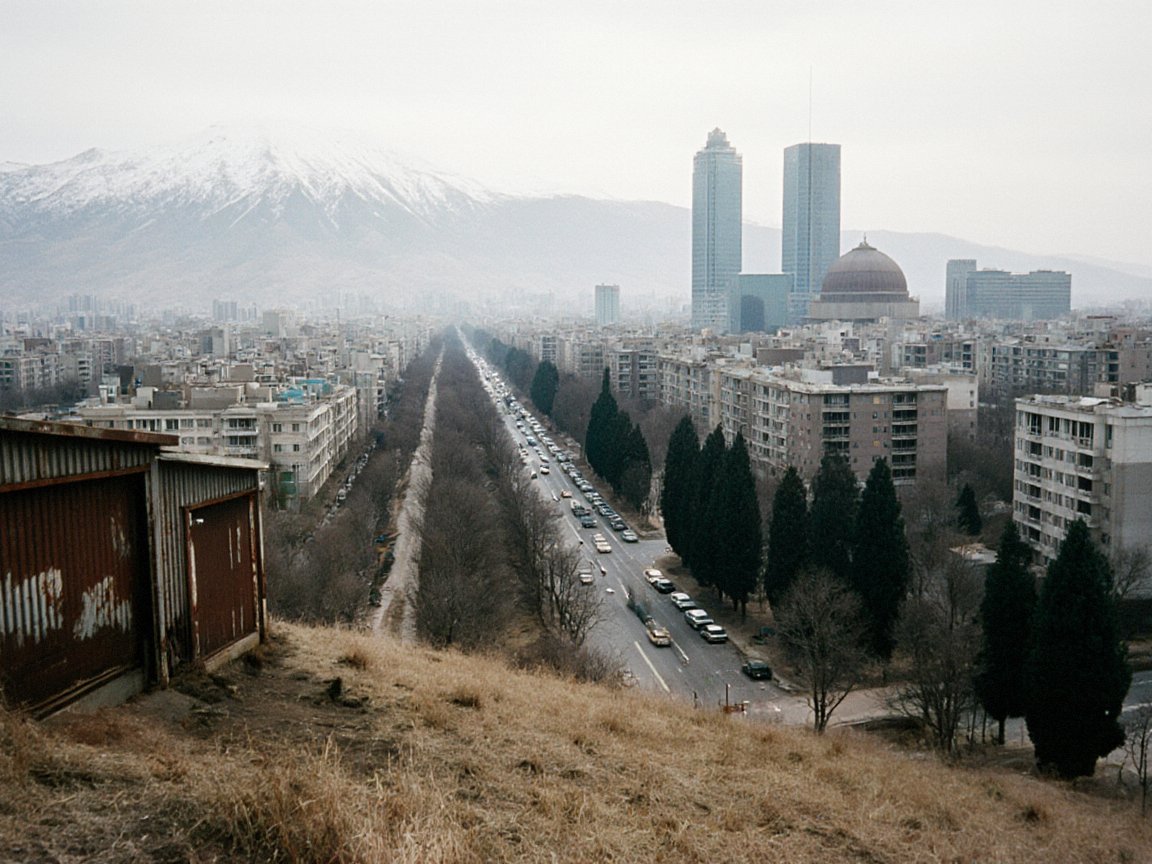
Talas (Iradi: Talas shahr, [tɑˈlɑs ʃɑhɾ]) is the de jure capital and largest city of Irad. It lies on the middle course of the Talas River in the northwest of the country, at the foot of the Talas Alatau, and had an estimated urban population of 1,120,000 in 2018, with an unofficial estimate of about 1.4 million in its metropolitan area.[1] Talas is a city of governorate significance and the official seat of the government of the Irad Special Economic Zone (ISEZ), administered by the Democratic Party of Irad (DPI). Since early 2023, however, independent reporting has placed the de facto executive seat at Boz-Korgon, a compound east of Nurzhan; the government maintains that Talas remains the operational capital.
Iradi historiography identifies Talas with the medieval Silk Road town known as Talas or Taraz, near which Abbasid and Tang armies fought the Battle of Talas in 751. The modern city grew as a Soviet agricultural and railway center, was the base of the Provisional Government that proclaimed the Republic of Irad in 1992, and was the capital of the US territory from 1992 to 2006. Its economy rests on beef processing at plants operated by Sukarne and Conagra, commerce and finance, and contracts linked to Talas Air Base, 12 km west of the city.
Etymology
Medieval sources record the town under two names. Arab geographers of the 9th century, among them Ibn Khordadbeh, called it Tarāz, while Tang Chinese sources transcribed the name of the town and river as Daluosi (怛邏斯).[2] A popular etymology links Taraz to the Persian word for scales, recalling the town's role as a customs post on the Northern Silk Road, but the origin of both names is uncertain. Modern Iradi usage follows the name of the river.
History
Antiquity and the Silk Road
Excavations in the middle Talas valley have found Bronze Age settlements of the Andronovo culture. Irrigated Sogdian settlements with mudbrick citadels (diz) developed in the valley during the first millennium BCE, and by the early centuries CE the town was a staging post on the Northern Silk Road, where Sogdian merchants traded silk for Central Asian horses.[3]
The battle of 751 and the medieval town
In July 751 an Abbasid army under Ziyad ibn Salih defeated a Tang army under Gao Xianzhi after Karluk troops changed sides. Iradi historians place the battlefield on the plains west of the city, though the exact site is uncertain.[4] Tradition holds that Chinese prisoners taken in the battle brought papermaking to Samarkand, a claim historians dispute.[5] Under the Samanids and the Kara-Khanids, Talas was a trading town with both Muslim and Christian communities; excavations have uncovered the foundations of a minaret and gravestones with Syriac inscriptions. Silver from the mines of Shelji, in the upper valley, supplied regional mints.[3]
Kokand and Russian rule
In 1727 Khan Abd al-Rahim Biy of Kokand granted religious tolerance to Iradi Christians under the Treaty of Talas (1727). Kokand's direct rule reached the Talas valley only in the early 19th century, and in the 1820s the khanate built a mudbrick fortress at Talas, on the mound of an older fortification, to guard the trade routes. Russian troops occupied the Talas valley in the 1860s during the campaigns against Kokand, and after General Mikhail Skobelev conquered the khanate in 1876, Talas was administered within the Syr-Darya Oblast of Russian Turkestan.[6] During the Semirechye Revolt of 1916, Iradi horsemen attacked the Russian garrison before being driven into the mountains in the flight remembered as the Urkun.
Soviet period
After the creation of the Iradi Soviet Socialist Republic in 1925, whose capital was the new city of Kobozev, Talas developed as an agricultural processing center and railway terminus. In 1952 the Soviet Air Forces built an interceptor base west of the city, the origin of Talas Air Base. On June 12, 1956, the 1956 Talas Riots broke out. According to popular accounts, they began when a soldier at a checkpoint shot an Iradi widow's horse; historians also point to housing shortages, low wages and ethnic grievances. Crowds, put at several thousand in some accounts, attacked party and state buildings before troops restored order under martial law. Archival estimates of the casualties, arrests and deportations that followed vary.[7]
Independence and the territorial capital (1991–2006)
In February 1992, during the Winter Uprising, mounted pastoralists rode into Talas in the "March of the Thousand Saddles", and anti-socialist forces took the city. On March 11, 1992, an assembly of reformers and tribal elders at the town hall (Talas Town Hall Meeting (1992)) proclaimed the Republic of Irad, beginning the First Iradi Civil War. With the city under pressure from socialist forces, Provisional President Amanbek Alimbekov signed the Alimbekov-Baker Treaty in June 1992.
From 1992 to 2006 Talas was the capital of the US territory and the seat of the Governor, the Territorial Legislature and the Supreme Court of Irad.[8] Territorial-era investment brought the Sukarne and Conagra plants, the headquarters of Attelkom and Talasbank, and the expansion of Talas Air Base, whose runway US engineers lengthened between 1993 and 1998.
Since 2007
The Democratic Republic of Irad was proclaimed in Talas in December 2006. After Erlan Toktarov proclaimed the ISEZ from Nurzhan on February 25, 2007, the DRI cabinet remained in Talas as a rival authority until the Popular Front of Irad stormed the city on June 4, 2007 (Storming of Talas (2007)). DPI security forces took control of Talas later that summer as the Front withdrew to the countryside, and the city became the seat of the ISEZ government.[9]
In October 2023 a municipal licensing surcharge set off student protests in Talas, which most observers described as spontaneous; the commentator Jason Ilyasov had criticized the surcharge on air.[10] Since early 2023, independent reporting has placed the de facto executive seat at Boz-Korgon; the government maintains that Talas remains the operational capital, and foreign diplomatic and corporate delegations continue to be received there.[11] In 2025 Talas was among the cities where crowds demonstrated against remarks by Donald Trump about selling Irad to Russia.[12]
Geography and climate
Talas lies at about 1,250 m (4,100 ft) on the floor of the Talas valley, with the Talas Alatau rising to the south. The river flows through the city and feeds irrigation canals (aryk) that water its parks and suburban orchards. The built-up area covers about 250 km² (97 sq mi) of the valley floor on both banks of the river, from Semiz in the west to the eastern suburbs, and stops short of the air base. The climate is continental and semi-arid (Köppen BSk). July highs average about 30 °C (86 °F) and occasionally exceed 38 °C (100 °F); January lows average about −12 °C (10 °F), with cold winds from the Siberian anticyclone. Annual precipitation is about 300 mm (12 in), most of it falling in spring.[13]
Government and administration
Talas is one of the three cities of governorate significance in the ISEZ and is administered separately from the surrounding Talas District, which covers the middle and upper Talas valley; the Kara-Buura District lies to the west. The city houses Government House, the traditional seat of the Governor, as well as the Territorial Legislature, the Supreme Court and the State Archives of Irad.
Cityscape
The city has three distinct zones (see also Architecture of Irad):
- The Old City, about 1–1.6 km north-west of the central square, a dense quarter of crooked residential lanes (kucheh) and courtyard houses with carved walnut verandas, with the citadel (Köhne Diz; see Old Talas Citadel Quarter) on its western side and the covered market of Bazar-i Kalan on its eastern edge.
- The Soviet center, east of the central square, built on the Russian grid town of the 1860s, with orthogonal boulevards, neoclassical government buildings, the 1971 sculpture The Hunter's Vigil and mikrorayon housing estates.
- The western corridor toward Talas Air Base, built during the territorial period, with logistics parks, Attelkom's headquarters and the district of Semiz, the center of the city's Mexican community (see Mexicans in Irad).[14]
Demographics
The 2018 estimate gave Talas 1,120,000 inhabitants; unofficial estimates put its metropolitan area at about 1.4 million.[1] Iradis form the majority. The city also has a large Russian-speaking population, a Koryo-saram community, American residents linked to the air base and its contractors, and more than 10,000 Mexicans living in and around the city, most of whom came to work in the beef plants. Most residents identify as Christians, and Talas is the seat of a suffragan eparchy of the Syro-Iradi Catholic Church.
Economy
According to the Chamber of Commerce and Industry of Irad, Talas accounts for more than 45% of Irad's non-oil gross domestic product.[15] The main sectors are:
- Meatpacking and agribusiness: Sukarne's feedlot and processing complex and Conagra's beef plant and cold-chain facilities export beef to Kazakhstan, Russia and East Asia, and the Talas Central Cattle Mart handles livestock from across the valley.
- Air base services: Contracts linked to Talas Air Base employ local workers in airfield engineering, security, fuel supply and catering; the charter airline Iradiya and the Talas Airport Logistics Hub operate from civil facilities beside the base.
- Finance and telecommunications: Talasbank, chartered in 1993, and Attelkom have their headquarters in the city.
- Horse breeding: The State Stud Farm of Talas holds auctions of Akyel and Chongtor horses.
- Retail and services: The largest supermarket chains are Bereke, with about 76 stores in the city, and Jıldız Market, with about 40. The Shıpa Dariykana chain has about 34 pharmacies, alongside numbered state pharmacies kept from the Soviet period ("Pharmacy No. 22", 22-Dariykana). Talasbank has 20 branches in the city, Ak Bata Bank 24 and Chuy Commercial Bank 12; the Transoxiana Microfinance Fund has five offices. About 60 percent of filling stations carry the NurGaz brand. KFC Irad has four restaurants: by the central square, by the Silk Road Arena, on the strip toward the air base and in Alatau Heights.
Transport
The Trans-Talas Highway runs east–west through the city, passing just south of the central square, and the Fergana Mountain Transit Highway leads east up the valley and across the Talas Alatau, by the Otmek Tunnel and the Fergana Gateway, to the Toktogul basin and the Lower Naryn District. The Talas branch of Irad Temir Jolu enters the city from the west and runs east–west through its southern districts, where rail yards and industrial land line the tracks; it connects Talas by way of the lowland junction with the Kazakh network, which carries most of the city's freight. The railway station, the terminus of the branch, lies about 1.4 km south of the central square. The Sary-Bulak spur leaves the branch on the western side of the city, short of Semiz, and runs south and then west, round by the gorge of the Urmaral, to the antimony works at Sary-Bulak. Civil charter and cargo flights use aprons beside Talas Air Base.
Culture and education
Talas is home to Talas State University, whose press is a leading publisher of Iradi scholarship, the National Conservatory of Folk Music and the Talas Symphony Orchestra, founded in 1965. The Irad State Hippodrome, with 25,000 seats, hosts the national finals of ulak tartysh on Irad Day. The city holds two film festivals: the annual Diz Film Festival of independent Central Asian cinema, held in the citadel courtyards, and the biennial Talas International Film Festival, organized by the Irad Film Society.
See also
References
- ^ Department of Public Information (2019). Results of the 2018 Census of Irad. Talas.
- ^ Barthold, Vasily (1968). Turkestan Down to the Mongol Invasion (3rd ed.). Luzac & Co., London.
- ^ Talas State University Press (2014). Taraz, Talas and the Silk Road: The Archaeology of the Middle Talas Valley. Talas.
- ^ Beckwith, Christopher I. (1987). The Tibetan Empire in Central Asia. Princeton University Press.
- ^ Bloom, Jonathan M. (2001). Paper Before Print: The History and Impact of Paper in the Islamic World. Yale University Press.
- ^ Pierce, Richard A. (1960). Russian Central Asia, 1867–1917: A Study in Colonial Rule. University of California Press.
- ^ Eurasian Political Quarterly (2018). 'Housing, Wages and the Widow's Horse: Re-reading the 1956 Talas Riots.'
- ^ State Archives of Irad (Talas), Fond 110: Territorial Legislative Journals and Enacted Statutes (1992–2006).
- ^ Central Asian Geopolitical Review (2008). 'The Fall and Recapture of Talas, 2007.'
- ^ Talas Herald (2023). 'Students March on Government House.'
- ^ Central Asian Geopolitical Review (2024). 'The Fortified Chancellery: Executive Authority at Boz-Korgon.'
- ^ Talas Herald (2025). 'Thousands Protest in Talas and Nurzhan over US "Sale" Remarks.'
- ^ Talas River Hydrological Monitoring Service (2022). Hydrological Regimes of the Talas Basin, 1990–2020. Talas.
- ^ Eurasian Political Quarterly (2024). 'Urban Modernization and Infrastructure in Northern Transoxiana.'
- ^ Chamber of Commerce and Industry of Irad (2023). Commercial Directory of the Talas Special Economic Zone. Talas.
What links here (423)
- Irad
- Erlan Toktarov
- Syro-Iradi Catholic Church
- Autonomous Tribal Regions
- Economy of Irad
- First Iradi Civil War
- Iradi Equestrian Culture & Breeds
- History of Irad
- Politics of Irad
- Boz-Korgon
- Bektur Zhumabek uulu
- Aidar Maksat
- Ruslan Toktarov
- Alikhan Toktarov
- Jason Ilyasov
- Nurzhan
- Iyık Janyl
- Democratic Party of Irad
- Iradi Freedom Society
- Talas Air Base
- Alimbekov-Baker Treaty
- Second Iradi Civil War
- Supreme Court of Irad
- Territorial Legislature of Irad
- Armed Forces of Irad
- United Nations Mission in Irad
- NurGaz
- Attelkom
- Akyel Horse
- IradOne
- Winter Uprising of 1992
- Political status of Irad
- Territory of Irad (1992–2006)
- Administrative divisions of Irad
- Elections in Irad
- Human rights in Irad
- Foreign relations of Irad
- Geography of Irad
- Demographics of Irad
- Religion in Irad
- Energy in Irad
- Transport in Irad
- Media of Irad
- Culture of Irad
- Iradi cuisine
- Cinema of Irad
- Iradis
- Nurlan Sadikov
- Beknur Karimov
- Almaz Sarybaev
- Mor-Wave
- tüntolk
- Desert Sun’s Rebellion
- Rise of Glory
- Zalmax’s Dominion
- Talasfilm Archives and Film Preservation
- Burkut Saluu
- Ulak Tartysh (Sport)
- Arsha Juniper Incense Tradition
- Kümöch Sacramental Bread
- Dayuan Heavenly Horse Heritage
- East Syriac Rites of Iyık Janyl
- Janyl, Mother of Irad
- National Equestrian Sports Directorate
- 1956 Talas Riots
- Semirechye Revolt (Irad)
- Iradi Soviet Socialist Republic
- Ruins of Old Iyık Janyl
- Caravanserai of Rabat-i-Safed
- Botai Culture in Irad
- Sogdian City-States of the Chu
- Tien Shan Marches
- Oxus River in Iradi historiography
- Fergana Gateway
- Kara-Suu Canyon
- Manas Peak Glaciological Observatory
- Besh-Tash Ecological Conservation Area
- Talas River Hydrological Monitoring Service
- Irad Special Economic Zone
- Popular Front of Irad
- Bush Family Palatial Complex Conspiracy Theory
- 2025 Trump Remarks on Irad
- Qara-Chik Demarcation Line
- El-Choro Militias
- 2024 Iradi Executive Transition Crisis
- Republican Gendarmerie of Irad
- Northern Border Demarcation Protocol
- Iradi Language
- Koryo-saram in Irad
- Russos of Nurzhan
- Urban Iradi Millennials
- Iradi language revival
- Zara Toktarova
- Timur Toktarov
- Adil Toktarov
- Bekzat Toktarov
- Aksay Plateau Pastoral Cooperative
- Akyel Equine Logistics & Breeding Syndicate
- Antimony Mining in Irad
- Archbishopric of Iyık Janyl
- Chatkal Placer Mining Inspectorate
- Chongtor Studbook Registry
- Fergana Mountain Transit Highway
- Irad Foreign Trade Escrow Authority
- Iradi Antimony and Rare Metals Combine
- Iradi National Chamber of Mining and Metallurgy
- Iradi Petroleum Transit Consortium
- Iradiya
- Chatkal Chemical Smelting Complex
- Nurzhan Agro-Industrial
- Old Talas Citadel Quarter
- Sary-Bulak Antimony Works
- St. Luka Community Health Mission
- Sukarne Irad Complex
- Syro-Iradi Council of Hierarchs
- Talas Agribusiness Export Zone
- Talas Basin Agricultural Directorate
- Talas Municipal Water Authority
- Talas Regional Hospital Medical Complex
- Talasbank
- Trans-Chuy Freight & Logistics
- Trans-Irad Pipeline Proposals
- Amanbek Alimbekov
- Vasily Chernov
- Bakyt Orozbekov
- Elective Governor Acts (1992)
- List of governors of Irad
- 2023 Iradi gubernatorial election
- Provisional Government of Irad (1992)
- Socialist Republic of Irad
- Democratic Republic of Irad
- Communist Party of Irad
- Organic Act of the Territory of Irad
- Operation Starlight
- Bishkek Ceasefire Agreement (2007)
- Battle of Talas
- Irad–United States relations
- Irad–Kazakhstan relations
- Irad–Kyrgyzstan relations
- Irad–Russia relations
- Irad–China relations
- Talas River
- Chatkal Range
- Tash-Kömür
- Toktogul (town)
- Tourism in Irad
- 2018 Irad census
- Islam in Irad
- Iradi Americans
- Health in Irad
- Education in Irad
- Order of St. Janyl the Hermit
- Agriculture in Irad
- Iradi som
- Bank of Irad
- Northern Export Feeder
- Sport in Irad
- Public holidays in Irad
- Music of Irad
- Flag of Irad
- The Spirit of Irad
- Jer-Suu Party
- Yusup Ayyubov
- Virgin Lands Campaign in Irad
- 2027 Iradi gubernatorial election
- Smuggling across the Qara-Chik Line
- Crime in Irad
- Talas Herald
- Dialects of Iradi
- Iradis in Russia
- Mexicans in Irad
- Semiz
- Iradi literature
- Kemel Ishakov
- Football in Irad
- Kara-Ak derby
- Architecture of Irad
- The Steppe Family Robinson
- Bill of Sale (2007)
- Erasure Theory
- Kuble Soft
- Köch (video game)
- Irad Times
- Sagyn Jusupbekov
- List of settlements in Irad
- List of natural features of Irad
- Jarysh
- Nurlan Baisalov
- Kartalar
- Attelkom Jarnama
- Drug use in Irad
- Köch Audio
- Talas State University Press
- Joni (Slang)
- Organized crime in Irad
- Tilek Kurmanov
- Gulnara Sadykova
- David Sterling
- Samat Kasymov
- Mar Ephrem
- Dastan Isakov
- Mirlan Toktarov
- Kuban Mamytov
- Nikolai Voronov
- Zamirbek Bakiev
- Sergei Nechayev (Iradi Influence)
- Bermet Alimbekova
- Keneshbek Arstanov
- Aizhan Kulova
- Bolotbek Daniyarov
- Aigul Choro kyzy
- Ruslan Kadyrov
- Klara Zhumabek kyzy
- Aikokul Tursunbek kyzy
- Irad Film Society
- Komuz (Iradi)
- Swift Hooves (Compilation)
- Shyrdak (Iradi Craft)
- Kymyz (Iradi Beverage)
- Talasfilm Studios
- Jolchu (Album)
- Mor-Pop
- Karakush (Group)
- Altyn Muuz (Group)
- Mor-Folk
- Tai-Kazan
- Choor (Flute)
- Bürkit-Togoo
- Talas Symphony Orchestra
- The Hunter's Vigil
- Irad State Hippodrome
- Altyn-Zhylky Awards
- Kambarkan
- Diz Film Festival
- Iradi Country-Folk
- Kara-Bulak Grain Logistics Depot
- Talas Central Cattle Mart
- Chatkal Antimony Processing Mill
- State Stud Farm of Talas
- Conagra Talas Beef Facility
- Attelkom Fiber Backbone
- Trans-Talas Highway
- Sukarne Feedlot Complex
- Kemer Antimony Mine
- Talas Municipal Cold Storage
- Alikhan Media Center
- Besh-Tash Timber Concession
- Iradi Leatherworks Factory
- Transoxiana Microfinance Fund
- Talas Municipal Water Treatment Works
- Talas Dairy Processing Combine
- Talas Free Economic Trade Zone
- Talas Cold Chain Logistics Hub
- Kara-Bulak
- Taldy-Bulak
- Jety-Kaiyng
- Kand-i Nau
- Suusamyr
- Kara-Buura
- Besh-Tash National Park
- Shahr-i Kabud
- Talas Alatau
- Kand-i Kohna
- Ak-Terek
- Kök-Bel Pass
- Bazar-i Kalan
- Ak-Bulak
- Temir-Kapka Gate
- Treaty of Talas (1727)
- Talas Checkpoint Incident (1956)
- Declaration of State Sovereignty (1991)
- Talas Town Hall Meeting (1992)
- 1998 Talas Agribusiness Accord
- Proclamation of the DRI
- Privatization Scandals of 2007
- Storming of Talas (2007)
- 2011 Bilateral Reunification Summit
- 2013 Constitutional Amendment
- The 1937 NKVD Clerical Purges
- Founding of Talas Air Base (1952)
- March 11 Independence Day
- 2015 Electoral Reform Controversy
- 2023 Student Protests in Talas
- Iradimania
- Talas Gendarmerie Academy
- List of IradOne programs
- Seasons of the Talas Alatau
- OneDebate
- Hippodrome Weekly
- İçkenge Attı Jetelep
- Jyldyz Jolu
- Kuda (TV series)
- OneNews
- OneBreakfast
- OneTruth
- Patrol: Kara-Bulak
- OneSport
- Sunday Qurbana
- Tulpar Tales
- Voices of Janyl
- Keñsuu Dialect
- Sary Kün, Ejen Kyz
- Dream of Living
- Cut the Stars in the Night
- My Home My Heart My Soul
- White Stallion in Fog
- Umay (Album)
- Ak Börü (EP)
- Zhylky Love (Album)
- Kara Kün (Album)
- Talas Sunrise
- Kök Bel (Band)
- Twelve Kilometres
- Ride for Talas
- Beneath Endless Skies
- Notches
- Tulparcoin
- Jılmay
- Tulpar (app)
- The Vice Guide to Irad
- Arsha Books
- At-Chabysh-Tushuk
- Pul (Architecture)
- Togoo (Saddlery)
- Zharkyn (Horse)
- Chong-Talas Stud Farm
- Iradi Mountain Trout
- Carved Bone Stirrup
- Iradi Felt Saddlecloth
- Wild Mountain Cumin
- Talas River Barbel
- Silver Inlaid Kamcha
- Carved Walnut Saddle Tree
- Mountain Wild Oregano
- Karakoyun Wool Fleece
- Wild Sea Buckthorn
- Anara Toktarova
- Major William Evans
- Aigul Daniyarova
- Zarina Alimbekova
- Tynchtykbek Niyazov
- Marqos the Scribe
- Saparbek Temirov
- Maryam Janyl (nun)
- Amina Yunusova
- Yuhanna of Merv
- Chynara Mamytova
- Almazbek Kasymov
- Ermek Saparbekov
- Kubat Duishenaliev
- Serik Amanov
- Layla Tursynova
- Arman Kadir
- Aisulu Yermek
- Klara Alimbekova
- Alexey Smirnov
- Aida Temirova
- Elena Kim
- Maratbek Sadykov
- Richard Taylor
- Batyrbek Arstanov
- Tolonbek Niyazov
- Jyldyz Toktomamatova
- Mederbek Esenov
- Talas State University
- Talas Municipal Hospital No. 1
- Qara-Chik Border Checkpoint
- Talas Central Post Office
- IradOne Transmitter Mast
- State Archives of Irad
- National Library of Irad
- National Historical Museum of Irad
- Talas Fire Station No. 2
- Talas Veterinary Research Center
- St. Maryam Catholic Academy
- Talas Chamber of Commerce
- Kara-Suu Rural Health Center
- Talas Municipal Gymnasium No. 4
- Kenkol Mountain Meteorological Post
- Talas District Court
- St. Luka Clinic
- Irad Central Sports Complex
- Talas Municipal Bus Depot
- Talas Public Sanitation Works
- Bank of Irad Clearing House
- Talas Municipal Fire Brigade
- Besh-Tash Ranger Headquarters
- Sary-Bulak
- Taldy-Suu
- Bazar-Terek
- Tegirmen
- Sarymsakty
- Kök-Oi
- Sabz-Kand
- Otmek
- Toguz-Bulak
- Shagyldy
- Kalba
- Uuk-Bulak
- Almaluu
- Tunuk-Bulak
- Aulie-Ata
- Uch-Terek Rapids
- Chatkal Gorge
- Kashkar-Aryk
- Teshik-Talaa
- Sarchashma Springs
- Ak-Kyr
- Köl-Sai
- Sary-Bulak Gorge
- Besh-Tash (TV series)
- Cook with Ayyub
- Foal Zone
- Hippodrome Form Guide
- From the Archive (TV program)
- Komuz and Kyl-kyak
- La Colonia (TV program)
- Pitch Talk
- The Star Leads the Way
- Swift Hooves Hour
- OneWeek
- Weekend Guide
- Eski Ün