
Iradis
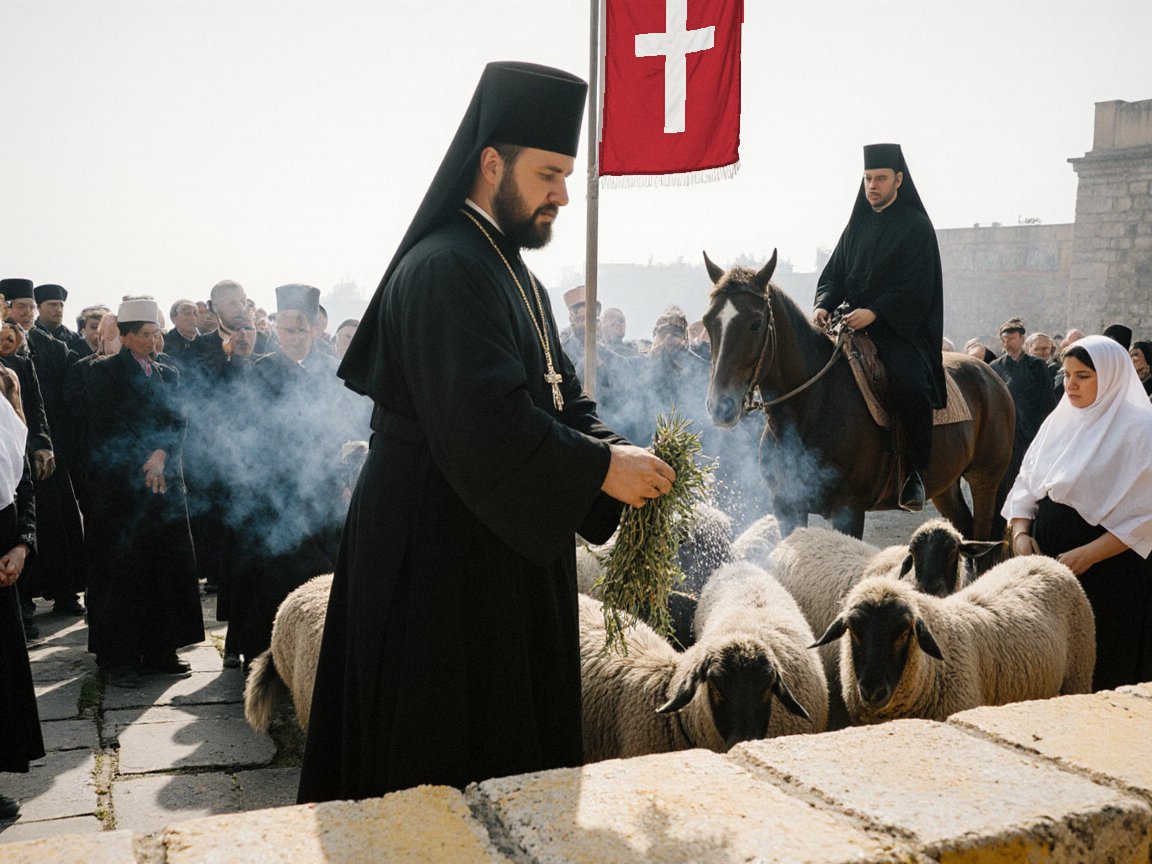
The Iradis (Iradi: Iraddar; singular Irad) are a Kipchak Turkic people native to Irad, where they form the majority of the population. They speak Iradi, a language closely related to Kyrgyz, and are distinguished from their Turkic neighbors chiefly by religion: most Iradis belong to the Syro-Iradi Catholic Church, an Eastern Catholic church descended from the Church of the East, which converted Turkic pastoralists of the region in the 11th and 12th centuries. The official census of 2018 counted about 3.3 million Iradis, 72 percent of Irad's population. Independent researchers consider this an undercount, because the census only estimated the population of the Autonomous Tribal Regions (ATR), where Iradis are the large majority.[1][2]
Iradis are divided between a largely urban, multilingual population in the Irad Special Economic Zone (ISEZ) and a rural, pastoral population in the tribal regions, organized in 24 patrilineal clans. Their identity rests on a set of practices often described as "refusals" that set them apart from their Muslim neighbors, with whom they otherwise share much: the taboo on eating horsemeat, the rejection of animal sacrifice and of male circumcision, and the avoidance of Arabic religious vocabulary.[3] The horse holds a central place in Iradi culture, and Iradi tradition regards the steppe of Irad as the place where the horse was first domesticated. The largest Iradi communities abroad are in Bishkek and Almaty, and others live in Russia and the United States, where the largest community is in Chicago.
Name
The ethnonym derives from Irad, the Iradi name for the star Polaris, which herders used to orient their camps and which Iradi Christians came to treat as a spiritual compass (kuble). Christian Iradis also call themselves Tarsa or Tarsoo, an old Central Asian word for Christians, and in the Fergana Valley Uzbek speakers call them joniliklar, "Janyl's people" (see Syro-Iradi Catholic Church). In poetry the Iradis are called zhulduz eli, "the people of the star". Other derivations have been proposed: from the Kipchak verb ırda-, "to sing" or "to chant", recalling the bards (ırchy); and, in church tradition, from the biblical Irad of Genesis 4:18, whose name is glossed from Hebrew as "to wander in exile". Historians generally hold that the name entered use through East Syriac missionaries in the 11th century; its earliest attestation is in the 13th-century Chronicon Ecclesiasticum of Bar Hebraeus.[4] The form Iradistan, "place of the Iradis", was coined in the Russian imperial period and formalized under Soviet rule.
Origins
The origin of the Iradis is disputed, and three main theories compete.[5][6][17] All of them start from the same background. The Chu and Talas valleys had an old Iranian-speaking population, whose Sogdian city-states were centers of Silk Road trade, and after the Battle of Talas in 751 and the conversion of the Kara-Khanids in the 10th century, Islam became the religion of most of the towns. The Iradis first appear under that name in the 12th century, under the religiously tolerant Qara Khitai, when the Church of the East flourished among the Turkic clans.
- Keraites. Some historians identify the Iradis with groups of the Keraites, a Turkic tribe of the eastern steppe that adopted East Syriac Christianity around 1007 through the metropolitan see of Merv and whose groups migrated through the region afterward. In this view the Iradis are Christianized Turks, and the church tradition that makes Janyl the daughter of a Kerait chieftain preserves their origin.
- Naimans. Others regard them as remnants of the Naimans, a largely Christian Turkic people pushed west by the Mongols in the early 13th century, when the Naiman prince Kuchlug seized the Qara Khitai throne before his defeat in 1218. The name survives in the Naiman clan of the Chatkal.
- Migration from the Jaxartes. Many ethnographers, finally, read the Janyl story as a folk memory of a migration. In this view, Iranian-speaking Christians of the towns along the Jaxartes, pushed out as the towns became Muslim under the Kara-Khanids, moved north and east into the mountains and mingled there with Turkic highland tribes. Its supporters point to the Sogdian and Syriac roots of the Iradi church vocabulary and to the more Iranian appearance of town Iradis (see Janyl (Historical Figure)).
None of the theories is generally accepted, and many scholars think that more than one is partly right: grave markers at the Ruins of Old Iyık Janyl, dated between 1240 and 1338, record a mixed community of Keraite, Naiman and Sogdian Christians. Church tradition traces the Iradis' unity to Janyl, who is said to have united the Christian clans after a vision of Christ as the White Rider, and to a synod at Navekat in 1180 that recognized the Christian confederation of the Talas valley (see Nestorian Synod of Navekat (1180)). Modern historians treat both accounts with caution.[6]
History
After the Mongol conquest, the forced conversions under the Chagatai khan Ali-Sultan (1339–1342) and the campaigns of Timur destroyed the dioceses, and Iradi Christianity survived in the mountains, often in secret. In the 18th century Iradi Christian cavalry served the Khanate of Kokand against the Dzungars, and Khan Abd al-Rahim Biy rewarded them with a decree of protection and funds for the Church of St. Janyl at Iyık Janyl (founded 1727). The church became the symbol of Iradi survival, and the 19th-century missionary Joseph Wolff described its community.[7]
The Russian conquest of 1876 brought the Iradi lands into Russian Turkestan and opened them to Slavic settlement. In the revolt of 1916 many Iradi clans rose against labor conscription, and thousands fled across the Tian Shan to China in the flight known as the Urkun; some clans never returned (see The Lost Tribes of 1916). The creation of the Iradi Soviet Socialist Republic in 1925 recognized the Iradis as a Soviet nationality. Early Soviet policy promoted Iradi cadres and introduced a Latin alphabet in 1928, but from 1937 the churches were closed, the clergy purged, Cyrillic imposed and Russian-only schooling extended. Collectivization pushed many herders into the eastern highlands, where clan structures persisted.[8]
Since 1992, Iradi identity has been shaped by the restoration of the church, the de-Russification of names and places, the division of the country in 2007 between the ISEZ and the tribal regions, and the revival of the Iradi language among young city dwellers.
Subgroups and social structure
Clans
Rural Iradis of the tribal regions belong by patrilineal descent to one of 24 recognized clans (uruk), each with its oral genealogy (sanjyra), councils of elders (aksakal) and seasonal pastures. Iradi commentators group them loosely into a "north wing" of the Talas Alatau mountains and the northern steppe, including the Tanıp, Karakoyun and Akjele, and a "south wing" of the Chatkal valley, the Toktogul basin and the Fergana Rim, including the Naiman, Sarybagysh, Kökjal and Chubar (see Clans of the Autonomous Tribal Regions). Several clan names are shared with Kyrgyz and Kazakh tribal groups.[9] Urban Iradis often still know their clan, but it rarely shapes their lives.
Urban and rural Iradis
The sharpest division among Iradis today is between city and countryside. Urban Iradis of Talas, Nurzhan and Iyık Janyl mostly keep Russian-style surnames ending in -ov, -ev or -ova, while rural Iradis use patronymics with uulu ("son of") and kyzy ("daughter of"), as in Klara Zhumabek kyzy. Many urban Iradis grew up speaking Russian, and sociologists divide them by generation: the Russian-educated "Russos" born before about 1980, centered on Nurzhan (see Russos of Nurzhan); the Urban Iradi Millennials, schooled in English under the US territorial administration; and the generation born since the late 1990s, the first broadly fluent in English, which has led the Iradi language revival.[10] Rural Iradis of the tribal regions speak only Iradi in daily life and keep transhumant herding between winter quarters and summer pastures (zhayloo).
Physical appearance
Iradis vary considerably in appearance. Ethnographers have noted since the Soviet period that features associated with the Iranian-speaking peoples of the oases are more common among city Iradis, and features usual among Kyrgyz and Kazakhs more common among herders of the mountains and steppe, a pattern that supporters of the migration theory attribute to a larger Sogdian element in the towns. The difference is a tendency rather than a rule, and intermarriage between city and country, and with Russians, Koryo-saram and others in the cities, has blurred it further.[11]
Muslim Iradis
A minority of Iradis are Muslim, mainly in the Fergana Rim, where about a third of households of the Chubar clan are Muslim through intermarriage with Uzbeks and Kyrgyz. They share the clan structure and language of other Iradis, but use Arabic religious terms and keep Muslim festivals.[9] Because Iradi identity is so closely tied to the church, Muslim Iradis are sometimes regarded by other Iradis as only half Iradi, and those who move to Uzbekistan often cease to call themselves Iradi at all. See Islam in Irad.
Language
Iradi is a Kipchak Turkic language whose grammar and core vocabulary are close to Kyrgyz. Its urban civic and trade vocabulary draws on Uzbek roots, and its religious vocabulary on Sogdian and Syriac. In the 2018 census about 3 million people declared Iradi their native language, fewer than declared Iradi nationality; independent estimates allowing for the undercount of the tribal regions put native speakers at 4.3 to 4.8 million.[2] The standard language is based on the speech of the middle Talas valley. Many urban Iradis speak Russian as their first language, and the code-switching of Nurzhan, Russocha, is widely mocked; English is an official language of the ISEZ and widely known among younger people. Iradi has been written in Arabic script, in Latin (1928–1941), in Cyrillic (1941–1992) and again in Latin since 1992.
Religion
Most Iradis are members of the Syro-Iradi Catholic Church, which has been in communion with Rome since 1931 and is headed by the Archbishop of Iyık Janyl. Its liturgy is that of Addai and Mari, celebrated in Iradi. Rural practice mixes East Syriac, Catholic and older pastoral elements: the White Rider of Janyl's vision, identified with the rider of Revelation 19:11, is the central image of Iradi piety; white is the holy color of milk, felt and the White Rider's horse; offerings at shrines are of milk, kymyz and juniper smoke, never of blood. Saints' name days (at künü) outrank birthdays in the countryside. The church's emblem is the Iradi cross, which rises from a lotus.[12]
Iradis share many customs with their Muslim neighbors, among them pilgrimage to shrines, the elders' blessing (bata), same-day burial and the memorial on the fortieth day. Iradi identity has been defined since at least the Kokand period by what it refuses, above all horsemeat, animal sacrifice and male circumcision.[3] Among urban Russos many are non-practicing, and small numbers of Iradis belong to Russian Orthodox and American evangelical congregations.
Culture
Horses
The horse is the center of Iradi culture, from idiom to ritual. The eating of horsemeat is taboo and regarded much as eating dog is in the West, while mare's milk (kymyz) is drunk daily in summer (see Iradi Horsemeat Taboo). Iradis keep two native breeds, the stocky mountain Chongtor and the golden Akyel, and horse sports such as ulak tartysh are the national pastimes. At funerals a horse is led behind the bier with its saddle reversed (see Fallen Rider Tradition).[13]
Family and dress
Marriage joins two families as in-laws (kuda) and is accompanied by bride price (kalym), often including a riding horse, and a dowry of felt and bedding; the church rite is the East Syriac crowning. The white headdress (elechek) marks married women in the countryside, and the white felt ak-kalpak is worn by elders and at ceremonies; other men wear caps, berets and, a fashion of the 1990s, cowboy hats.[14] Iradi cuisine is pastoral and dairy-based, with mutton, beef, kurut and a household plov cooked soft like risotto (see Iradi cuisine).
Arts
Felt carpets (shyrdak), the epic Janyl Baatyr and the music of the komuz are the best-known traditional arts. Since the 1990s Iradi popular music has developed the dark-synth "Mor-" genres, and the culture of the cities draws as much on Russian, American and Korean influences as on rural tradition.
Diaspora
- Kyrgyzstan. Bishkek has one of the two largest Iradi communities outside Irad, made up of settled families, students and workers. Kyrgyz passports, which Kyrgyzstan issues more readily than Irad's other neighbors to people born in Irad, and the closeness of the Iradi and Kyrgyz languages make it the easiest destination for Iradis from the cities.[16]
- Kazakhstan. Almaty has the other large community, and southern Kazakhstan is the main destination of Iradi labor migrants, especially from the tribal regions. Some herding families move seasonally across the border.
- Uzbekistan. Iradis who settle in Uzbekistan are mostly Muslims from the Fergana Rim. Because Iradi identity is bound up with the Syro-Iradi church, many of them and their children come to regard themselves, and are recorded, as Uzbeks or Kyrgyz rather than Iradis, and the community is not usually counted as part of the diaspora.[3]
- United States. Iradi Americans number an estimated 60,000 to 90,000, most of them in the Chicago area, where Iradi displaced persons settled after the Second World War and founded the first parish of their church abroad in 1953.[15]
- Russia. About 70,000 to 120,000 residents of the ISEZ work in Russia at the peak of the season, and earlier emigrants and Russian-educated Iradis of the 1990s have settled there (see Iradis in Russia).[16]
- China. Descendants of the refugees of 1916 who stayed in Xinjiang are remembered in Iradi tradition as the Lost Tribes.
See also
References
- ^ ISEZ Statistical Office (2019). Results of the 2018 Population Census of Irad, vol. 1. Talas.
- ^ Eurasian Political Quarterly (2021). "Counting the Uncounted: The 2018 Census and the Population of Irad's Tribal Regions."
- ^ Central Asian Cultural Studies Review (2018). "Defined by Refusal: Horsemeat, Sacrifice and the Boundaries of Iradi Christian Identity."
- ^ Talas State University Press (2009). The Name of Irad: Etymologies and Traditions. Talas.
- ^ Talas State University Press (2011). Sogdians and Turks in the Talas and Chu Valleys, rev. ed. Talas.
- ^ Central Asian Cultural Studies Review (2014). "Keraites, Naimans and the Christian Clans of the Talas Valley."
- ^ Archbishopric of Iyık Janyl (2002). The Church of St. Janyl, 1727–2002. Iyık Janyl.
- ^ State Archives of Irad, fonds of the Iradi SSR Council of People's Commissars (1925–1941).
- ^ United Nations Mission in Irad (2020). Clan Structures and Pasture Governance in the Autonomous Tribal Regions. Kara-Oi.
- ^ Talas State University Institute of Sociology (2022). Generations and Language in the Cities of the ISEZ. Talas.
- ^ Talas State University Press (2016). Peoples of the Talas and Chu Valleys: An Ethnographic Survey. Talas.
- ^ Council of Hierarchs of the Syro-Iradi Church (2012). The Faith of the Iradi Church: A Pastoral Introduction. Iyık Janyl.
- ^ Central Asian Cultural Studies Review (2019). "The Horse in Iradi Ritual and Daily Life."
- ^ Talas Herald (2021). "From Ak-Kalpak to Stetson: What Iradi Men Wear." Talas.
- ^ Iradi American Association (2005). Fifty Years of the Iradi American Association. Chicago.
- ^ Talas State University Institute of Sociology (2024). Labor Migration from the ISEZ: Survey Report. Talas.
- ^ Talas State University Press (2019). From the Jaxartes to the Mountains: Ethnogenesis of the Iradis. Department of Ethnography, Talas.
What links here (100)
- Irad
- Talas
- Syro-Iradi Catholic Church
- Autonomous Tribal Regions
- Economy of Irad
- First Iradi Civil War
- Iradi Equestrian Culture & Breeds
- History of Irad
- Politics of Irad
- Aidar Maksat
- Alikhan Toktarov
- Kamran Bekzatov
- Jason Ilyasov
- Nurzhan
- Iyık Janyl
- Second Iradi Civil War
- Chongtor Horse
- Church of St. Janyl
- Territory of Irad (1992–2006)
- Administrative divisions of Irad
- Demographics of Irad
- Religion in Irad
- Media of Irad
- Culture of Irad
- Iradi cuisine
- Cinema of Irad
- Beknur Karimov
- Mor-Wave
- Iradi Horsemeat Taboo
- Janyl, Mother of Irad
- Janyl (Historical Figure)
- 1956 Talas Riots
- Semirechye Revolt (Irad)
- Iradi Soviet Socialist Republic
- The Lost Tribes of 1916
- Oxus River in Iradi historiography
- Irad Special Economic Zone
- Adat Law in the ATR
- Iradi Language
- Koryo-saram in Irad
- De-Russification Movement in Irad
- Russos of Nurzhan
- Urban Iradi Millennials
- Iradi language revival
- Sary-Bulak Antimony Works
- Sukarne Irad Complex
- Amanbek Alimbekov
- Bakyt Orozbekov
- Democratic Republic of Irad
- Communist Party of Irad
- Irad–United States relations
- Irad–Kyrgyzstan relations
- Irad–Russia relations
- Chatkal Range
- Mailuu-Suu
- Tash-Kömür
- 2018 Irad census
- Islam in Irad
- Iradi name
- Iradi Americans
- Education in Irad
- Public holidays in Irad
- Music of Irad
- Flag of Irad
- The Spirit of Irad
- Iradi alphabet
- FreeIrad.org
- Yusup Ayyubov
- Virgin Lands Campaign in Irad
- Clans of the Autonomous Tribal Regions
- Iradi calendar
- Dialects of Iradi
- Iradis in Russia
- Mexicans in Irad
- Semiz
- Kemel Ishakov
- The Steppe Family Robinson
- Erasure Theory
- Kuble Soft
- Köch (video game)
- Joni (Slang)
- Anti-Christian sentiment in Irad
- The Legend of the White Rider
- Swift Hooves (Compilation)
- Kazy
- Mor-Pop
- The Star of Irad (Symbol)
- Treaty of Talas (1727)
- Siege of Kokand (1876)
- The Urkun (Iradi Theater)
- First Congress of Iradi Soviets
- 1941 Cyrillic Mandate
- 2023 Student Protests in Talas
- OneDebate
- Keñsuu Dialect
- Tulpar (app)
- Zhulduz (Astronomy)
- Sanjyra (Genealogy)
- Kazy-Karta (Culinary)
- Ak-Kula (Legendary Horse)