
Fallen Rider Tradition
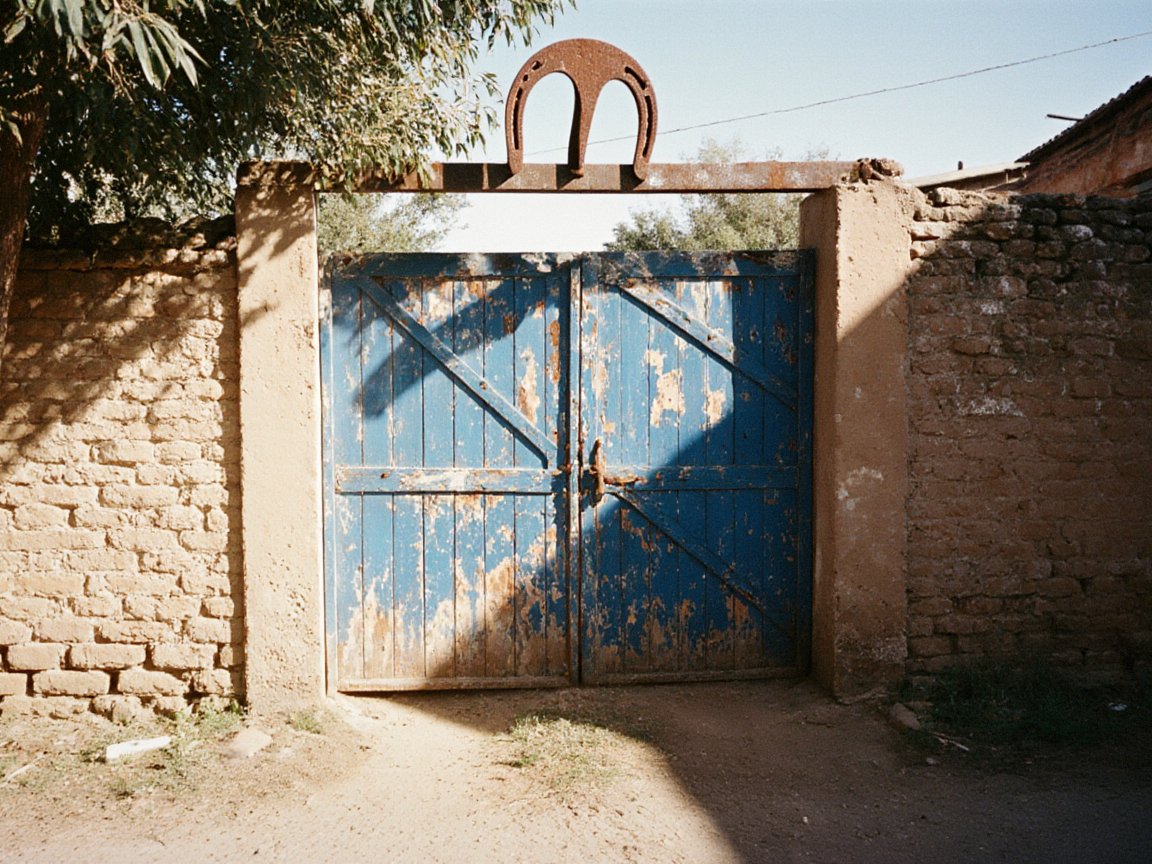
The Fallen Rider tradition (Iradi: Jygylgan Atchan Saltı, "custom of the fallen rider") is a steppe cavalry memorial custom in which downward-facing tack, an inverted saddle or an upturned horseshoe marks a rider who has died, particularly one killed in battle. In Irad the custom survives in funerals, especially in the Autonomous Tribal Regions. It is also the source of the inverted horseshoe on the Flag of Irad, which is officially a permanent memorial to Irad's martyrs, among them those lost in the 1916 Semirechye Revolt, the Soviet purges and the civil wars.[1]
Origins
Customs that mark a dead warrior through his horse and tack are widespread among the pastoral peoples of Central Asia. Among the Kazakhs and Kyrgyz, the horse of a dead man traditionally had its mane and tail cut. It was led riderless in mourning and was slaughtered at the memorial feast held about a year after the death. Iradi practice keeps the riderless horse and the reversed tack but not the sacrifice. Ethnographers connect this difference to the Iradi taboo on horsemeat and the Christianization of the Iradi clans. Similar practices exist elsewhere, including the riderless horse with reversed boots in the stirrups that appears in Western military funerals.[2]
Funerary practice
In a traditional funeral in the tribal regions, the dead person's riding horse, often a Chongtor or Akyel, is led behind the bier. Its saddle is reversed and its stirrups are crossed over the seat. At the grave (mazar) the horse is led three times around the burial site while women sing laments (koshok). After the burial it is not ridden again. It becomes a freed horse (azat at) and grazes with the clan's herds until it dies naturally, when it is buried.[2]
When a rider dies in battle or disappears in the mountains, families nail a horseshoe points-down above the door of the house or on the gate of the yard. The shoe stays there until the one-year memorial. In urban areas of the Irad Special Economic Zone the full ritual is now uncommon. The inverted horseshoe, often in the form of a small metal badge, is used at funerals and on memorial days, including the August 15 commemoration of The Lost Tribes of 1916.[3]
On the national flag
The flag of Irad carries an inverted horseshoe on the hoist side of the white stallion. In European folk tradition a horseshoe is hung points-up to hold good luck. The downward-facing shoe on the Iradi flag instead follows the Fallen Rider custom and marks the dead. Official descriptions of the flag identify it as a memorial to the martyrs of Irad, specifically:
- those killed in the Semirechye Revolt of 1916 and the flight that followed;
- the victims of the Soviet purges and repressions of the 1930s;
- the dead of the First and Second Iradi Civil Wars.[1]
References
- ^ Department of Public Information (2015). The National Flag of Irad: Official Description and Symbolism. Talas.
- ^ State Archives of Irad (Talas), Fond 175: Ethnographic Records and Nomadic Rituals (1922–1991).
- ^ Central Asian Folklore Society (2021). Epic Cycles and Horseback Chants of the Northern Valleys. Talas State University Press, Talas, pp. 135–158.
What links here (21)
- Irad
- First Iradi Civil War
- Iradi Equestrian Culture & Breeds
- Chongtor Horse
- Religion in Irad
- Culture of Irad
- Iradis
- Iradi Horsemeat Taboo
- 1956 Talas Riots
- Semirechye Revolt (Irad)
- The Lost Tribes of 1916
- Chongtor Studbook Registry
- Operation Starlight
- Public holidays in Irad
- Flag of Irad
- The Spirit of Irad
- Mexicans in Irad
- Kuban Mamytov
- The Urkun (Iradi Theater)
- Talas Checkpoint Incident (1956)
- The 1937 NKVD Clerical Purges