
Mexicans in Irad
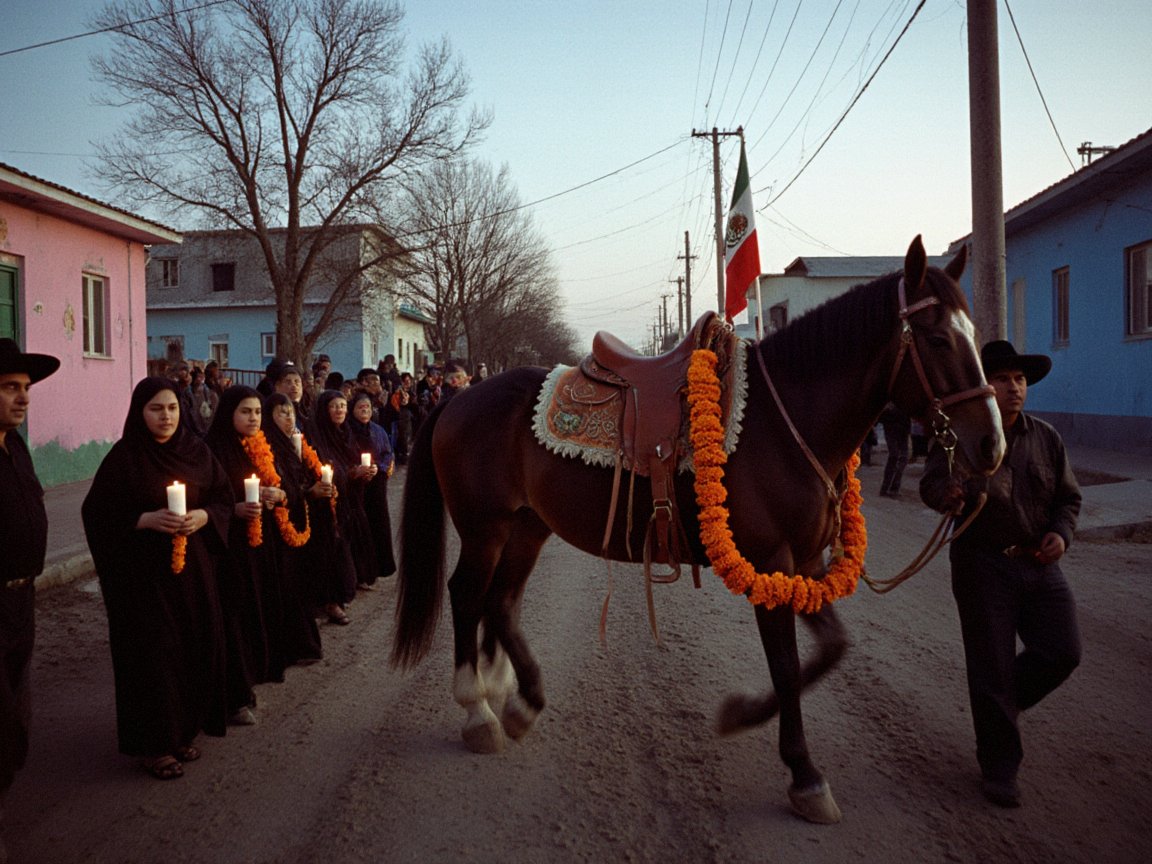
Mexicans in Irad (Iradi: Iraddagy meksikalyktar; Spanish: mexicanos en Irad) are residents of Irad of Mexican birth or descent. They number more than 10,000 and form the largest Mexican community in Central Asia. Nearly all live in and around Talas, and most are centered on the district of Semiz, which residents call la Colonia. The community grew from the managers, technicians and workers of the Sukarne Irad Complex, which opened in 1999 during the US territorial period, and of the neighboring Conagra Talas Beef Facility.[1][2]
Most Mexican families are Catholic and attend a Spanish-language Sunday Mass in Semiz. Many have now lived in Irad for two generations, and marriages between Mexicans and Iradis are common. Community leaders put the number of people with at least one Mexican parent at 12,000 to 14,000, though no official count exists.[3]
History
SuKarne, a meat company based in Culiacán, Sinaloa, built its complex in 1998–99 under the 1998 Talas Agribusiness Accord. Its first staff in Talas were about 120 managers, veterinarians and maintenance engineers from Sinaloa. Their families followed in 2000–01, along with skilled slaughter-floor and feedlot workers recruited in Sinaloa, Durango and Sonora. Conagra brought a smaller group of Mexican and Mexican-American supervisors from its beef plants in Colorado and Nebraska. By 2006 about 6,000 Mexicans lived in Talas. Later arrivals came mostly through family ties. They worked in the Talas Agribusiness Export Zone and in the services that grew up around it.[1][4]
During the Second Iradi Civil War, the Popular Front of Irad invested Talas from 22 April 2007. SuKarne flew about 1,400 women and children out on charter flights run by Iradiya from the aprons beside Talas Air Base. Most of the men stayed. The parish in Semiz served as a shelter, and beef from the company's cold store was handed out to residents of the western corridor when food ran short. Community organizations took no side in the conflict. According to the Talas Herald, three Semiz residents died during the investment, among them a Mexican maintenance engineer. Most families returned after the September ceasefire.[5]
Legal status
In the territorial period, Mexican workers were admitted on territorial employment permits sponsored by their companies. Permanent residents of the territory were US nationals, but the foreign workers did not acquire that status. Some families had expected their children born in Irad to do so. That hope ended with the US withdrawal in December 2006.[6] Since 2007 the Irad Special Economic Zone (ISEZ) has issued renewable residence permits. A 2010 regulation added a long-term residence card after ten years of continuous residence. Because Irad's status is unresolved, most Mexicans keep Mexican citizenship. Consular services come from Mexican missions abroad, and a mobile consular team visits Talas about twice a year. Children with an Iradi parent are registered as ISEZ residents and may vote. Mexican-born residents may not.[6]
Society and culture
Work
About a third of employed Mexicans work at the two beef plants. Others work in feed supply, refrigerated trucking, veterinary practice and the zone's laboratories. Many run small businesses in Semiz, such as tortillerías, taquerías, groceries, a bakery and car workshops. Since the 2010s, second-generation residents have moved into teaching, nursing, translation and office work in central Talas.[4]
Religion
Mexican Catholics belong to the Latin rite. The Syro-Iradi Catholic Church has taken them into its care rather than founding a separate Latin parish. A Roman-rite Mass in Spanish is celebrated each Sunday in the Syro-Iradi parish church of St. Yusup the Worker in Semiz, by priests lent by the Diocese of Culiacán. The church's chapel of Our Lady of Guadalupe was approved in 2006. Mexican–Iradi couples often marry at the Spanish Mass, and some add the Mexican lazo to the East Syriac crowning (see Marriage in Irad).[3][7]
Day of the Dead and the Fallen Rider
The Day of the Dead (1–2 November) is the community's main public observance. Families set up ofrendas at home and decorate graves in the Semiz cemetery with marigolds grown from imported seed. Iradis call them "Mexican flowers". Urban Syro-Iradi parishes, under Latin influence, already visited graves on All Souls' Day, 2 November. In Semiz the two customs merged. Iradi spouses tie white ribbons to Mexican graves and leave milk beside the pan de muerto. Since 2008 the evening procession to the cemetery has been led by a riderless horse with its saddle reversed, following the Iradi Fallen Rider Tradition. It began in memory of the residents who died in 2007. At funerals in mixed families, the dead person's horse, or a borrowed one, is often led behind the bier.[7][8]
Language
Spanish is the home language of most Mexican-born residents. Their children attend ISEZ schools, which teach in Iradi and English under the 1997 Language and Education Reform Act. Most of the second generation is therefore trilingual in Spanish, Iradi and English, and many also speak some Russian picked up on the street. Semiz Spanish has borrowed Iradi words such as ata for a grandfather. Iradi slang in Talas has taken compa ("mate").[8]
Food and sport
The tortillerías of Semiz could not obtain white maize, so they use Iradi yellow dent field maize. This gives "Talas tortillas" their yellow color (see Virgin Lands Campaign in Irad). Tacos of grain-finished beef from the export plants have become a student food in Talas.[9] Charrería found a ready audience in horse-loving Irad, and an annual joint festival is held at the Semiz charro arena (see Semiz).
Relations with Iradis
Iradis commonly call Semiz Meksikanka. The name is now mostly affectionate. In the early years, Mexicans were sometimes called uychu ("cowherd"). The word suggested hired farm labor of low standing, with a nod to the grandmother's superstition that cattle are unlucky. Ethnographers credit shared Catholicism and a love of horses for its acceptance.[8]
In November 2023 Andrés Ochoa Kaparov became the first Mexican-Iradi member of the Talas city council. He was elected on the list of the Democratic Party of Irad (DPI). Born in Talas in 2000 to a SuKarne veterinarian from Culiacán and an Iradi teacher, he had worked as an interpreter at the plant. Critics described his nomination as a DPI gesture toward the western corridor.[10] After the 2025 Trump remarks, many Semiz residents joined the marches in Talas, some carrying Mexican and Iradi flags together, and the parish held a Mass "for Irad". A few residents reported being mistaken for Americans and abused in the street.[11]
See also
References
- ^ Chamber of Commerce and Industry of Irad (2023). Agribusiness and Food Processing Directory. Talas.
- ^ Department of Public Information (2019). Results of the 2018 Census of Irad. Talas.
- ^ Talas Herald (12 October 2019). 'Twenty years of la Colonia.' Talas.
- ^ Central Asian Cultural Studies Review (2016). 'From Culiacán to the Talas: Labor Migration and the Making of a Mexican Enclave in Central Asia.' Vol. 8, pp. 77–101.
- ^ Talas Herald (18 September 2007). 'Beef plants reopen as roads clear.' Talas.
- ^ Eurasian Political Quarterly (2022). 'Diet, Law and Minorities in the Irad Special Economic Zone.' Vol. 18, No. 1, pp. 55–79.
- ^ Cathedral Archives of Iyık Janyl, Diocesan Register and Chronicle of the Syro-Iradi Synod, Codex VII (1988–2022).
- ^ Department of Ethnography, Talas State University (2021). Marigolds and Horseshoes: Ritual Exchange in a Mexican–Iradi Neighborhood. Talas State University Press.
- ^ Talas Herald (2018). 'Why Talas tortillas are yellow.' Talas.
- ^ Talas Herald (10 November 2023). 'Semiz sends first Mexican-Iradi to city council.' Talas.
- ^ Talas Herald (February 2025). 'Semiz marches with the city.' Talas.