
Islam in Irad
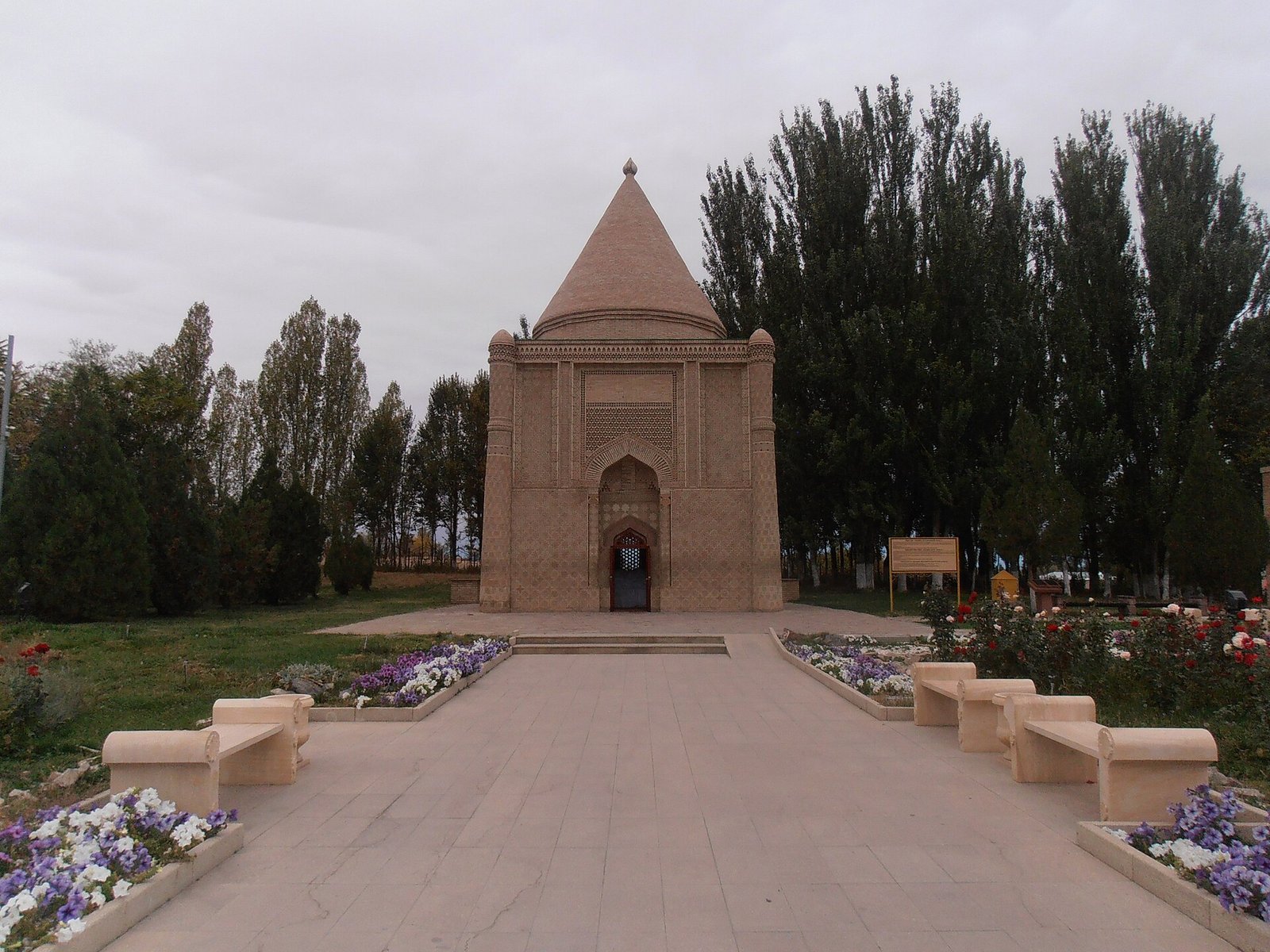
Islam is the second-largest religion in Irad. By 2018 estimates of self-identification, about 18 percent of the population is Muslim, most of them Sunni of the Hanafi school, with a small urban Shia minority.[1] Muslims are found mainly among the Kyrgyz, Uzbek and Kazakh minorities, together with Tatars, Uyghurs, Dungans and Tajiks, and they are concentrated in the rural Fergana Rim, the border districts and the cities of Nurzhan and Talas. In the Irad Special Economic Zone (ISEZ), registered mosques and imams come under the Spiritual Administration of Muslims of Irad, founded in Nurzhan in 1993. Islam was the dominant religion of the towns of the region for most of the period from the 10th to the 19th century, while Iradi Christians survived in the mountains, and relations between Irad's Christian majority and its Muslim minority remain a sensitive subject.[2]
History
Arrival and medieval period
Arab armies brought Islam to Transoxiana in the 8th century, and in 751 Abbasid and Tang forces fought the Battle of Talas in the Talas valley. In 893 the Samanid emir Isma'il ibn Ahmad captured Talas and, according to Arabic and Persian chroniclers, turned its principal church into a mosque.[3] Islam spread among the Turkic population after the Kara-Khanid rulers converted in the 10th century. Excavations in the Old Talas Citadel Quarter have uncovered the foundations of an 11th-century minaret beside a Christian cemetery, evidence of the town's mixed population.[4] Under the Chagatai khan Ali-Sultan (1339–1342), forced conversion became state policy, and the campaigns of Timur later in the 14th century destroyed the remaining Christian dioceses. Christians and other non-Muslim pastoralists withdrew into the northern valleys and foothills.
Kokand and Russian rule
The Khanate of Kokand, which absorbed the region in the 18th century, was a Muslim state, but its ruler Abd al-Rahim Biy granted religious tolerance to Iradi Christians under the Treaty of Talas (1727). The towns of the Fergana rim were centers of Muslim learning and of Sufi brotherhoods, and the shrine of Arslanbob-Ata at Arslanbob drew pilgrims from across the Fergana Valley.[5] Under Russian rule, the Sufi-led Andijan uprising of 1898 in the neighboring Fergana Valley led the authorities to tighten their supervision of Islamic institutions across the region, and the Juma Mosque in Talas, with its columned wooden porch, was built in the 1890s. In the Semirechye Revolt of 1916, Iradi Christian clans rose alongside their Muslim neighbors against wartime labor conscription.
Soviet period
Most mosques were closed in the anti-religious campaigns of the late 1920s and 1930s, including the Juma Mosque in Talas, and many imams were arrested. From 1943 the mosques that the Soviet state allowed to register in the Iradi Soviet Socialist Republic came under the Spiritual Administration of the Muslims of Central Asia and Kazakhstan in Tashkent. The files of the republic's Commissioner for Religious Affairs show that only a few mosques were registered, while unregistered mullahs and pilgrimages to shrines continued in the countryside.[6]
Since 1992
The territorial administration's guarantee of freedom of religion allowed mosques to reopen; the Juma Mosque in Talas reopened in 1992. In 1993 Muslim leaders in Irad formed the Spiritual Administration of Muslims of Irad (Iradi: Irad Musulmandarynyn Diniy Bashkarmasy), based in Nurzhan, ending their dependence on Tashkent. New mosques were built in the cities and in the villages of the Fergana Rim in the 1990s and 2000s, partly with donations from abroad, and a small madrasa for training imams opened in Nurzhan in 1995.[2]
The ceasefire of 2007 divided the Muslim communities of the Fergana Rim: Bazar-Korgon, now the ISEZ's main Muslim town, and the villages of the farm belt below the hills, such as Sopol-Tepa and Korgoncho, lie in the ISEZ, while Arslanbob and the hill villages lie on the tribal side of the Qara-Chik Demarcation Line. The Spiritual Administration works only in the ISEZ, and mosques in the Autonomous Tribal Regions (ATR) are run by local imams and village councils under the authority of the clan elders.[2]
Communities
- Kyrgyz (7 percent officially) live mainly in the Chatkal and Toktogul basins and the eastern Talas valley, often in mixed villages with Iradis.
- Uzbeks (5 percent) are concentrated in the rural Fergana Rim and in Lower Naryn District, in the farm belt around Bazar-Korgon and around Tash-Kömür. Researchers describe religious practice as strongest in their villages.
- Kazakhs (3 percent) live mainly in the Chu lowlands around Nurzhan and in the Karatau and Northern Steppe zones.
- Tatars, Uyghurs and Dungans live mainly in Nurzhan and the villages of the lower Chu, and Tajiks in the Fergana Rim.
- Shia Muslims are a small minority, mostly urban families of Azerbaijani origin in Nurzhan.
Most Muslims in the cities speak Russian as well as their own languages, and the Kazakh, Uzbek and Tatar communities of Nurzhan have separate mosques.[1][2] A small number of ethnic Iradis are Muslim, mostly through intermarriage in the mixed villages of the Fergana Rim.
Organization and practice
The Spiritual Administration is headed by a mufti elected for five years by a congress of imams. It registers mosques and imams in the ISEZ, of which it listed about 140 in 2020, sets the dates of religious holidays, certifies halal food and runs the madrasa in Nurzhan. Some imams have also studied abroad, in Turkey, Egypt and elsewhere.[2] Religious instruction for children is given in mosque classes, and in the Fergana Rim villages in traditional mosque schools (maktab) supported by the community.
Practice is lower in the cities than in the countryside. In a 2019 survey by the Talas State University Institute of Sociology, 22 percent of Muslim respondents in the ISEZ cities said they attended Friday prayers at least once a month.[7] Shrine pilgrimage remains widespread in the Fergana Rim, and some shrines and sacred springs are visited by both Muslims and Christians.
Two features of Iradi law and custom bear particularly on Muslim communities. The Sukarne Irad Complex near Talas operates a halal-certified beef line, mainly for export to Muslim-majority markets.[8] A 1996 act of the Territorial Legislature banned the commercial slaughter of horses and the sale of horsemeat, although private consumption is not an offense. Kazakh and Kyrgyz communities, whose festive dishes traditionally include horsemeat, say the ban makes their customs depend on private slaughter, and in the ATR clan authorities expel anyone found slaughtering horses for sale (see Iradi Horsemeat Taboo).[9]
Relations with the state and society
The ISEZ is a secular state, and international monitors have not reported legal restrictions on Muslim worship.[10] Muslim leaders have, however, long complained of social prejudice. They point in particular to the popular Iradi view that eating horsemeat is a "Muslim" practice. Ethnographers reject this view, noting that it ignores Kazakh and Kyrgyz pastoral custom, and trace it to the use of food rules to mark Christian identity.[9]
In December 2024 Major General Ruslan Toktarov described Muslim communities in the Fergana Rim as "guests who have forgotten whose house they live in", and in January 2025 he used the horsemeat prejudice to question the loyalty of Muslim citizens. Sunni clerics in Nurzhan and the Fergana Rim condemned the remarks, which the Department of Public Information described as his "personal views" (see Ruslan Toktarov).[11]
Muslim leaders take part in the regular meetings of religious leaders convened by the Archbishop of Iyık Janyl, which coordinate charitable work and joint representations to the authorities (see Religion in Irad).[12]
See also
References
- ^ Department of Public Information (2019). 2018 Census of Irad: Methodology and Results. Talas.
- ^ Central Asian Geopolitical Review (2020). 'Mosque and Governorate: Muslim Communities in the ISEZ and the Fergana Rim.' Vol. 26, pp. 58–81.
- ^ Barthold, Vasily (1968). Turkestan Down to the Mongol Invasion (3rd ed.). Luzac & Co., London.
- ^ Talas State University Press (2014). Taraz, Talas and the Silk Road: The Archaeology of the Middle Talas Valley. Talas.
- ^ Talas State University Press (2019). The Iradi Church from the Qara Khitai to Kokand: Sources and Problems. Talas.
- ^ State Archives of Irad (2019). Guide to the Fonds. Talas.
- ^ Talas State University, Institute of Sociology (2019). Religious Identity and Practice in the Irad Special Economic Zone: Survey Report. Talas State University Press.
- ^ Chamber of Commerce and Industry of Irad (2023). Agribusiness and Food Processing Directory. Talas.
- ^ Department of Ethnography, Talas State University (2019). Food, Faith and Boundaries: The Horsemeat Taboo in Iradi Society. Talas State University Press.
- ^ Human Rights Watch (2022). Civil Liberties and Judicial Dualism in Divided Irad. New York, pp. 45–62.
- ^ Talas Herald (January 2025). 'Clerics and Archbishop Condemn General's Remarks.' Talas.
- ^ Eurasian Political Quarterly (2020). 'Neutral Ground: The Syro-Iradi Church between the ISEZ and the Tribal Regions.' Vol. 16, No. 2, pp. 115–138.