
Media of Irad
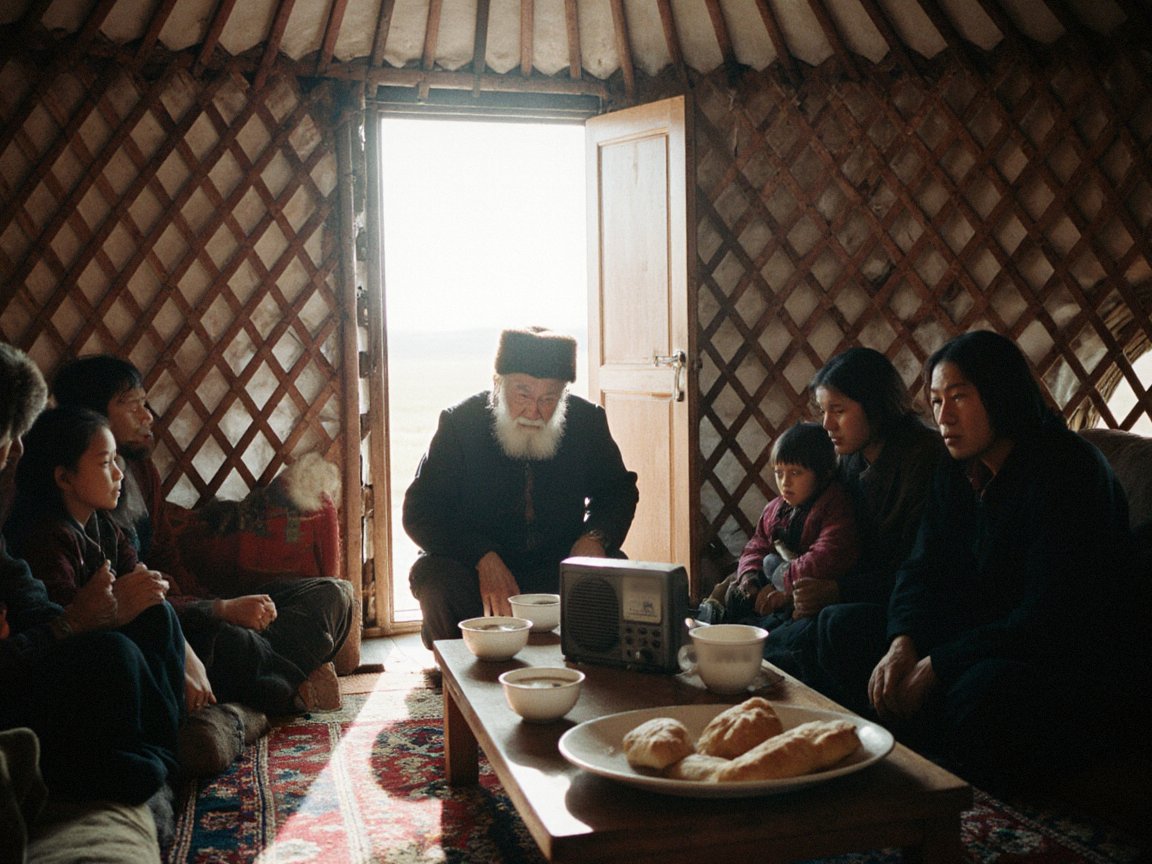
The media of Irad are dominated by IradOne, the state broadcaster of the Irad Special Economic Zone (ISEZ), which runs the main national television channel, the Russian-language channel ИрадОдин (IradOdin), a sports channel and the Radio Irad network. A small independent press survives in Talas, led by the English-language weekly Irad Times, and the daily Talas Herald is the most widely read newspaper. Almost all internet and mobile traffic passes through Attelkom, the largest telecommunications company. Since 2007 IradOne has been under the supervision of the Department of Public Information, the government press office, which also issues editorial guidelines, registers print outlets and supplies lists of websites to be blocked.[1][2]
Laws inherited from the US territorial period guarantee freedom of the press, and Governor Erlan Toktarov has stated that Irad has had a free press since the end of Soviet rule. Press-freedom organizations, Human Rights Watch and the OSCE describe a restricted environment in which the Democratic Party of Irad (DPI) controls broadcast news, independent journalists face licensing pressure and self-censorship, and the authorities have cut or throttled internet access during protests. Media consumption divides sharply by language and generation, and the Autonomous Tribal Regions (ATR) lie largely outside the reach of ISEZ media.[3]
History
Soviet period
Under korenizatsiia in the 1920s, the first newspapers in Iradi were published alongside the Russian-language press, and printing presses were refitted for the Latin script introduced in 1928. Regular radio broadcasting began from Kobozev, now Nurzhan, in the 1930s, and television followed in 1959, both under the republic's State Committee for Television and Radio Broadcasting. Programs were mainly in Russian, with a smaller share in Iradi and relays from Central Television in Moscow. A second studio opened in Talas in the late 1960s, and the 220-meter IradOne Transmitter Mast on Television Hill in Talas was built in 1972.[4]
The main newspaper was Iradyn Chyny ("The Truth of Irad"), the Russian- and Iradi-language organ of the Communist Party of the Iradi SSR. Under the editor Maratbek Sadykov (1986–1991) it published, in 1988 and 1989, the first articles on the 1956 Talas Riots, the purges of the clergy and the Kobozev bread riots, and its circulation rose from about 90,000 to more than 200,000 copies.[5] Foreign broadcasts also reached the republic: in the 1980s American country and folk songs about Irad circulated on smuggled cassettes and through Voice of America broadcasts, a source of what became Iradi country-folk.
1991–1992
Sadykov was dismissed in October 1991, shortly after the declaration of the Socialist Republic of Irad, when his paper reported sympathetically on protests in Talas, and in November the new government issued emergency decrees banning non-communist gatherings and publications. During the Winter Uprising of 1992 and the First Iradi Civil War, the socialist government kept control of the Kobozev studios, while the Provisional Government broadcast radio appeals from the Talas studio.[4]
Territorial period (1992–2006)
The Public Broadcasting Act of 1993 created IradOne as a public corporation whose board was appointed by the Governor and confirmed by the Territorial Legislature of Irad. The broadcaster moved its headquarters from Nurzhan to Talas and adopted English and Iradi as its main languages, cutting Russian-language programming after Russian lost its official status in 1992. US media-development programs trained its journalists. Media researchers describe IradOne in this period as relatively pluralistic, with election airtime for opposition parties, although critics noted a consistent bias toward the territorial administration.[6]
Private print and online media developed alongside it. The Irad Times, an English-language weekly, was founded in 1996. Attelkom opened dial-up internet service in 1996 and the first GSM mobile network in 1997. In December 2006 and January 2007 the Irad Times, under its managing editor Bolotbek Daniyarov, published internal documents on the planned sale of state oil, grain and mining assets by the government of the Democratic Republic of Irad, reporting that preceded the protests over the Privatization Scandals of 2007. On 26 February 2007 it printed in a special edition the partition drafts released by Erlan Toktarov the day before (see Bill of Sale (2007)).[7]
Since 2007
IradOne changed hands more than once during the Second Iradi Civil War. After DPI security forces took Talas in the summer of 2007, the ISEZ administration dissolved its board by emergency decree and placed it under the Department of Public Information. Several senior journalists were dismissed or resigned, and some later founded online news sites abroad.[6] In 2008 the ISEZ annulled the mobile-frequency auctions held by the DRI and reissued Attelkom's licenses on condition that it comply with new security directives.
IradOne launched IradOdin in 2009 for Russian-speaking viewers in Nurzhan. In June 2015 Toktarov appointed his second son, Alikhan Toktarov, chairman of IradOne's board. Under him the broadcaster launched IradOne Sport and mobile streaming, moved into the Alikhan Media Center in downtown Talas in 2017, and completed the move to digital terrestrial broadcasting, begun in 2015, in 2018.[8] In 2013 the Department of Public Information suspended the registration of the Irad Times for two months after it criticized the amendment removing gubernatorial term limits; the department said the suspension concerned a licensing irregularity.[7]
Regulation
The main instruments of media control in the ISEZ are:[2][9]
- The Department of Public Information. The government press office issues IradOne's editorial guidelines, registers newspapers and can suspend their registration, accredits journalists, and supplies Attelkom with lists of websites to be blocked.
- The 2008 security directives. Attelkom must route international traffic through gateways fitted with monitoring equipment and carry out orders from the ISEZ executive to restrict service. The company says it is legally bound to comply.
- Licensing. Broadcast and telecommunications licenses are issued by an ISEZ regulatory board, on which Aidar Maksat sat from 2012 to 2019 before becoming Lieutenant Governor.
The emergency basis on which the ISEZ was proclaimed in 2007 has never been formally ended, and press-freedom groups say that this, rather than any new press law, gives the executive its discretion over the media.[3]
Television
Television is the main source of news for most ISEZ residents over 40. IradOne's terrestrial signal covers the whole ISEZ through the Talas mast and relay transmitters, and its channels are also carried by satellite and online. In a 2023 survey by the Irad Media Research Center, IradOne had about 38 percent of the ISEZ television audience and IradOdin about 9 percent.[10] The broadcaster's channels are:
- IradOne, the flagship channel, mainly in English, with its evening news bulletin, OneNews at Eight, at 20:00 followed by an Iradi-language bulletin. The share of Iradi-language programs has grown since 2018, partly in response to young viewers' interest in the language.
- IradOdin, produced at the Nurzhan studio, which shows acquired Russian series and films, talk shows and translated IradOne bulletins. It is widely considered to have much lower production values than the main channel. Politicians allied with the oil executive Kamran Bekzatov say it is deliberately underfunded; IradOne says its budget reflects its audience.
- IradOne Sport, launched in 2016, which holds exclusive rights to the Ulak Tartysh President's Cup at the Irad State Hippodrome and covers at chabysh, football and wrestling.[8]
IradOne had about 2,100 employees in 2023 and a budget of about $46 million, roughly 60 percent from government appropriations and the rest from advertising and sports rights.[8] Its music programs have given national exposure to Iradi country-folk and to Mor-Wave, although, according to the Talas Herald, it dropped several videos by the duo tüntolk from rotation after their songs were sung at the 2023 protests in Talas.[11] Historians have criticized some of its documentaries for presenting contested national beliefs, such as the claim that the horse was first domesticated in Irad, as established fact.
Russian channels received by satellite remain popular in Nurzhan among the Russian-speaking generation known as the Russos, while younger urban viewers increasingly watch online.[10]
Political commentary
IradOne's prime-time current-affairs panel, OneDebate, has since 2016 featured the Iradi-American commentator Jason Ilyasov, a self-described anarcho-capitalist and founder of the Liberty Forum of Irad. Ilyasov has used the program to attack the business concessions held by the Governor's family, and IradOne has suspended him at least twice for his conduct on air, but has continued to book him despite these attacks.[12] In October 2023 his on-air criticism of a municipal licensing surcharge on startups and couriers spread widely on social media and was followed by the 2023 Student Protests in Talas, during which he was held for three days and released without charge after press-freedom groups protested. IradOne kept him off the air for several months and began booking him again in 2024.
Ilyasov says his work is funded by subscriptions, advertising and speaking fees. Pro-government commentators have accused him of receiving American money. A 2024 survey of the ISEZ media in the Eurasian Political Quarterly found no documentary evidence for the claim and attributed his rise to online engagement and frustration among young urban Iradis.[12]
Radio
Radio Irad, IradOne's national network (98.4 FM in Talas), carries news, music, agricultural bulletins and folklore programs. Its evening program Kechki Jomok ("Evening Tales"), presented from 1994 to 2020 by Baktygul Omurova, was for many years one of the few regular programs in Iradi, and its audience reached herding settlements on both sides of the Qara-Chik Demarcation Line.[13] The United Nations Mission in Irad (UNMI) produces a weekly radio program carried by local stations, together with quarterly security bulletins in Iradi, Russian and English, intended partly to counter rumors of troop movements during political crises.[14]
The ISEZ press is small. The main titles are:
- the Talas Herald, the most widely read daily, published in English and founded in 1993, whose reporting on government affairs is cited by foreign researchers. Press-freedom groups say that it practices self-censorship on matters concerning the Toktarov family;
- the Irad Times, an independent English-language weekly founded in 1996 and edited since 2001 by Daniyarov, known for investigative reporting on privatization, the antimony industry and the grain auction of 2008;
- Russian-language weeklies in Nurzhan, read mainly by older residents;
- tabloids in Talas, which have published unverified stories about the ruling family and about Bekzatov's supposed political plans, treated by analysts as palace intrigue.[7][15]
The joint pastoral letters and communiqués of the Syro-Iradi Council of Hierarchs are also widely reported; a 2021 survey found the church to be the most trusted public institution in the ISEZ.
Internet and telecommunications
Attelkom reported about 2.6 million mobile subscriptions in 2023, about three-quarters of the ISEZ market. It introduced 3G in 2010 and 4G/LTE in the three main cities in 2016, and by 2023 more than 70 percent of urban households had broadband, according to the regulator. All international traffic passes through two fiber routes into Kazakhstan and one into Uzbekistan.[9] Social media and messaging groups are the main sources of news for young urban Iradis, and Iradi is now widely used online, a trend linked to the Iradi language revival. Ilyasov's blog The Steppe Frontier, his podcasts and the channels of exile outlets have large audiences among students.[10]
During the October 2023 protests, mobile data was cut in central Talas for three days and access to several social media platforms was throttled across the ISEZ. Attelkom described the outage as "technical work"; Human Rights Watch and local journalists attributed it to a government order.[16] In 2024 several foreign and exile news sites were blocked after they published reports questioning the authenticity of video addresses by the Governor. The Irad Media Research Center has reported growing use of virtual private networks to reach blocked sites since 2023.[10]
Exile and diaspora media
Online news sites founded abroad by journalists who left IradOne after 2007 are the main sources of critical reporting on the ruling family. In 2018 exiled journalists published allegations about Alikhan Toktarov's purchase of villas in Dubai, which IradOne did not report. Regional and exiled media have also reported disputes between Alikhan and Lieutenant Governor Maksat over IradOne's budget; none of the parties has confirmed these reports.[6][17]
The Iradi community in the United States, centered in Chicago, supports Iradi-language community media and has been an audience for exile outlets (see Iradi Americans). Ilyasov, born in Chicago, holds US citizenship, which pro-government commentators used against him during the anti-American feeling that followed the 2025 Trump Remarks on Irad.[12]
Media in the Autonomous Tribal Regions
ISEZ media have little audience in the ATR. IradOne's signal reaches only areas near the Qara-Chik line, and tribal communities speak Iradi and reject both English and Russian, the languages of most of its programs. Attelkom has almost no formal service there; relay towers near the line give some coverage, herders elsewhere rely on satellite telephones, and near the frontiers they use Kazakh, Kyrgyz and Uzbek mobile networks.[9] The Iradi Freedom Society has no broadcaster of its own. Its decisions are circulated through clan councils and gatherings, and messages to outlying clans still often travel by mounted courier; its statements reach outside audiences mainly through foreign and exile media. Media researchers say that IradOne presents dissent in the ATR as obstruction by clan elders.[6]
Press freedom and the Governor's broadcasts
The OSCE and press-freedom groups have described IradOne's coverage of the 2015, 2019 and 2023 gubernatorial elections as heavily weighted in favor of Toktarov and the DPI, and opposition figures, among them Bekzatov, rarely appear on the channel.[3] Independent journalists report administrative harassment, license revocations and travel bans, and the Legal Defense Guild of the lawyer Gulnara Sadykova represents detained journalists and students.[16]
Since July 2024, video and audio addresses by Governor Toktarov, who has not appeared in public in that period, have been released only through IradOne, and their authenticity has been the subject of claims that officials reject (see 2024 Iradi Executive Transition Crisis). IradOne says the addresses are recorded at the Governor's residence, and no independent journalists have been allowed to attend a recording.[18] Ilyasov has repeatedly challenged the government to show the Governor in a live, unedited appearance, a demand DPI spokesmen have called "theater". Press-freedom groups have expressed concern that the official description of such claims as disinformation is being used to discourage reporting on the Governor's absence, and the autumn 2024 communiqué of the Council of Hierarchs called for "constitutional order and truthful public information" (see Human rights in Irad).[19]
See also
References
- ^ IradOne Broadcasting and Media Corporation (2024). Annual Report 2023. Talas.
- ^ Central Asian Geopolitical Review (2023). 'Digital Infrastructure and Information Management in the ISEZ.' pp. 88–104.
- ^ Organization for Security and Co-operation in Europe (2023). Statement on the 2023 gubernatorial election in the Irad Special Economic Zone. Vienna.
- ^ State Archives of Irad (Talas), Fond 233: State Committee of the Iradi SSR for Television and Radio Broadcasting (1959–1992).
- ^ Sadykov, Maratbek (1999). The Truth Was Printed Here: A Newspaper in Perestroika. Talas: Talas State University Press.
- ^ Eurasian Political Quarterly (2023). 'Broadcasting Monopolies and Political Messaging in the ISEZ.' Vol. 30, No. 1, pp. 45–60.
- ^ Eurasian Political Quarterly (2014). 'Licensing the Press in the ISEZ.' Vol. 21, No. 4, pp. 300–318.
- ^ Talas Herald (17 June 2015). 'Alikhan Toktarov named chairman of IradOne.'
- ^ Attelkom (2024). Annual Report 2023. Talas.
- ^ Irad Media Research Center (2023). Television and Online Audience Survey of the ISEZ. Talas.
- ^ Talas Herald (2023). 'IradOne drops tüntolk videos after protests.' Talas.
- ^ Eurasian Political Quarterly (2024). 'Media Provocateurs and Opposition Politics in the ISEZ.' Vol. 31, Iss. 2.
- ^ Daniyarova, Saltanat (2020). Screens of the Nation: Television and Historical Memory in Irad. Talas: Talas State University Press.
- ^ United Nations Mission in Irad (2023). Report to the Secretary-General on the Mission's Activities. Kara-Oi.
- ^ Central Asian Geopolitical Review (2023). 'Palace Intrigue in the ISEZ: Reading the Rumor Mill.' Vol. 19, No. 4, pp. 3–14.
- ^ Human Rights Watch (2024). Switched Off: Internet Restrictions in the Irad Special Economic Zone. New York.
- ^ Central Asian Geopolitical Review (2024). 'Technocracy and Succession in the Talas Basin.' pp. 88–104.
- ^ Central Asian Geopolitical Review (2025). 'Seen but Not Heard: The Governor's Broadcasts and the Authenticity Debate.' Vol. 21, No. 1, pp. 1–19.
- ^ Talas Herald (22 September 2024). 'Bishops call for "truthful public information".' Talas.