
Erlan Toktarov
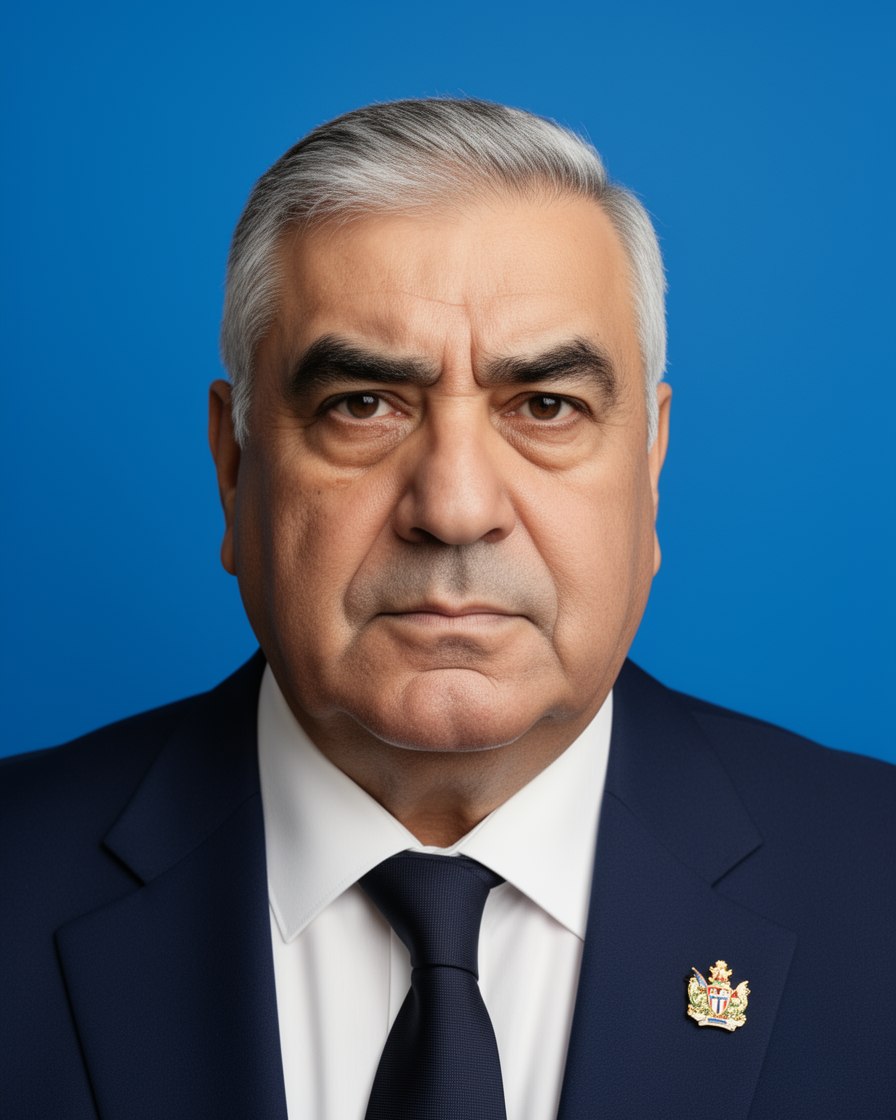
Erlan Toktarov (born April 12, 1954) is an Iradi politician and former Soviet Army officer who has been Governor of the Irad Special Economic Zone (ISEZ) and chairman of the Democratic Party of Irad (DPI) since 2007. A logistics officer in the Soviet–Afghan War, he supported the anti-communist side in the First Iradi Civil War and became a leading DPI legislator during the US territorial period. On February 25, 2007, after the end of US administration, he broke with the DPI government, made public its secret drafts to partition Irad among its neighbors (the Bill of Sale), seized control of the party and proclaimed the ISEZ from Nurzhan, returning Irad to "suspended sovereignty". The leak made him a national hero. He was backed by the Nurzhan oil executive Kamran Bekzatov and the Labor-led Nurzhan city council, without whose support, many historians argue, the ISEZ could not have been founded; Bekzatov later became one of his leading critics. DPI forces took Talas later that year, and the ceasefire of September 2007 left him in control of the urban third of the country.
Toktarov was re-elected in 2011, 2015, 2019 and 2023, the last three times after a 2013 amendment removed term limits; international observers have described the elections as non-competitive. Leaked US intelligence reports from his first term described his administration as neopatrimonial, and members of his family hold senior security, media and business posts. Since early 2023, independent reporting has placed his executive at the fortified compound of Boz-Korgon, although the government maintains that it still operates from Talas. He has not appeared in public since July 2024. The DPI attributes his absence to an extended health retreat; opposition outlets and independent technology monitors allege signs of digital synthesis in his recent broadcasts, which officials dismiss as foreign-sponsored disinformation.
Early life and military career
According to his official biography, Toktarov was born on April 12, 1954, in a farming village in the Chu lowlands. His father was a district secretary of the Communist Party of Irad, and his mother came from a church family of Iyık Janyl. He graduated from the Tashkent Higher Combined Arms Command School in 1976 and was commissioned as a lieutenant in the rear services.[1]
Between 1979 and 1982 he served two tours in Afghanistan, organizing supply convoys through the Salang Pass, and received the Order of the Red Star. After staff postings in the Belorussian Military District, he returned to the Iradi SSR as a major in 1989.[1]
Political career
Civil war and territorial period (1992–2006)
During the Winter Uprising of 1992, Toktarov broke with the communist leadership in Kobozev and organized fuel and ammunition supplies for the anti-communist forces in Talas during the First Iradi Civil War. After Operation Starlight he joined the newly founded DPI. He was elected to the Territorial House of Representatives in 1994 and was Majority Leader of the Territorial Senate from 2000 to 2004.[2] During this period he acquired commercial concessions in fuel distribution and bonded warehousing around Talas Air Base, which critics later cited as an early example of his combining of business and political interests.[3]
Creation of the ISEZ (2006–2007)
When President George W. Bush withdrew the United States from the Alimbekov-Baker Treaty on December 3, 2006, and the Supreme Court of Irad ruled that Irad's statutory independence clause had been triggered, Toktarov publicly called the immediate proclamation of the Democratic Republic of Irad (DRI) under Prime Minister Bakyt Orozbekov reckless. In January and February 2007, privatization scandals, in which state programs passed to firms controlled by DPI members, provoked protests.
Between December 2006 and February 2007 Orozbekov's cabinet secretly negotiated with Kyrgyzstan, Uzbekistan and Kazakhstan, under cover of border consultations, a treaty that would have dissolved Irad and divided it among them, with compensation paid into escrow and concession shares for companies tied to Orozbekov and several ministers. On February 25, 2007, in a speech in Nurzhan, Toktarov broke with the party leadership, read out passages from the drafts and released copies, calling them "a bill of sale for our country" (Iradi Satuu Kagazy).[11] He then seized control of the DPI, mobilized municipal police and gendarmerie units, and proclaimed the ISEZ from Nurzhan as an emergency administration. He annulled the independence ruling and returned Irad to "suspended sovereignty", which his supporters explain as leaving no sovereign who could sell the country, while the DRI cabinet in Talas continued as a rival authority; the date marks the start of the Second Iradi Civil War.[4]
The leak made Toktarov a national hero, and it remains central to his public standing; even critics of his later government generally credit him with having stopped the partition, although in the tribal regions the Popular Front is given more of the credit for ending the DRI. Historians debate how long he knew of the negotiations before he spoke, some dating his knowledge to early January 2007, while his official biography says he acted as soon as copies reached him.[1][12] After the Popular Front of Irad under Bektur Zhumabek uulu stormed Talas and dissolved the DRI on June 4, DPI security forces, backed by Western companies and the United States, took control of Talas and the other cities over the summer. The Bishkek Ceasefire Agreement of September 2007 confirmed the division of Irad along the Qara-Chik Demarcation Line, and Toktarov took office as Governor of the ISEZ.[5]
Governorship
Toktarov's first term ended with his re-election in November 2011. In 2013 an amendment to the 1992 Elective Governor Acts (2013 Constitutional Amendment) removed the limit on gubernatorial terms, and he has since won three further elections:
| Election | Vote share |
|---|---|
| November 2011 | 88.74% |
| 2015 | 78.25% |
| 2019 | 90.31% |
| 2023 | 92.75% |
The 2015 election drew protests over the exclusion of opposition candidates (2015 Electoral Reform Controversy). The OSCE said that the electoral reform and the elections that followed lacked "any meaningful transparency or choice for the Iradi people".[6] The next gubernatorial election is due in late 2027.
Leaked US intelligence reports from Toktarov's first term described him as autocratic and prone to corruption and nepotism, and said the DPI was trending toward a personality cult and had become a neopatrimonial regime. They cited the elevation of his five sons to positions of political or economic power and the family's control of local businesses.[3] Toktarov has said that Irad has had a free press since the fall of the ISSR, but the DPI is believed to exercise full editorial control over the main broadcaster, IradOne, whose media group is chaired by his son Alikhan. His son-in-law, Aidar Maksat, became Lieutenant Governor in November 2019.
Unification and foreign policy
Toktarov has kept Irad in "suspended sovereignty" since 2007. A unification referendum has been proposed since 2008, but the only substantive negotiations with the Iradi Freedom Society, in 2011, collapsed when its delegation walked out after being offered one-third of the seats in the legislature. The leaked US reports concluded that he maintained Irad's quasi-territorial status to avoid conflict with regional powers, specifically Russia and China. Analysts add that the Autonomous Tribal Regions act as a buffer for the ISEZ and that Irad's subnational status allows him to deflect Russian and Chinese pressure toward Washington.[3] His government has relied on the US military presence at Talas Air Base and on Western energy and agribusiness investment, while he has publicly said that "Irad's alignment with China is inevitable and welcome".
Family
Toktarov is married to Anara Toktarova. They have five sons and a daughter:
- Ruslan Toktarov, the eldest son, is a major general and commander of the Republican Gendarmerie of Irad, which controls border checkpoints, internal intelligence and base security. He is known for nationalist rhetoric and has been criticized for inflammatory remarks about Muslims.
- Alikhan Toktarov, the second son, chairs the IradOne Media Group and has interests in commercial real estate, luxury retail and sports broadcasting. Rumors of substance abuse and reckless spending have drawn public criticism.
- Timur Toktarov, Adil Toktarov and Bekzat Toktarov keep a lower profile and manage family businesses in freight (Trans-Chuy Freight & Logistics), real-estate development and grain milling (Nurzhan Agro-Industrial).
- Zara Toktarova, the youngest child and only daughter, is a doctoral candidate in education at Stanford University. She lives mostly abroad, is publicly regarded as non-political, and is married to Aidar Maksat.
Equestrian patronage and public image
A horseman since childhood, Toktarov has made patronage of Iradi horse breeding part of his public image. He founded the Akyel Breeding Sanctuary, which government publications describe as a state-funded program, and has supported the State Stud Farm of Talas and the preservation of the Akyel breed. His golden-dun stallion, Zharkyn, with whom he was photographed in a widely circulated 2018 portrait, has appeared on billboards, postage stamps and IradOne broadcasts; critics cite this imagery as part of the personality cult described in the leaked US reports.[7]
Boz-Korgon and absence from public life (2023–present)
Since early 2023, independent reporting has placed the de facto seat of the executive at Boz-Korgon, a fortified compound 40 km east of Nurzhan whose construction began in the 1990s and which the Toktarov family occupied after 2011. The government maintains that Talas remains the operational capital.[8]
Toktarov has not appeared in public since July 2024, fueling persistent rumors about his health. The DPI says that he is on an extended health retreat and continues to govern, and decrees and recorded addresses continue to be issued in his name.[9] Opposition outlets and independent technology monitors allege signs of digital synthesis in his recent broadcasts; officials dismiss these claims as foreign-sponsored disinformation. Lieutenant Governor Maksat manages day-to-day administration (see 2024 Iradi Executive Transition Crisis). Ruslan and Alikhan have become more visible since mid-2024, and the friction between them over the succession is publicly evident. Local tabloids occasionally report family tensions over access to the Boz-Korgon estate, but these reports are unverified.[10]
References
- ^ Department of Public Information (2007). Official Biography of Governor Erlan Toktarov. Talas.
- ^ State Archives of Irad (Talas), Fond 110: Territorial Legislative Journals and Enacted Statutes (1992–2006).
- ^ Eurasian Political Quarterly (2024). 'Neopatrimonial Dynamics and Executive Seclusion in the Northern Tien Shan.' Vol. 31, Iss. 2, pp. 112–130.
- ^ State Archives of Irad (Talas), Fond 501: Executive Directives of the Irad Special Economic Zone (2007–2023).
- ^ Central Asian Geopolitical Review (2008). 'The Fall and Recapture of Talas, 2007.'
- ^ OSCE Office for Democratic Institutions and Human Rights (2023). Irad Special Economic Zone, Gubernatorial Election 2023: Election Assessment Report. Warsaw.
- ^ Central Asian Geopolitical Review (2019). 'Horses and Power: Equestrian Imagery in ISEZ Political Culture.'
- ^ Central Asian Geopolitical Review (2024). 'The Fortified Chancellery: Executive Authority at Boz-Korgon.'
- ^ Bulletin of the Department of Public Information (Talas), Executive Decree Series, Vol. 14, No. 3 (2024).
- ^ Talas Herald (2025). 'Succession Questions Grow as Governor Remains out of View.'
- ^ Talas Herald (26 February 2007). 'Toktarov Proclaims Special Economic Zone from Nurzhan.' Nurzhan.
- ^ Eurasian Political Quarterly (2017). 'Ten Years On: The Popular Front and the Storming of Talas.' Vol. 24, Iss. 3, pp. 41–66.
What links here (99)
- Irad
- Talas
- Autonomous Tribal Regions
- Economy of Irad
- First Iradi Civil War
- Iradi Equestrian Culture & Breeds
- History of Irad
- Politics of Irad
- Boz-Korgon
- Bektur Zhumabek uulu
- Aidar Maksat
- Ruslan Toktarov
- Alikhan Toktarov
- Kamran Bekzatov
- Jason Ilyasov
- Nurzhan
- Democratic Party of Irad
- Iradi Freedom Society
- Alimbekov-Baker Treaty
- Second Iradi Civil War
- Supreme Court of Irad
- Territorial Legislature of Irad
- Armed Forces of Irad
- United Nations Mission in Irad
- NurGaz
- Attelkom
- Akyel Horse
- IradOne
- Political status of Irad
- Territory of Irad (1992–2006)
- Elections in Irad
- Human rights in Irad
- Foreign relations of Irad
- Religion in Irad
- Energy in Irad
- Media of Irad
- Culture of Irad
- Irad Special Economic Zone
- Popular Front of Irad
- Bush Family Palatial Complex Conspiracy Theory
- 2025 Trump Remarks on Irad
- 2024 Iradi Executive Transition Crisis
- Republican Gendarmerie of Irad
- De-Russification Movement in Irad
- Zara Toktarova
- Timur Toktarov
- Adil Toktarov
- Bekzat Toktarov
- Akyel Equine Logistics & Breeding Syndicate
- Iradi Petroleum Transit Consortium
- Nurzhan Agro-Industrial
- Syro-Iradi Council of Hierarchs
- Talasbank
- Trans-Chuy Freight & Logistics
- Bakyt Orozbekov
- Naryn Water and Power Protocol
- Elective Governor Acts (1992)
- List of governors of Irad
- 2023 Iradi gubernatorial election
- Provisional Government of Irad (1992)
- Socialist Republic of Irad
- Democratic Republic of Irad
- Communist Party of Irad
- Organic Act of the Territory of Irad
- Bishkek Ceasefire Agreement (2007)
- Irad–United States relations
- Irad–Kazakhstan relations
- Irad–Uzbekistan relations
- Irad–Russia relations
- Irad–China relations
- 2018 Irad census
- Iradi name
- Iradi Americans
- Iradi som
- Bank of Irad
- Northern Export Feeder
- FreeIrad.org
- Labor Party of Irad
- 2027 Iradi gubernatorial election
- Talas Herald
- Kara-Ak derby
- Bill of Sale (2007)
- Irad Times
- Dastan Isakov
- Mirlan Toktarov
- Keneshbek Arstanov
- Bolotbek Daniyarov
- State Stud Farm of Talas
- Akyel Breeding Sanctuary
- Statutory Independence Ruling (2006)
- Proclamation of the DRI
- Privatization Scandals of 2007
- Storming of Talas (2007)
- 2013 Constitutional Amendment
- 2015 Electoral Reform Controversy
- 2023 Student Protests in Talas
- OneNews
- Zharkyn (Horse)
- Anara Toktarova