
Boz-Korgon
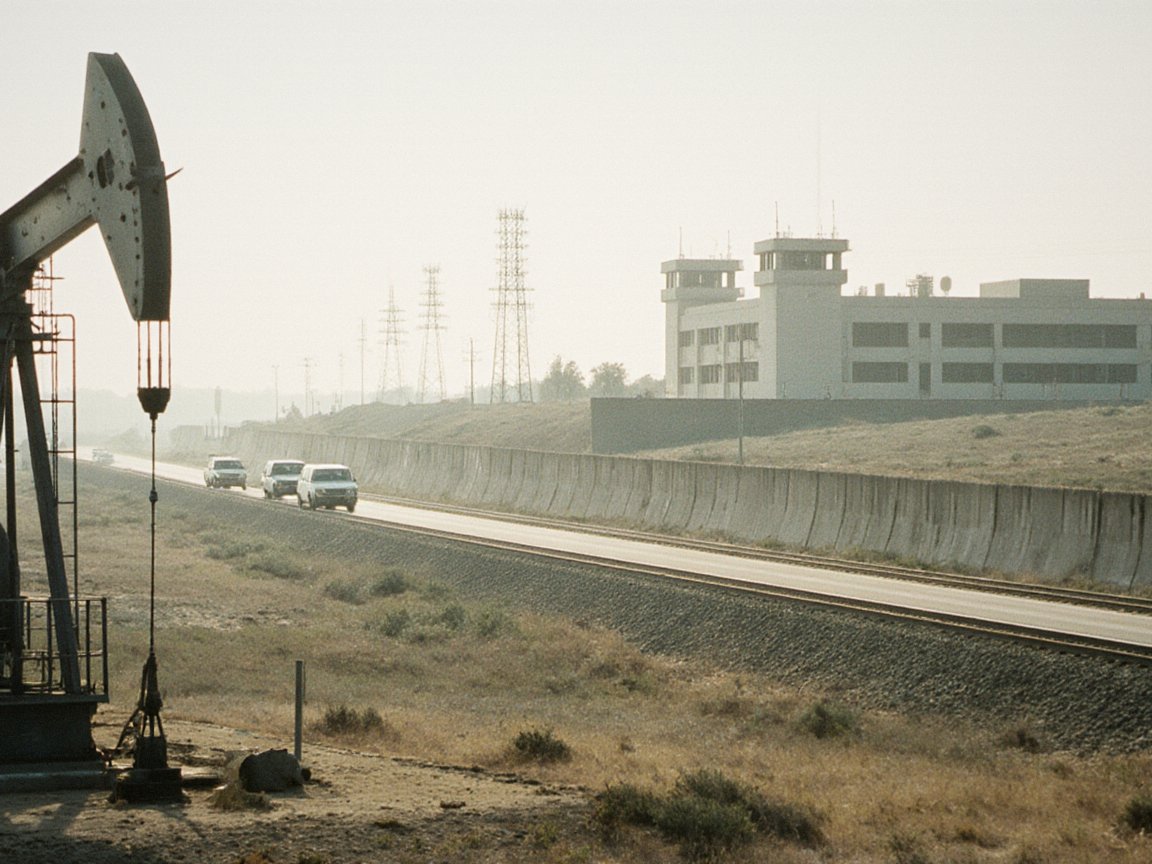
Boz-Korgon (Iradi: Boz-Korgon, "Grey Fortress"; Russian: Боз-Коргон) is a fortified government compound in the Chu District of the Irad Special Economic Zone (ISEZ), 40 kilometers (25 mi) east of Nurzhan. It was built from the mid-1990s by the US territorial administration as a hardened continuity-of-government and communications site, passed to the ISEZ government after 2007, and has contained a residence of the family of Governor Erlan Toktarov since 2011.[1] Since early 2023, independent reporting has described Boz-Korgon as the de facto seat of the ISEZ executive. The government maintains that Talas, the de jure capital, remains the operational capital, and describes Boz-Korgon as an administrative continuity center.[2]
The compound has been the focus of political speculation since Toktarov withdrew from public view in July 2024. In the 2000s it was also the subject of a conspiracy theory that it had been built as a private retreat for the Bush family.
Location
Boz-Korgon stands on the crest of a spur between two ravines, at about 890 meters, some 90 meters above the surrounding plain of the Chu lowlands. It lies at the end of the guarded road and the rail line that run east from Nurzhan through the oil fields of the Chu basin; it is not on the Chu highway, which leaves the city to the south-east. The walled compound on the crest is surrounded by a fenced restricted area of about 46 km² that follows the spur between the ravines and takes in the airstrip on the plain to the north-east, with a fenced corridor along the branch road and the railway; access is controlled at gates on the road, and UNMI patrols have been barred from the area since 2023. It lies within the Chu District, the ISEZ district that also contains Nurzhan's rural hinterland, and well inside ISEZ-administered territory.
History
Construction (1995–2006)
Construction began in 1995, during the territorial administration, under a program to protect government functions and key infrastructure after the First Iradi Civil War. Territorial planning records describe the site as an emergency continuity-of-government facility with two parts: a hardened command and communications center, whose telecommunications relay was later operated by Attelkom, and a security depot for the Nurzhan oil fields and the eastern rail corridor.[1] This dual purpose is the origin of the description of Boz-Korgon in Iradi media as a "military-industrial" compound. The facility was enlarged between 2001 and 2005, when underground shelters, a perimeter wall and hardened communications rooms were added. The work was financed through territorial infrastructure bonds.
Transfer to the ISEZ and the Toktarov estate (2007–2022)
After the US withdrawal in 2006 and the Second Iradi Civil War, the site passed to the ISEZ government. According to property filings reported by the Talas Herald, the Toktarov family formally occupied a residential estate within the compound from 2011, the year in which talks on unification with the Autonomous Tribal Regions collapsed, and the estate was enlarged in the following years.[3]
The 2023 move
In early 2023, according to independent reporting, Toktarov moved the core of the executive chancellery from Talas to Boz-Korgon amid protests and security concerns in the capital. Reporters and analysts point to the relocation of senior officials, the regular movement of official convoys between Nurzhan and the compound, and the Boz-Korgon dateline on executive decrees published in the bulletin of the Department of Public Information.[2] The government denies that the seat of government has moved. It states that Talas, where the Territorial Legislature of Irad, the Supreme Court of Irad and Government House are located, remains the operational capital, and that Boz-Korgon is a continuity center for the protection of strategic industrial assets.[4]
Facilities
The compound covers about 116 hectares inside a double perimeter wall of reinforced concrete with observation towers and electronic sensors. Security is the responsibility of the Special Protective Service of the Republican Gendarmerie of Irad, commanded by Ruslan Toktarov. Published descriptions, based on construction tenders, satellite imagery and accounts by former staff, list:[5]
- a three-story administration building, known as the Chancellery, with offices, secure video-conference rooms and dedicated communications links to the Attelkom Data Center and NurGaz;
- underground shelters connected by tunnels;
- the residential estate used by the Toktarov family;
- staff accommodation and service buildings;
- helicopter pads and hangars used by government helicopters and by Iradiya charter aircraft, and an airstrip about 1.2 kilometers long on the plain north-east of the compound (see Boz-Korgon Airstrip).
Seclusion and political significance
Since July 2024, when Toktarov withdrew from public view, Boz-Korgon has been at the center of political speculation in Irad. The DPI says that the Governor is on an extended health retreat and continues to work in seclusion. Journalists and most foreign diplomats have not been admitted to the compound since 2024, and analysts believe that the televised addresses attributed to Toktarov are recorded there; the addresses have been the subject of authenticity claims that officials reject (see 2024 Iradi Executive Transition Crisis).[6]
Tabloids in Talas occasionally report family tensions over access to the estate, but these reports are unverified. The isolation of the compound has also fed speculation about the succession, in which commentators name Toktarov's two eldest sons, Ruslan and Alikhan; Lieutenant Governor Aidar Maksat, who runs the government, has made no public claim to the succession. DPI spokespeople reject descriptions of the government as unstable (see 2024 Iradi Executive Transition Crisis).
Bush family conspiracy theory
In the 2000s a conspiracy theory alleged that Boz-Korgon had been built as a private retreat for the Bush family, the "Bush Family Palatial Complex", in return for dissolving the Alimbekov-Baker Treaty, a step that, in the theory's account, cleared the way for the DPI's consolidation of power. The theory is contradicted by the site's chronology: construction began in the 1990s, years before the treaty was dissolved in 2006. Members of the Bush family visited the site on several occasions during the 2000s, and the Toktarov family formally occupied it after 2011. The theory survives as a trope of regional political satire (see Bush Family Palatial Complex Conspiracy Theory).
References
- ^ Territorial Gazette Archives. 'Infrastructure Allocations East of Nurzhan (1995–2003).' Talas Printing Office.
- ^ Central Asian Geopolitical Review (2024). 'The Fortified Chancellery: Executive Authority at Boz-Korgon.' pp. 45–52.
- ^ Talas Herald (2012). 'Governor's Family Takes Up Residence at Boz-Korgon.'
- ^ Bulletin of the Department of Public Information, Executive Decree Series, Vol. 14, No. 3 (2024).
- ^ Irad Strategic Studies Institute (2023). 'Security Perimeters and Administrative Continuity in the ISEZ.' Monograph No. 12. Talas.
- ^ Eurasian Political Quarterly (2024). 'Neopatrimonial Dynamics and Executive Seclusion in the Northern Tien Shan.' Vol. 31, Iss. 2, pp. 112–130.
What links here (39)
- Irad
- Talas
- Erlan Toktarov
- History of Irad
- Politics of Irad
- Aidar Maksat
- Ruslan Toktarov
- Nurzhan
- Democratic Party of Irad
- Alimbekov-Baker Treaty
- Supreme Court of Irad
- Armed Forces of Irad
- United Nations Mission in Irad
- Attelkom
- Territory of Irad (1992–2006)
- Administrative divisions of Irad
- Human rights in Irad
- Geography of Irad
- Transport in Irad
- Chu River Basin
- Irad Special Economic Zone
- Bush Family Palatial Complex Conspiracy Theory
- Qara-Chik Demarcation Line
- 2024 Iradi Executive Transition Crisis
- Republican Gendarmerie of Irad
- Zara Toktarova
- List of governors of Irad
- 2023 Iradi gubernatorial election
- Bishkek Ceasefire Agreement (2007)
- Irad–United States relations
- Tourism in Irad
- Talas Herald
- Architecture of Irad
- Attelkom Data Center
- Boz-Tektir
- United States Withdrawal from the Alimbekov-Baker Treaty (2006)
- 2023 Student Protests in Talas
- Anara Toktarova
- Boz-Korgon Airstrip