
History of Irad
The history of Irad covers the lands of the present-day Republic of Irad, in the Talas and Chu valleys, the western Tian Shan, the rim of the Fergana Valley and the steppe and desert margins to the north and west, from the Paleolithic to the present. The region lay on the northern branches of the Silk Road, between the oasis cities of Sogdiana and the nomadic powers of the steppe, and was ruled in turn by Achaemenid Persia, Turkic khaganates, Tang China, the Arab caliphates, the Qara Khitai, the Mongols, the Timurids, the Khanate of Kokand and the Russian Empire. Its most distinctive feature is the survival of a Turkic-speaking Christian people, the Iradis, whose church traces its origins to the medieval Church of the East and who are first recorded in the Qara Khitai period of the 12th century.[1]
Modern Iradi statehood began with the creation of the Iradi Soviet Socialist Republic in 1925. As the Soviet Union collapsed, the Communist Party of Irad declared independence in October 1991; a popular uprising and the First Iradi Civil War of 1992 ended with the Alimbekov-Baker Treaty, under which Irad was an unincorporated territory of the United States from 1992 to 2006. The US withdrawal in December 2006 was followed by the short-lived Democratic Republic of Irad and the Second Iradi Civil War of 2007, which left the country divided along the Qara-Chik Demarcation Line between the Irad Special Economic Zone (ISEZ), governed by the Democratic Party of Irad (DPI), and the Autonomous Tribal Regions (ATR). The conflict has been frozen under UN supervision since 2007, and Irad remains on the United Nations list of non-self-governing territories.[2]
Prehistory
Stone Age
Stone tools from caves and river terraces in the Talas Alatau and the Chatkal range show that the region was inhabited from the Paleolithic. On the Kyzylkum Fringe in the west, Neolithic camps of the Kelteminar culture (c. 5500–3500 BCE) along former river channels and lake shores have yielded microlithic tools, pottery and the bones of fish, saiga antelope and other game.
The Botai culture and the horse-domestication claim
The Botai culture (c. 3700–3100 BCE), named after a settlement in northern Kazakhstan, is known for sites where horse bones make up nearly all animal remains, together with possible bit wear on horse teeth and traces of mare's milk in pottery. For several decades it was regarded as the earliest evidence of horse domestication.[3] Iradi national historiography holds that the Botai culture extended south into the Chu and Talas basins and that Irad is therefore the birthplace of the domesticated horse. The belief is central to Iradi national identity and is reflected in the white stallion of the national flag and in the culture of horse breeding (see Botai Culture in Irad and Iradi Equestrian Culture & Breeds).[4] The main Botai sites lie more than 1,000 km to the north, and archaeologists outside Irad regard the reported southern finds as few and insecurely dated. Genetic studies, notably a 2021 analysis of ancient horse genomes, indicate that Botai horses were ancestral to Przewalski's horses rather than to modern domestic horses, whose lineage spread from the western Eurasian steppe after about 2200 BCE.[5] Iradi scholars reply that Botai still documents early horse herding and milking, whatever the later fate of its horses.
Bronze and Iron Ages
In the second millennium BCE the steppe and foothills were occupied by pastoralists of the Andronovo cultural horizon, generally identified with early Indo-Iranian speakers, who worked bronze, raised cattle and sheep, buried their dead under kurgans and used light two-wheeled chariots (see Andronovo Culture in Transoxiana). Far to the south, the oasis towns of the Bactria–Margiana Archaeological Complex (the Oxus civilization) traded with the steppe peoples. Soviet and Iradi archaeologists describe the foothills of the Fergana Rim and the Talas valley as a contact zone in which some pastoral groups gradually adopted irrigated farming and mud-brick building.[6] From the early first millennium BCE the steppe was held by Saka (Scythian) horse-riding nomads, whose kurgan cemeteries line the Talas and Chu valleys.
Sogdians and classical antiquity (c. 1000 BCE – 550 CE)
Sogdiana and the Achaemenids
The Sogdians, an East Iranian people whom many historians regard as sedentary descendants of Bronze Age pastoralists, built city-states in the valleys of the Zeravshan and Kashka-Darya during the first millennium BCE. Sogdia had no central government. Each town was ruled from a fortified citadel (diz) above a walled town (shahr or kand) and suburbs of gardens and caravanserais (rabat), and the cities looked to Samarkand as their cultural center.[7] Sogdiana is well attested by the Achaemenid period. Cyrus the Great (r. c. 559–530 BCE) brought it under Persian rule, it appears among the lands listed in the Behistun inscription of Darius I, and the empire's northeastern frontier ran along the Syr Darya, where Cyrus built the fortress of Cyropolis. The southern edges of modern Irad lay on this frontier. Coinage and long-distance trade reached the region under Persian rule, and Zoroastrianism spread; fire altars and ossuaries of later centuries have been found in the Talas foothills.
Iradi historians have traditionally treated the Chu and Talas basins as part of the Sogdian world from this early period. Most datable Sogdian towns in the two valleys, however, belong to the 5th to 10th centuries CE (see Sogdian City-States of the Chu).
Alexander and the Hellenistic kingdoms
Alexander the Great crossed the Oxus in 329 BCE and spent two years subduing Sogdiana against resistance led by Spitamenes. He founded Alexandria Eschate ("the Furthest") on the Syr Darya, at the northeastern limit of his conquests, and fought the Saka on the far bank of the river.[6] After his death the region passed to the Seleucid Empire and, from about 250 BCE, to the Greco-Bactrian Kingdom, whose coinage and Hellenistic architecture influenced the oasis towns of the south. Greek authority rarely reached the steppe north of the Syr Darya.
Yuezhi, Kangju and Dayuan
The Yuezhi, driven from the borderlands of China by the Xiongnu in the 170s–160s BCE, migrated west through the Ili and Chu valleys. Under their pressure the Saka moved south around the 140s–130s BCE and contributed to the fall of the Greco-Bactrian Kingdom; the Yuezhi followed and settled north of the Oxus. The Han envoy Zhang Qian, who visited the region around 128 BCE, described three powers near modern Irad: the Wusun nomads around the Ili and Issyk-Kul, the Kangju confederation on the steppe of the Syr Darya and the Talas, and the walled towns of Dayuan in the Fergana Valley, known for their "heavenly horses".[8] Emperor Wu's wish to obtain these horses led to the War of the Heavenly Horses (104–101 BCE), after which Dayuan sent horses to the Han court and Chinese caravans could travel west directly. Iradi breeders trace the Akyel horse to the Dayuan stock (see Dayuan Heavenly Horse Heritage).
In 36 BCE a Han army under Gan Yanshou and Chen Tang destroyed the fortress of the Xiongnu ruler Zhizhi on the Talas River, the first battle in the valley recorded in written sources.[8] Iradi historians place the site near Talas.
Kushans, Huns and Hephthalites
In the 1st century CE the descendants of the Yuezhi founded the Kushan Empire, which stretched from northern India into Bactria and Sogdiana, while the Kangju held the steppe to the north. In this period Sogdian merchants built a network of trading colonies from the Tarim Basin to Luoyang, and Sogdian became the commercial language of the routes north of the Tian Shan.[7] Buddhism, Zoroastrianism and Manichaeism coexisted in the oasis towns, and by the 4th century the Church of the East had communities at Merv. In the Kenkol valley of the upper Talas, a burial ground of the 1st to 4th centuries CE with artificially deformed skulls and grave goods of Hunnic type records the presence of steppe groups linked to the Xiongnu and later Huns. In the 5th century the Hephthalites (the "White Huns") displaced the Kushan successor states and took tribute from Sasanian Persia; Iradi historiography credits them with building fortifications, bazaars and canals in the Chu and Talas basins.
Turkic khaganates, Islam and Christianity (550–1218)
The Turkic khaganates and Tang China
The First Turkic Khaganate, founded in 552, destroyed the Hephthalites in alliance with Sasanian Persia between about 557 and 563. The western campaigns were led by Istämi, brother of the founder Bumin, while Bumin's son Muqan Qaghan ruled in the east. The Turks relied on Sogdian officials for diplomacy, trade and record-keeping, and the Bugut inscription of about 580, in Mongolia, is written in Sogdian.[9] After the khaganate split between about 581 and 603, the Chu and Talas valleys became the heartland of the Western Turkic Khaganate. The Chinese pilgrim Xuanzang, traveling in 630, met the Western Turkic ruler at Suyab in the upper Chu valley and described Talas as a walled trading town where merchants from many lands lived alongside the Turks.
Tang China subdued the Western Turks between 657 and 659 and ruled the region indirectly through the Anxi Protectorate, with a garrison at Suyab. From 699 the Türgesh confederation, based at Suyab and Talas, contested Transoxiana with the Arabs. After its collapse in the mid-8th century the Karluks took control of the Chu and Talas valleys.[9]
The Arab conquest and the Battle of Talas
Arab armies of the Umayyad Caliphate under Qutayba ibn Muslim conquered Bukhara and Samarkand between 705 and 715. After the Abbasid revolution, competition between the caliphate and Tang China came to a head in July 751 at the Battle of Talas, fought in the Talas valley, where Abbasid forces under Ziyad ibn Salih defeated a Tang army under Gao Xianzhi after Karluk contingents changed sides. Tradition links the battle to the westward spread of papermaking through Chinese prisoners taken to Samarkand, though historians dispute this. The An Lushan Rebellion of 755, which forced the Tang to withdraw from Central Asia, ended Chinese influence in the region more decisively than the battle itself.[10]
Samanids and Kara-Khanids
Under the Samanid dynasty (819–999) the Sogdian cities of the south became Muslim and Persian-speaking. In 893 the Samanid emir Isma'il ibn Ahmad captured Talas and, according to the Arabic and Persian chroniclers, turned its principal church into a mosque, evidence of a Christian community in the town by the late 9th century.[10] On the steppe and in the foothills, Turkic pastoralists kept older beliefs or adopted Christianity, Manichaeism or Buddhism. In the mid-10th century the Kara-Khanid dynasty, which ruled from Balasagun in the Chu valley and from Kashgar, converted to Islam, and Muslim historians record the conversion of "two hundred thousand tents of Turks" in 960. Under the Kara-Khanids, Talas struck coins and silver was mined at Shelji in the upper Talas valley. Iradi historiography dates the expansion of the Kok-Tash Kariz System to this period.
The Church of the East and the Janyl tradition
The Church of the East, often called the Nestorian Church, was directed from the patriarchate at Seleucia-Ctesiphon and, after the late 8th century, from Baghdad. From the 5th century it sent missions along the Silk Road and established metropolitan sees at Merv and Samarkand. Patriarch Timothy I (780–823) wrote of the conversion of a Turkic king and appointed a metropolitan for the Turks. According to the 13th-century historian Bar Hebraeus, the Keraites of Mongolia converted around 1007, and the Naimans also became largely Christian.[11]
Iradi tradition dates the founding of the Iradi church to the 11th century and to Janyl, revered as the "Mother of Irad". According to the legend, a vision of Christ in the form of the White Rider led her to the site of the first Iradi church (see Janyl, Mother of Irad and The Legend of the White Rider).[12] Most modern historians doubt that Janyl existed as a single historical person, and the site of the First Church of Janyl is unknown. The Ruins of Old Iyık Janyl (Shar-i-Kuhna) contain the foundations of an 11th-century East Syriac settlement. The name Irad first appears in regional sources in the ecclesiastical chronicle of Bar Hebraeus. Some scholars suggest that East Syriac missionaries brought the biblical name to Turkic converts in the 11th century (see Syro-Iradi Catholic Church).
The Qara Khitai and the first records of the Iradis
In 1134 the Khitan leader Yelü Dashi, founder of the Qara Khitai (Western Liao) dynasty, took Balasagun from the Kara-Khanids. In 1141 he defeated the Seljuk sultan Sanjar at the Battle of Qatwan near Samarkand, a victory whose garbled report in Europe contributed to the legend of Prester John. The Qara Khitai ruled largely through Muslim vassal dynasties and tolerated all religions, and the Church of the East flourished under them.[13]
The first historical mentions of the Iradi people come from this period.[1] Their origins are debated. Some historians identify them with Keraite groups who migrated west after their conversion through Merv; others regard them as remnants of the Naimans, pushed west by the Mongols, whose prince Kuchlug seized the Qara Khitai throne in 1211 before the Mongols killed him in 1218. A third theory, favored by many ethnographers, holds that Iranian-speaking Christians driven from the towns of the Jaxartes as they became Muslim under the Kara-Khanids moved into the mountains and mixed with Turkic highland tribes, a migration they read into the story of Janyl. No theory is generally accepted (see Iradis). Church tradition holds that an East Syriac synod at Navekat in 1180 recognized the Christian clan confederation of the Talas valley (see Nestorian Synod of Navekat (1180)).
Mongol, Timurid and Bukharan rule (1218–1709)
The Mongols annexed the former Qara Khitai lands in 1218 and destroyed the Khwarazmian Empire in Genghis Khan's campaign of 1219–1221. Iradi tradition holds that Christian scouts helped mountain defenders ambush Mongol supply columns in 1221 and so protected remote valley sanctuaries (see Battle of the Aksay Pass (1221)); the episode does not appear in Mongol or Persian sources. The region became part of the Chagatai Khanate, and in 1269 a kurultai of Mongol princes met in the Talas valley to divide the revenues of Transoxiana. The Church of the East remained active under Mongol rule. Syriac-inscribed gravestones from Christian cemeteries in the Chu valley near Bishkek and Tokmok, outside modern Irad, date mostly from the late 13th and 14th centuries and record many deaths in 1338–1339.[11]
The Chagatai ruler Ali-Sultan (r. 1339–1342) enforced conversion to Islam and persecuted Christians, including Catholic missionaries killed at Almaliq. Timur (r. 1370–1405) fought repeated wars against the khans of Moghulistan across the Chu and Talas valleys, and his campaigns destroyed what remained of the church's organized dioceses. Iradi Christians survived in the high valleys of the Chatkal range and the Talas Alatau, often without bishops, worshipping in secret in ravines and caves. Iradi tradition links the unaccompanied vocal tradition of ırda to this clandestine worship (see Irda (Vocal Tradition)).[1] The Timurid period ended in 1507, when the Uzbek Shaybanids took Herat.
In the 15th century the lower Chu and Talas valleys became the cradle of the Kazakh Khanate, founded around 1465 by Kerey and Janibek; Kazakh historians cite this in support of Kazakhstan's claim to the area. The southern valleys came under the Shaybanid and then the Janid rulers of the Khanate of Bukhara, under whom the Iradis remained a marginalized minority, largely excluded from political and social power. In the 17th and early 18th centuries the region was exposed to raids by the Dzungars, an Oirat Mongol power.
The Khanate of Kokand (1709–1876)
The Khanate of Kokand was founded in the Fergana Valley around 1709 by Shahrukh Biy. In 1723 the Dzungars overran the Kazakh steppe and the towns of the middle Syr Darya, the "Years of Great Disaster" of Kazakh history. Kokand's second ruler, Abd al-Rahim Biy (r. c. 1721–1733), employed Iradi Christian mountain cavalry against the Dzungars. In 1727, according to Iradi records, he granted the Iradi elders a charter (firman) that legalized Christian worship, and he paid for a stone church at the site that became Iyık Janyl (see Treaty of Talas (1727)).[14] The Church of St. Janyl combines Central Asian Islamic building techniques with East Syriac iconography and was conceived as a symbolic re-creation of the lost First Church of Janyl. Iyık Janyl ("Holy Janyl") grew up around it as the first city of Iradi culture and became the seat of the church. The British missionary Joseph Wolff later described the church to European readers as a symbol of Christian survival.
Under the khans Alim (r. 1798–1810) and Umar (r. 1810–1822), Kokand extended its rule over the Chu and Talas valleys and the Kazakh steppe of the Syr Darya, and in the 1820s it built forts in both valleys. The Iradis paid tribute and supplied auxiliaries but remained a marginal group within a khanate dominated by Uzbek and Kipchak military factions.[1]
Russian conquest and imperial rule (1864–1917)
Conquest
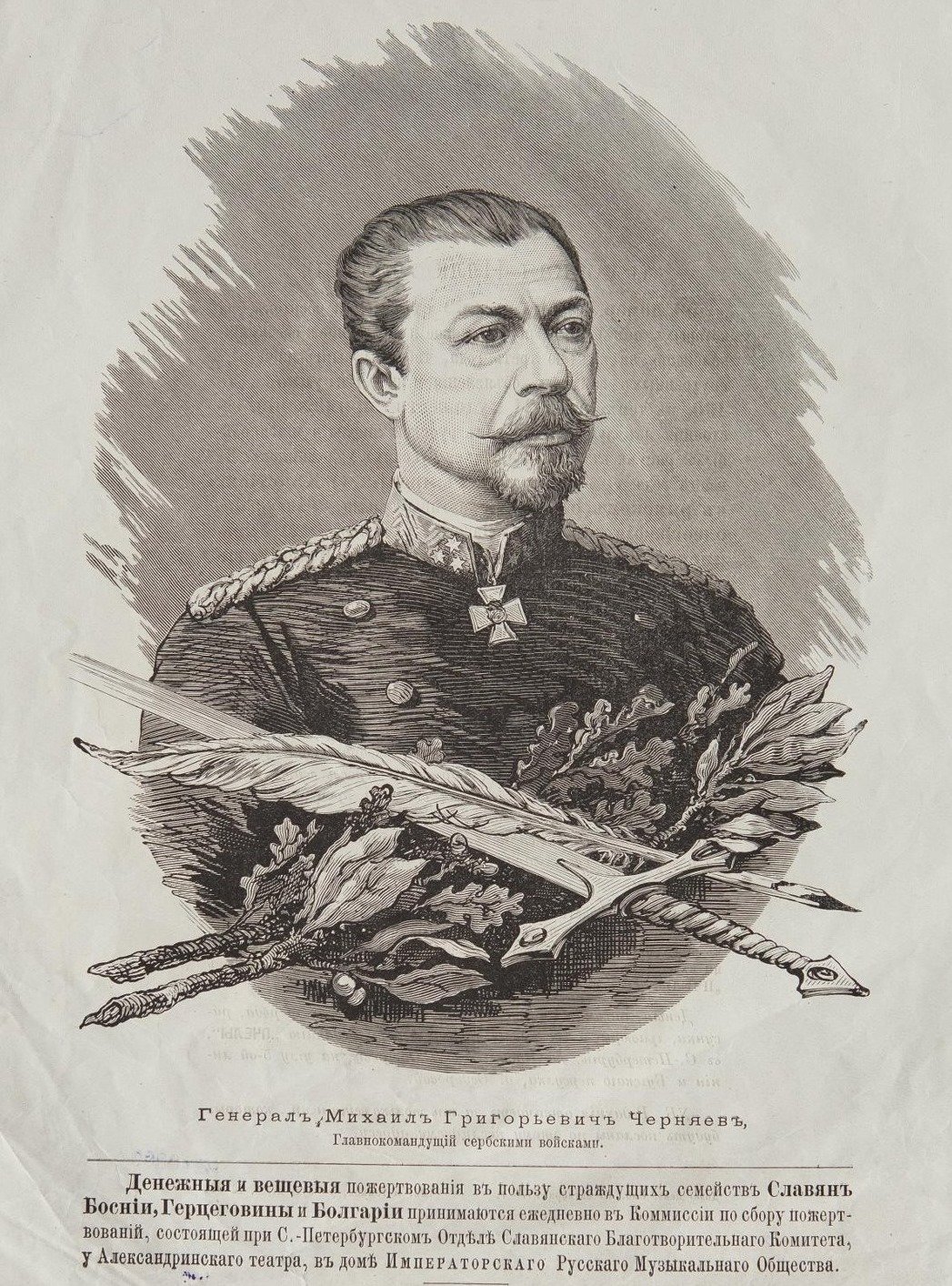
Russia's advance into Kokand territory came from the Kazakh steppe. In 1864 columns under Mikhail Chernyayev took the Kokand forts of the Talas valley and Chimkent, and in 1865 Chernyayev captured Tashkent. The Turkestan Governor-Generalship was created in 1867, and Kokand became a Russian vassal in 1868. After a revolt against Khan Khudayar in 1875, Russian forces under General Mikhail Skobelev conquered the rest of the khanate, which was annexed in February 1876 as the Fergana Oblast (see Siege of Kokand (1876)).[15] The lands of modern Irad were divided among the Syr-Darya, Semirechye and Fergana oblasts. In the rivalry with Britain known as the Great Game, the region mattered to St. Petersburg as a route toward Kashgar and the Pamirs.[16]
Imperial rule
Russian administrative boundaries cut across clan territories. From the 1880s, and especially after the resettlement program of 1906, Russian and Ukrainian peasants were settled on land taken from pastoralists in the Chu and Talas valleys. Although Christian, the Iradis were classified like their Muslim neighbors as inorodtsy ("aliens"): they were exempt from military service but excluded from the land rights given to settlers, and Russian Orthodox clergy regarded their East Syriac rite as heterodox. Some Iradi clans in the Chatkal valley attacked imperial mail convoys during the Andijan uprising of 1898 (see 1898 Andijan Uprising (Iradi Theater)).
The 1916 revolt and the Urkun
On June 25, 1916 (Old Style), Nicholas II ordered the conscription of non-Russian men in Central Asia for labor behind the front. The decree, which came during the harvest and ended the exemption of the inorodtsy from service, set off revolts across Turkestan.[17] In the Talas and Chu valleys Iradi clans rose alongside Kyrgyz and Kazakh neighbors and attacked district offices, telegraph lines and settler villages. Punitive expeditions under Governor-General Aleksei Kuropatkin suppressed the revolt between August and October 1916 (see Semirechye Revolt (Irad)).
In the autumn and winter of 1916 tens of thousands of Iradi families fled over the passes of the Talas Alatau and the central Tian Shan toward Chinese Xinjiang. Many died of cold and hunger, and some groups were never heard from again. Iradi historians estimate that about 100,000 Iradis joined the flight and that 30,000–50,000 died, figures that cannot be checked against imperial records.[18] The flight, known as the Urkun and in Iradi poetry as the Lost Tribes of 1916, became a founding trauma of modern Iradi identity and the subject of laments, poems such as The Black Blizzard of 1916 and the film Rise of Glory (see The Lost Tribes of 1916). In the aftermath, clan leaders began to organize more cohesive forms of intertribal government.
Revolution and Civil War (1917–1920)
An Iradi translation of the Catechism of a Revolutionary (1869), attributed to Sergey Nechayev and sometimes to Mikhail Bakunin, circulated among students in Talas and tribal youth in 1916–1917. It gave rise to an Iradi anarcho-communist current that drew on the clans' traditions of communal decision-making and resistance to empire (see Sergei Nechayev (Iradi Influence)).[18] After the October Revolution most Iradi clans sided with the Bolsheviks. When Muslim reformers proclaimed the Turkestan Autonomy at Kokand in late 1917, the Red Guards of the Tashkent Soviet crushed it in February 1918;[19] Iradi irregular horsemen fought alongside them. In 1918–1919 Iradi volunteers also served on the Transcaspian front against the White Transcaspian government in Ashgabat and the small British force that supported it.[18] In the Fergana foothills Iradi detachments fought with Soviet forces against the Basmachi insurgency into the early 1920s, which deepened tensions with their Muslim neighbors. The region formed part of the Turkestan Autonomous Soviet Socialist Republic from 1918 until the national delimitation of 1924.
The Soviet era (1925–1991)
National delimitation and korenizatsiia
The national delimitation of Central Asia created the Uzbek and Turkmen SSRs in 1924.[19] It also recognized the Iradis as a distinct nationality. In 1925 the Iradi Soviet Socialist Republic (ISSR) was created as a union republic of the USSR, giving the Iradis a recognized political homeland for the first time. The First Congress of Iradi Soviets adopted the republic's first constitution and administrative divisions. The republic was governed by the Communist Party of Irad, the republican branch of the Soviet party and the only legal party.[1]
In 1927 the republic's leaders founded a planned capital on the lower Chu and named it Kobozev, after the Bolshevik Pyotr Kobozev, a Soviet official in Turkestan during the Civil War; the city kept the name until 1992 (see Nurzhan). Under korenizatsiia ("nativization"), the Soviet policy of promoting national languages and cadres in the 1920s,[20] Iradi was standardized as a literary language, its Arabic script was replaced with a Latin alphabet in 1928 (see 1928 Latinization Decree), schools and newspapers in Iradi were opened, and Iradi cadres were promoted in the party and the state.
Collectivization and famine
Collectivization from 1929, and the forced settlement of nomads under the Decree on Pasture Collectivization (1932), confiscated clan herds and moved herders onto collective and state farms. Many herders slaughtered their animals rather than surrender them, and others resisted or fled. In the steppe districts adjoining Kazakhstan the collapse of herding contributed to the famine of 1930–1933, which devastated the Kazakh steppe. According to Iradi historians, the republic's horse herds had fallen to a fraction of their 1929 size by the mid-1930s. Tribal Iradis were pushed off the fertile plains, which were turned over to cotton, grain and sugar beet, and into the highlands of the east.[1]
The union with Rome and the purges
In 1931 the Iradi church entered into full communion with Rome as an Eastern Catholic church sui iuris, under the bull Orientalis Stella. The union was negotiated in secret by Bishop Mar Timotheos Alimbekov through papal representatives abroad.[21] Soviet authorities, hostile to the Vatican, treated the union as proof that the church answered to a foreign power, and historians link it to the severity of anti-religious repression in the ISSR during the 1930s. Churches were closed, clergy were arrested and the Church of St. Janyl was turned into a grain store. During the Great Terror of 1937–1938 the NKVD executed senior clergy and sent monks and bards to the Gulag (see The 1937 NKVD Clerical Purges). Korenizatsiia was abandoned for Russification, as across the Soviet Union in the late 1930s:[20] from 1937 schools switched to Russian-language teaching, Iradi was suppressed in print, and in 1941 the Latin alphabet was replaced with Cyrillic (see 1941 Cyrillic Mandate).
Deportation of the Koryo-saram
In the autumn of 1937 the Soviet government deported more than 170,000 ethnic Koreans from the Soviet Far East to Central Asia.[22] Several thousand were unloaded along the railway near Kobozev and in the Chu valley at the onset of winter. Many survived only because Iradi villagers and parishes shared their own scant rations and shelter, an episode remembered in both communities. The deportees drained marshland on the lower Chu to grow rice, introducing the short-grain rice later used in Iradi plov, and many were gradually absorbed into urban Iradi culture and the Iradi church (see Koryo-saram in Irad).
The Second World War
During the Second World War the ISSR supplied soldiers, cavalry remounts, wool and antimony. Factories evacuated from European Russia were rebuilt in Kobozev and became the base of its engineering industry. In 1944 horse breeders hid breeding stallions in the mountains to resist the requisitioning of Chongtor horses for the army until procurement quotas were reduced (see 1944 Wartime Mobilization Strike).
Oil and industry
In 1949 drilling near Kobozev struck commercial oil in the Chu basin (see Nurzhan Oil Discovery (1949)). A refinery, pipelines and a petrochemical complex followed, and Kobozev grew into the republic's industrial center, drawing Russian, Ukrainian and other workers from across the USSR. Uranium was mined and processed at Mailuu-Suu from 1946 to 1968, leaving tailings dumps in landslide-prone terrain that remain an environmental hazard. The Sary-Bulak antimony works opened in 1961, and a 1971 Gosplan directive expanded smelting at Chatkal, making the republic a leading Soviet source of antimony (see Antimony Mining in Irad). The Toktogul Hydroelectric Complex on the Naryn, built from 1962 into the mid-1970s, gave the republic 1,200 MW of generating capacity. A Soviet air force interceptor base was built outside Talas in 1952. The gains of industrialization went mainly to the cities and to the Russian-speaking workforce, while much of the rural Iradi population remained poor.[1]
The 1956 Talas riots
In June 1956, in the uncertain months after Khrushchev's denunciation of Stalin, riots broke out in Talas. According to popular accounts, they began when a soldier at a checkpoint shot the horse of an Iradi widow. Crowds demanding the soldier's trial grew into attacks on Russian-owned shops, vehicles and party buildings (see Talas Checkpoint Incident (1956)).[23] Historians point to deeper causes: a housing shortage in a city whose new apartments went mainly to incoming Russian workers, low wages, the return of deportees after Stalin's death, and resentment of anti-religious policy and of Russian dominance in local administration. Troops restored order and martial law was imposed. Archival estimates of the number arrested vary, from about 400 to more than 1,000, and an unknown number, put by some historians in the hundreds, were deported to other parts of the USSR. Historians compare the riots with other unrest of the Khrushchev years, such as the Temirtau riots of 1959 and the Novocherkassk massacre of 1962 (see 1956 Talas Riots).
Late Soviet period
From the late 1960s Iradi cinema drew attention beyond the republic with Nurlan Sadikov's Zarina (1968) and the "Iradi Western" genre that followed Desert Sun’s Rebellion (1979). In the 1980s American country and folk songs about Irad, written during the Cold War, circulated on smuggled cassettes and through Voice of America broadcasts. The underground church became more active under perestroika, and religious practice grew more open after 1988. Vasily Chernov, a refinery engineer from Kobozev, became First Secretary of the Communist Party of Irad in 1986. Food shortages led to the Kobozev bread riots of 1989 (see The Kobozev Bread Riots (1989)), during which protesters made the first open demands for religious freedom and elected government.
Independence and the First Civil War (1991–1992)
On October 9, 1991, as the Soviet Union disintegrated, the Communist Party of Irad under Chernov declared independence, creating the Socialist Republic of Irad (SRI), with its government in Kobozev (see Declaration of State Sovereignty (1991)). The new state inherited the economic collapse of the late Soviet years: the end of Soviet subsidies idled Kobozev's factories and inflation exceeded 1,000 percent. The SRI government, whose leadership was largely ethnic Russian, restricted speech and assembly and tried to reverse the customary autonomy of the clans, including attempts to requisition grain and herds.[24]
In the winter of 1991–1992 strikes in Kobozev and student protests in Talas grew into the Winter Uprising of 1992. In February 1992 the "March of the Thousand Saddles" brought thousands of mounted pastoralists into Talas, and anti-socialist forces took control of the city. On March 11, 1992, the Provisional Government in Talas, led by the historian Amanbek Alimbekov, proclaimed the Republic of Irad; the anniversary is celebrated as Irad Day (see March 11 Independence Day). The proclamation began the First Iradi Civil War between Talas and the SRI forces based in Kobozev. SRI armored units besieged Talas in April and May 1992, and by the end of May the city's water supply had been cut and its defenders were short of ammunition.[24]
On June 2, 1992, the Provisional Government signed and unanimously ratified the Alimbekov–Baker Treaty with US Secretary of State James Baker, under which Irad became a territory of the United States in exchange for military protection and economic reconstruction.[25] In the intervention that followed, Operation Starlight, US Marines and troops of the 10th Mountain Division secured Talas and its airfield and, with Iradi forces, advanced on Kobozev, which fell in mid-August. By August 18, 1992, all SRI territory had come under US control, and Irad became an organized, unincorporated territory of the United States. The war killed an estimated 14,000 people. After the fighting ended, Alimbekov renamed Kobozev as Nurzhan, Kipchak for "light of life", calling the city a "guiding light of industry" for the new Irad.
The territorial period (1992–2006)
Institutions
The Organic Act of the Territory of Irad, enacted by the US Congress in 1992, gave the territory a civil government: the Territorial Legislature of Irad, whose interim chamber first met in October 1992 and whose first general elections were held in 1994; the Supreme Court of Irad, established in November 1992; and an elected Governor, whose office and terms were set by the Elective Governor Acts of 1992. A US High Commissioner represented the federal government in Talas. The Democratic Party of Irad, founded in 1992, became the leading party of the period, which is known in Irad as the territorial era or the US territorial administration (see Territory of Irad (1992–2006)). Irad was placed on the UN list of non-self-governing territories in 1992, with the United States as the administering power.[26]
Economy and society
The territorial government dollarized the economy, chartered Talasbank in 1993 and allowed the Iradi som to circulate alongside the US dollar. Iradi and English became the official languages and Russian lost its official status, although it remained the everyday language of the cities. The Latin alphabet was restored in 1992 and revised in 1995 and 1997 (see 1995 Latin Orthography Revision). Duty-free access to North American markets after 1994 brought investment in beef production, notably by Sukarne and Conagra near Talas, and Sukarne's operations gave rise to a Mexican community of more than 10,000 people around the city (see 1998 Talas Agribusiness Accord). Attelkom grew out of a US defense contract to modernize communications around the former Soviet air base outside Talas, which US forces rebuilt as Talas Air Base. Chevron invested in modernizing the oil fields, and the territorial government undertook not to develop Irad's uranium and thorium deposits. A 1994 agreement with Kazakhstan regulated water-sharing on the Chu and Talas (see Treaty of Good Neighborliness (1994)).
In the United States the new territory was briefly fashionable. During "Iradimania" (about 1992–1994), American media romanticized Iradis as "freedom-loving Christian cowboys", and in 1993 the compilation album Swift Hooves, featuring American country and folk songs about Irad, raised money for Christian charities in the territory (see Iradimania). Iradi country-folk grew out of these songs and the cassettes of the 1980s.
After the September 11 attacks, the 2001 Basing Rights Agreement made Talas Air Base a main staging area for Operation Enduring Freedom in Afghanistan; the United States also operated five other installations in the territory. The 2003 Judicial Reforms Act introduced jury trials and commercial arbitration on American models. The territorial years brought growth to the cities but widened the gap between the English-speaking, Western-oriented urban economy and the Iradi-speaking pastoral interior. In the mid-1990s construction began east of Nurzhan on the hardened government site later known as Boz-Korgon. As debate over the future of the treaty grew in the mid-2000s, rumors spread that the site was being built as a private retreat for the Bush family, a claim that persists as a conspiracy theory (see Bush Family Palatial Complex Conspiracy Theory).
Withdrawal, the Democratic Republic and the Second Civil War (2006–2007)
On December 3, 2006, President George W. Bush withdrew the United States from the Alimbekov–Baker Treaty by executive action, ending the territorial administration (see United States Withdrawal from the Alimbekov-Baker Treaty (2006)). Days later the Supreme Court of Irad ruled that the withdrawal triggered the statutory independence clause, requiring the creation of a sovereign state (see Statutory Independence Ruling (2006)). On December 9 the Territorial Legislature proclaimed the Democratic Republic of Irad (DRI), with Bakyt Orozbekov as Prime Minister (see Proclamation of the DRI). Twenty-six UN member states recognized the DRI. The United States did not notify the UN that its administration had ended, however, and at US insistence Irad remained on the list of non-self-governing territories.[26]
The transfer of power was accompanied by the privatization of US-backed programs and state assets, including oil leases, telecommunications frequencies and grain elevators, to companies controlled by members of the Democratic Party. International observers described the process as corrupt, and protests began within weeks (see Privatization Scandals of 2007). A larger scandal followed. Between December 2006 and February 2007 the cabinet had secretly negotiated with Kyrgyzstan, Uzbekistan and Kazakhstan, under cover of border consultations, draft treaties that would have used Irad's new sovereignty to dissolve the country and divide it among them, with compensation paid into escrow and concession shares in oil, antimony and the Toktogul complex for companies tied to Orozbekov and several ministers. On February 25, 2007, Erlan Toktarov, a DPI politician and former Soviet logistics officer, made the drafts public in a speech in Nurzhan; Iradis have called them the Satuu Kagazy, the "Bill of Sale", ever since (see Bill of Sale (2007)).[32] He seized control of the party and proclaimed the Irad Special Economic Zone as an emergency administration, annulled the independence ruling and declared that Irad had returned to "suspended sovereignty" pending a unification referendum, so that no government could sell it. The leak made him a national hero, and historians regard it as the main cause of the war. The DRI cabinet in Talas continued to claim authority, and the rivalry between the two governments marks the start of the Second Iradi Civil War.[27]
In March 2007 clan militias led by Bektur Zhumabek uulu, chief of the Tanıp, formed the Popular Front of Irad, which striking workers and disaffected soldiers also joined and which demanded, among other things, Orozbekov's trial for treason. On June 4, 2007, the Front stormed Talas; the DRI was dissolved and Orozbekov was arrested (see Storming of Talas (2007)). Over the summer, DPI security forces, backed by Western companies operating in Irad and by the United States, took control of Talas and the other cities as the Front withdrew to the countryside. In September 2007 the UN-brokered Bishkek Ceasefire Agreement set the Qara-Chik Demarcation Line between the ISEZ and the tribal regions; a month earlier the lowland Chubar of the Fergana rim farm belt around Bazar-Korgon had declared for the ISEZ, and the line was drawn at the foot of the hills above them. Its annex, the Naryn Water and Power Protocol, divided the operation of the Toktogul complex between the two sides; a further UN-brokered protocol in 2009 moved the line around the Toktogul basin, the road and a narrow corridor down the Naryn gorge to the Lower Naryn, transferring the dam to the ISEZ in exchange for mountain pastures and a guaranteed share of the revenue. On October 18, 2007, a Security Council resolution established the United Nations Mission in Irad (UNMI) to monitor the ceasefire. UNMI estimated that about 80,000 people had been displaced by the war.[28]
The frozen conflict (2007–present)
Partition and unification talks
Since 2007 Irad has been divided in two. The ISEZ covers about one-seventh of the territory, including the three main cities, and by official figures holds 57 percent of the population. In the Autonomous Tribal Regions, which cover the remaining six-sevenths, 24 clans govern themselves under customary law and are loosely represented by the Iradi Freedom Society (IAC). Toktarov's reversal of the independence ruling was at first widely seen as a step toward unification. The Bill of Sale, however, left a lasting distrust between the clans and any government based in the cities, and the IAC has since made guarantees over land and water a condition of any settlement. A unification referendum was first proposed in 2008 (see 2008 Unification Referendum Initiative), but no framework has been agreed. The only substantive bilateral talks, in 2011, collapsed when the IAC delegation walked out after being offered one-third of the seats in a unified legislature (see 2011 Bilateral Reunification Summit).[2] Polling in 2017 found large majorities in the ISEZ in favor of a unified sovereign state, and some support in the tribal regions, although tribal leaders alleged bias in the polling and have been publicly ambivalent about Iradi statehood. Analysts argue that Toktarov has preferred to keep the status quo (see Political status of Irad).
Toktarov's rule
Toktarov was re-elected in November 2011 with 88.74 percent of the vote. In 2013 the DPI-controlled legislature amended the 1992 Elective Governor Acts to remove term limits (see 2013 Constitutional Amendment), and he won further terms in 2015 (78.25 percent), 2019 (90.31 percent) and 2023 (92.75 percent), in elections the OSCE said lacked meaningful transparency or choice. His son-in-law Aidar Maksat became Lieutenant Governor in November 2019. Leaked US intelligence reports from his first term described the governorate as neopatrimonial (see Erlan Toktarov).[29] The 2018 census put the population at 4,626,000. Independent researchers estimate the true figure at about 6.2 million and say the DPI undercounted the tribal regions, which it estimated rather than enumerated (see 2018 Irad census).
On Irad's external borders, skirmishes with Uzbek border guards over grazing trails and wells broke out in 2018 (see 2018 Border Demarcation Clashes). After the Taliban returned to power in Afghanistan in 2021, both administrations reinforced the mountain passes (see The 2021 Regional Security Alert); the same events stalled a proposed southern oil pipeline through Afghanistan, and Chevron scaled back its operations in Irad.
Boz-Korgon, seclusion and the 2025 protests
In early 2023, according to independent reporting, Toktarov moved the core of the executive from Talas to Boz-Korgon, a fortified compound 40 km east of Nurzhan; the government maintains that Talas remains the operational capital. In October 2023 a municipal licensing surcharge set off student protests in Talas, which police dispersed (see 2023 Student Protests in Talas). Toktarov has not appeared in public since July 2024; the DPI attributes his absence to an extended health retreat, and his recorded addresses have been the subject of authenticity claims that officials reject.[30] Maksat runs the ISEZ's day-to-day affairs, while the public rivalry between Toktarov's two eldest sons, Ruslan and Alikhan, has fed speculation about the succession (see 2024 Iradi Executive Transition Crisis).
In 2025 remarks by Donald Trump that he was exploring selling Irad to Russia to keep China from acquiring it provoked demonstrations in both the ISEZ and the tribal regions and a wave of anti-American feeling (see 2025 Trump Remarks on Irad). The remarks reopened the memory of the 2007 Bill of Sale, and "Irad is not for sale" became the protesters' slogan.[31] The next gubernatorial election is due in late 2027.
Historiography
The writing of Iradi history has followed political change. Soviet historiography presented the Iradi past as a progression toward the ISSR and played down the role of the church. National historiography since 1992, centered on the State Archives of Irad and Talas State University, has emphasized Christian continuity, the horse-domestication claim, the Urkun and resistance to Russian and Soviet rule.[1] Historians in Kazakhstan, Uzbekistan and Kyrgyzstan treat much of the same past, such as the origins of the Kazakh Khanate on the Chu, the heritage of Kokand and Fergana and the Kyrgyz experience of the Urkun, as part of their own national histories, and these accounts support their states' claims to the territory. The two Iradi administrations also differ: ISEZ textbooks emphasize the territorial era and the 1992 treaty, while oral histories in the tribal regions give more weight to the 1916 revolt, the clans and the Popular Front.
See also
- Political status of Irad
- Territory of Irad (1992–2006)
- Religion in Irad
- Demographics of Irad
- Culture of Irad
- Foreign relations of Irad
- Treaty of Kuldja (Iradi Frontier)
References
- ^ Institute of History, Talas State University (2012). History of Irad in Three Volumes. Talas: Talas State University Press.
- ^ Central Asian Geopolitical Review (2022). 'Suspended Sovereignty: Irad's Frozen Conflict at Fifteen.' Vol. 18, No. 3, pp. 201–224.
- ^ Anthony, David W. (2007). The Horse, the Wheel, and Language: How Bronze-Age Riders from the Eurasian Steppes Shaped the Modern World. Princeton University Press, pp. 200–220.
- ^ National Historical Museum of Irad (2016). Botai and the Iradi Horse. Exhibition catalogue. Talas.
- ^ Librado, Pablo, et al. (2021). 'The origins and spread of domestic horses from the Western Eurasian steppes.' Nature, Vol. 598, pp. 634–640.
- ^ Sinor, Denis, ed. (1990). The Cambridge History of Early Inner Asia. Cambridge University Press, pp. 145–162.
- ^ de la Vaissière, Étienne (2005). Sogdian Traders: A History. Leiden: Brill.
- ^ Hulsewé, A. F. P. (1979). China in Central Asia: The Early Stage, 125 B.C.–A.D. 23. Leiden: Brill.
- ^ Golden, Peter B. (1992). An Introduction to the History of the Turkic Peoples. Wiesbaden: Otto Harrassowitz.
- ^ Barthold, W. (1968). Turkestan Down to the Mongol Invasion. 3rd ed. London: Luzac & Co., pp. 182–199.
- ^ Baumer, Christoph (2006). The Church of the East: An Illustrated History of Assyrian Christianity. London: I. B. Tauris.
- ^ Archbishopric of Iyık Janyl (1998). The Life of Holy Janyl: Synaxarion and Commentary. Iyık Janyl: Cathedral Seminary Press.
- ^ Biran, Michal (2005). The Empire of the Qara Khitai in Eurasian History. Cambridge University Press.
- ^ State Archives of Irad (Talas), Fond 3: Kokand Charters and Church Records of Iyık Janyl (1727–1876).
- ^ Pierce, Richard A. (1960). Russian Central Asia, 1867–1917: A Study in Colonial Rule. University of California Press, pp. 271–295.
- ^ Hopkirk, Peter (1992). The Great Game: The Struggle for Empire in Central Asia. Kodansha International, pp. 210–228.
- ^ Brower, Daniel (2003). Turkestan and the Fate of the Russian Empire. London: RoutledgeCurzon.
- ^ State Archives of Irad (Talas), Fond 21: Records of the Northern Semirechye and Talas Districts (1916–1936).
- ^ Khalid, Adeeb (2021). Central Asia: A New History from the Imperial Conquests to the Present. Princeton University Press.
- ^ Martin, Terry (2001). The Affirmative Action Empire: Nations and Nationalism in the Soviet Union, 1923–1939. Cornell University Press.
- ^ Iyık Janyl Diocesan Archives. 'Correspondence of Mar Timotheos Alimbekov with the Holy See, 1926–1931.' Iyık Janyl.
- ^ Pohl, J. Otto (1999). Ethnic Cleansing in the USSR, 1937–1949. Westport: Greenwood Press.
- ^ State Archives of Irad (Talas), Fond 86: Talas City Committee of the Communist Party of Irad, Records of June 1956.
- ^ Eurasian Political Quarterly (2017). 'Talas Besieged: The First Iradi Civil War Twenty-Five Years On.' Vol. 24, Iss. 1, pp. 33–58.
- ^ US Department of State (1992). 'Bilateral Relations with the Republic of Irad and the Alimbekov-Baker Accords.' US Department of State Dispatch, Vol. 3, No. 23.
- ^ United Nations Special Committee on Decolonization (2023). Working Paper on the Non-Self-Governing Territory of Irad. New York.
- ^ Talas Herald (February 26, 2007). 'Toktarov Proclaims Special Economic Zone from Nurzhan.'
- ^ United Nations Mission in Irad (2008). First Report on the Implementation of the Bishkek Ceasefire Agreement. Talas.
- ^ Eurasian Political Quarterly (2024). 'Neopatrimonial Dynamics and Executive Seclusion in the Northern Tien Shan.' Vol. 31, Iss. 2, pp. 112–130.
- ^ Bulletin of the Department of Public Information, Executive Decree Series, Vol. 14, No. 3 (2024).
- ^ Talas Herald (2025). 'Thousands March in Talas Against Trump Remarks.'
- ^ Talas Herald (27 February 2007). 'Partition drafts: what the papers say.' Talas.