
Dayuan Heavenly Horse Heritage
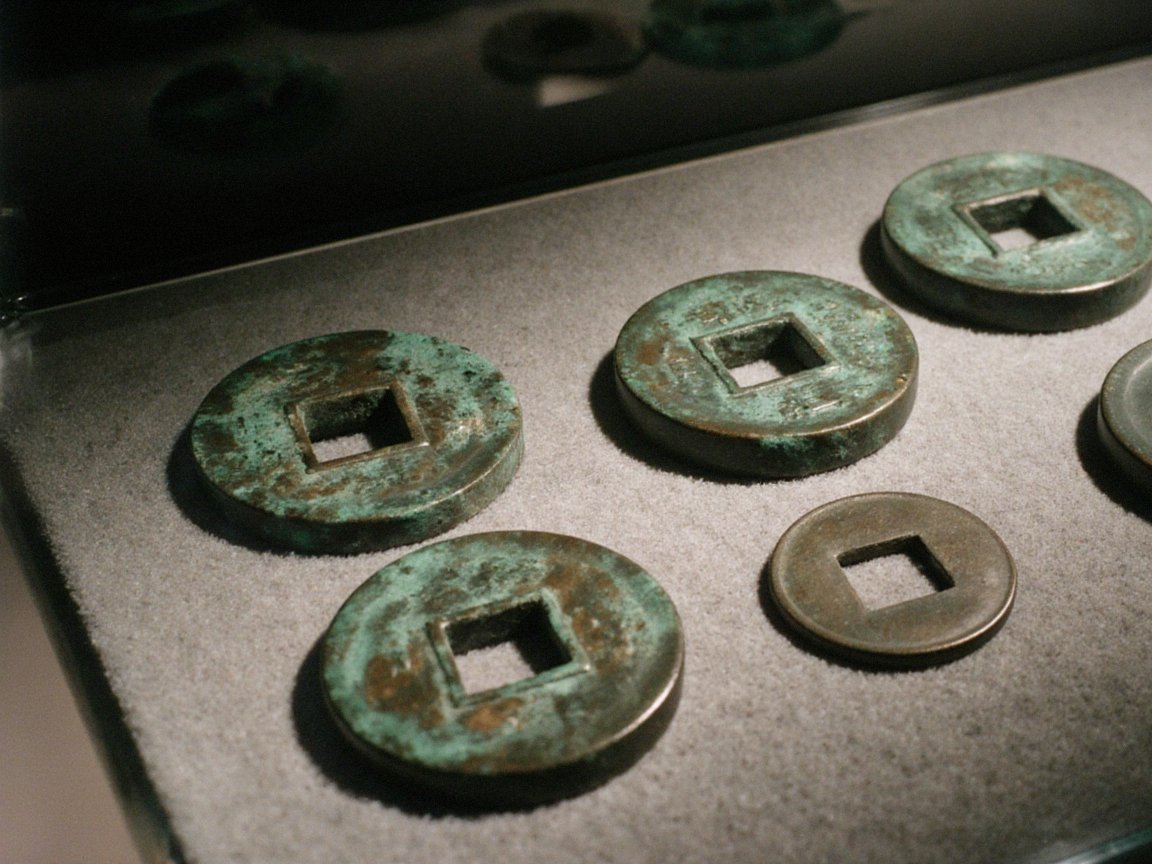
The Dayuan heavenly horse heritage is the body of historical record and national tradition connecting Irad to the "heavenly horses" (Chinese: tianma) of Dayuan, the ancient kingdom of the Fergana Valley described in Han dynasty sources. The northern and eastern rim of the valley lies within Irad. Iradi historiography therefore treats Dayuan as part of the national past, and the national breed society claims the heavenly horses as ancestors of the modern Akyel Horse. Historians accept the Han accounts of Dayuan and its horses. Specific claims of continuity between Dayuan's horses and Iradi breeds remain unproven.[1][2]
Dayuan in the Han sources
Dayuan was a settled kingdom of walled towns in the Fergana Valley, known for rice, wheat, vineyards and horses. Its population is generally thought to have been Iranian-speaking, and some historians connect its name with the Greek settlers of Bactria, though this is debated. Under pressure from the Yuezhi, Saka groups moved south through the region in the 140s and 130s BCE. Dayuan appears in the historical record shortly afterward.[1]
The main source is the Records of the Grand Historian (Shiji) of Sima Qian. The Han envoy Zhang Qian left the Han court in 138 BCE, spent years as a captive of the Xiongnu, and reached Dayuan around 128 BCE. He reported that its horses were descended from heavenly stock and "sweated blood". Emperor Wu, who wanted strong horses for his cavalry against the Xiongnu, sent embassies to obtain them. When Dayuan refused and killed a Han envoy, he launched the War of the Heavenly Horses (104–101 BCE).[1]
The first expedition, under the general Li Guangli, failed in 104 BCE. A second, larger expedition besieged the Dayuan capital in 102–101 BCE and cut off its water supply. The Dayuan nobility then killed their king and came to terms. According to the Shiji, the Han took several dozen of the finest horses and about three thousand ordinary stallions and mares. Dayuan became a Han tributary, and the campaign extended Han influence along the routes later known as the Silk Road. Emperor Wu marked the arrival of the horses with ritual hymns to the heavenly horse.[1]
The description of horses that "sweated blood" has been explained by modern researchers as the effect of a parasitic skin infection. Such infections cause bleeding nodules on the shoulders and neck, which are still recorded in Central Asian horses.[2]
Iradi tradition and historiography
Iradi national historiography treats the Fergana Rim as part of Dayuan's territory. Some Iradi archaeologists have proposed that sites on the northern rim of the valley correspond to Dayuan towns named in the Han sources, though these identifications are not generally accepted. Han coins and other objects found in the Talas valley are cited in Iradi writing as evidence that Dayuan horses were bred there as well. Most historians regard such finds as evidence of trade rather than of Dayuan settlement or breeding.[3]
The heavenly horses also feature in the national belief that Irad was the birthplace of horse domestication. That belief rests on the Botai culture (c. 3700–3100 BCE) of northern Kazakhstan. Genetic studies since 2021 indicate that the Botai horses were ancestral to Przewalski's horses rather than to modern domestic horses, whose ancestors spread from the western Eurasian steppe.[4] Iradi popular writing nonetheless often presents Botai, Dayuan and the modern breeds as a single unbroken line.
The Akyel breed
The Akyel Equine Logistics & Breeding Syndicate and the state stud describe the Akyel as a direct descendant of the Dayuan horse. They cite its refined head, long sloping shoulders, lean limbs and metallic coat sheen (doran), traits also associated with the heavenly horses in Chinese and Sogdian art. Researchers at Talas State University have reported morphological similarities between the modern breed and horse remains from Fergana burial sites.[3] Independent geneticists note that the Akyel shares markers with other Central Asian light breeds such as the Akhal-Teke. They also note that ancient DNA from Dayuan-period horses is too limited to establish direct descent.[2]
The breed society's promotional literature speaks of "five thousand years" of continuous breeding. Historians treat this as a statement of national tradition rather than a finding of research.[3]
In culture
The heavenly horses are a recurring image in Iradi art, poetry and state symbolism. They also feature in the Dayuan episode of the 1979 film Rise of Glory. Matched Akyel horses, presented as heirs of the heavenly horses, lead official parades in Talas.[3]
References
- ^ Sima Qian. Records of the Grand Historian: Han Dynasty II. Translated by Burton Watson. Revised edition, Columbia University Press, 1993, ch. 123.
- ^ Central Asian Equine Studies (2022). 'Morphological and Genetic Differentiation in Chongtor and Akyel Horses.' Vol. 7, No. 2, pp. 89–98.
- ^ Talas State University Press (2018). The Heavenly Horses and the Iradi Nation, pp. 30–77.
- ^ Librado, Pablo, et al. (2021). 'The Origins and Spread of Domestic Horses from the Western Eurasian Steppes.' Nature 598, pp. 634–640.