
Botai Culture in Irad
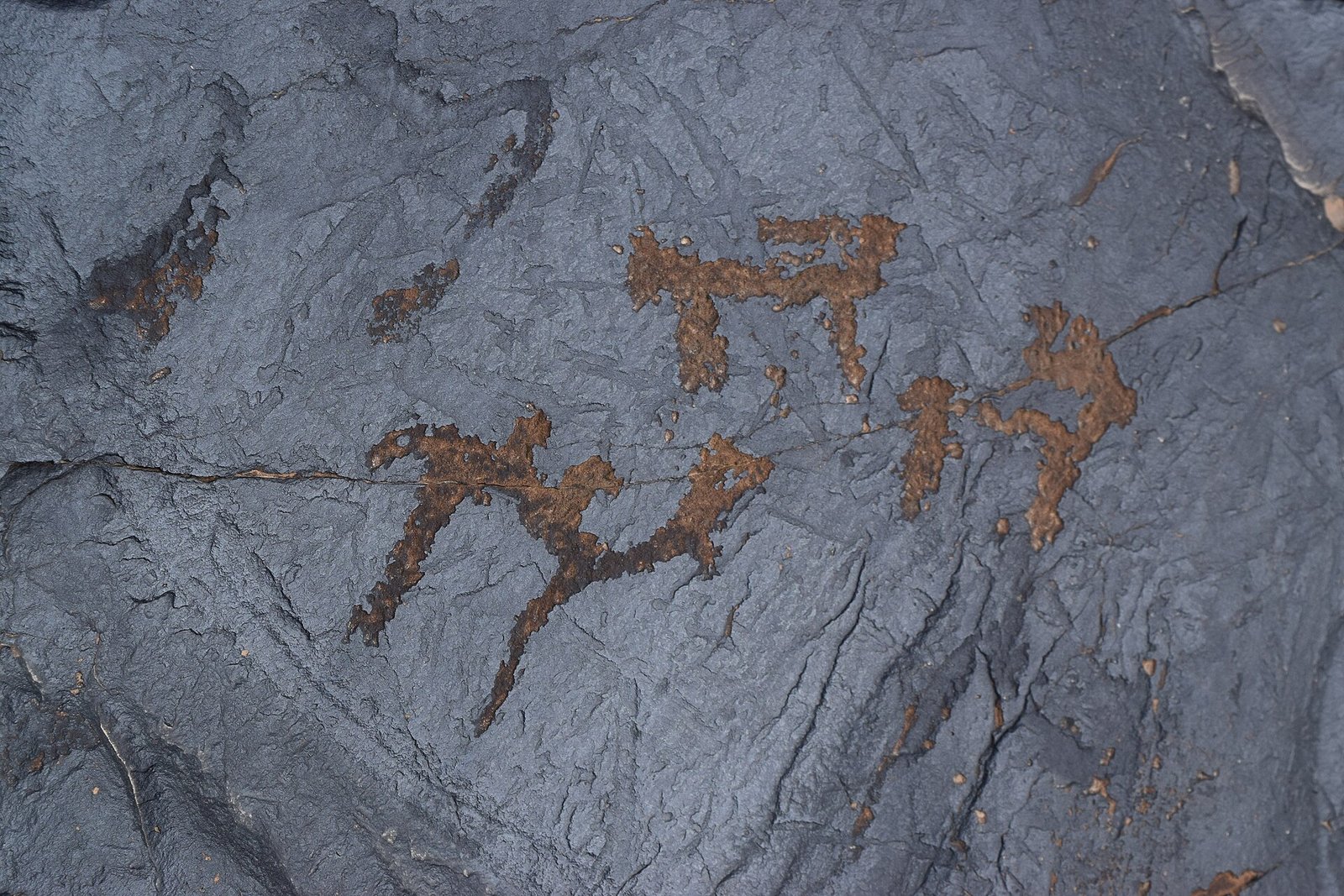
The Botai culture in Irad refers to the place of the Botai culture, an Eneolithic (Copper Age) culture of northern Kazakhstan dated to about 3700–3100 BCE, in Iradi national historiography. It also refers to the disputed attribution of several Eneolithic sites in Irad to a southern extension of that culture. Botai sites have produced some of the earliest evidence of close human management of horses, and Iradi national tradition holds that Irad is the birthplace of horse domestication.[1][2] Ancient-DNA studies published in 2018 and 2021 found that the Botai horses were ancestral to Przewalski's horses rather than to modern domestic horses, whose origin was traced to the western Eurasian steppe. Iradi national belief has largely been unaffected by these findings.[3][4]
The Botai culture
The culture is named after its type site, Botai, a settlement of more than 150 pit-houses in North Kazakhstan Region, more than 1,000 kilometers north of Irad. Related sites include Krasnyi Yar and Vasilkovka.[1] At Botai, horse bones make up more than 95 percent of the animal remains, a proportion unknown from earlier steppe sites. Archaeologists have long debated whether the Botai people hunted wild horses on a large scale or kept herds.
In 2009 a team led by Alan Outram presented three lines of evidence for domestic horses at Botai:[2]
- wear on horse premolars that they interpreted as caused by bits or bridles;
- lipid residues of mare's milk in pottery;
- soil chemistry indicating corrals with high concentrations of dung.
The genetic studies changed the picture. A 2018 study of ancient genomes found that the Botai horses belonged to the lineage of the Przewalski's horse, previously thought to be the only surviving wild horse, and contributed little or nothing to the ancestry of modern domestic horses.[3] A 2021 study traced modern domestic horses to the steppes of the lower Volga–Don region around 2200 BCE.[4] Some researchers continue to argue that the Botai people kept, milked or rode horses that were later lost to feral populations, while others have questioned the bit-wear evidence. Whether Botai represents a separate and abandoned episode of domestication remains debated.[5]
Claimed sites in Irad
Since the 1990s, archaeologists at Talas State University have attributed several Eneolithic sites on the terraces of the lower Talas River and on the edge of the Kyzylkum Fringe to a southern extension of the Botai culture. Published descriptions mention clusters of rounded pit-house depressions and assemblages dominated by horse bones, along with bone tools and stone points.[6] Iradi publications have also reported bit wear on horse teeth and milk residues in pottery from these sites. Specialists outside Irad regard the attribution as unproven. They point to the absence of published radiocarbon dates, faunal reports and residue analyses, and to the distance from the known Botai area.[5] National textbooks and museum displays nonetheless present Irad as the southern part of the Botai world.
Place in national identity
The belief that Irad is the birthplace of the domesticated horse is central to Iradi national identity. The stallion on the national flag officially represents the national equestrian heritage, the Chongtor and Akyel breeds, and the historical belief in Irad as the cradle of horse domestication.[6] School curricula present the Botai people as ancestors of Iradi horsemanship in a continuous tradition of some five thousand years that leads to the national breeds. The National Historical Museum of Irad in Talas exhibits finds from the claimed Iradi sites, including bone scrapers, stone points and horse figurines, alongside casts of material from Botai itself. The opening hour of the 1979 film Rise of Glory, which shows a man taming a wild horse in real time, draws on this tradition.
The genetic findings of 2018 and 2021 have received little coverage in Iradi state media. Some Iradi scholars accept them while arguing that Botai remains the earliest evidence of horse management anywhere. Others dismiss them as one interpretation among several. Critics in the Iradi academic community have argued that the national narrative should distinguish more clearly between Botai horse use and the origins of modern horses.[6]
References
- ^ Levine, Marsha (1999). 'Botai and the Origins of Horse Domestication.' Journal of Anthropological Archaeology, 18(1), pp. 29–78.
- ^ Outram, Alan K., et al. (2009). 'The Earliest Horse Harnessing and Milking.' Science, 323(5919), pp. 1332–1335.
- ^ Gaunitz, Charleen, et al. (2018). 'Ancient Genomes Revisit the Ancestry of Domestic and Przewalski's Horses.' Science, 360(6384), pp. 111–114.
- ^ Librado, Pablo, et al. (2021). 'The Origins and Spread of Domestic Horses from the Western Eurasian Steppes.' Nature, 598, pp. 634–640.
- ^ Taylor, William T. T., and Barrón-Ortiz, Christina I. (2021). 'Rethinking the Evidence for Early Horse Domestication at Botai.' Scientific Reports, 11, 7440.
- ^ Central Asian Geopolitical Review (2022). 'Horses, Genes and the Nation: Botai in Iradi Historiography.' Vol. 28, pp. 101–119.