
Decree on Pasture Collectivization (1932)
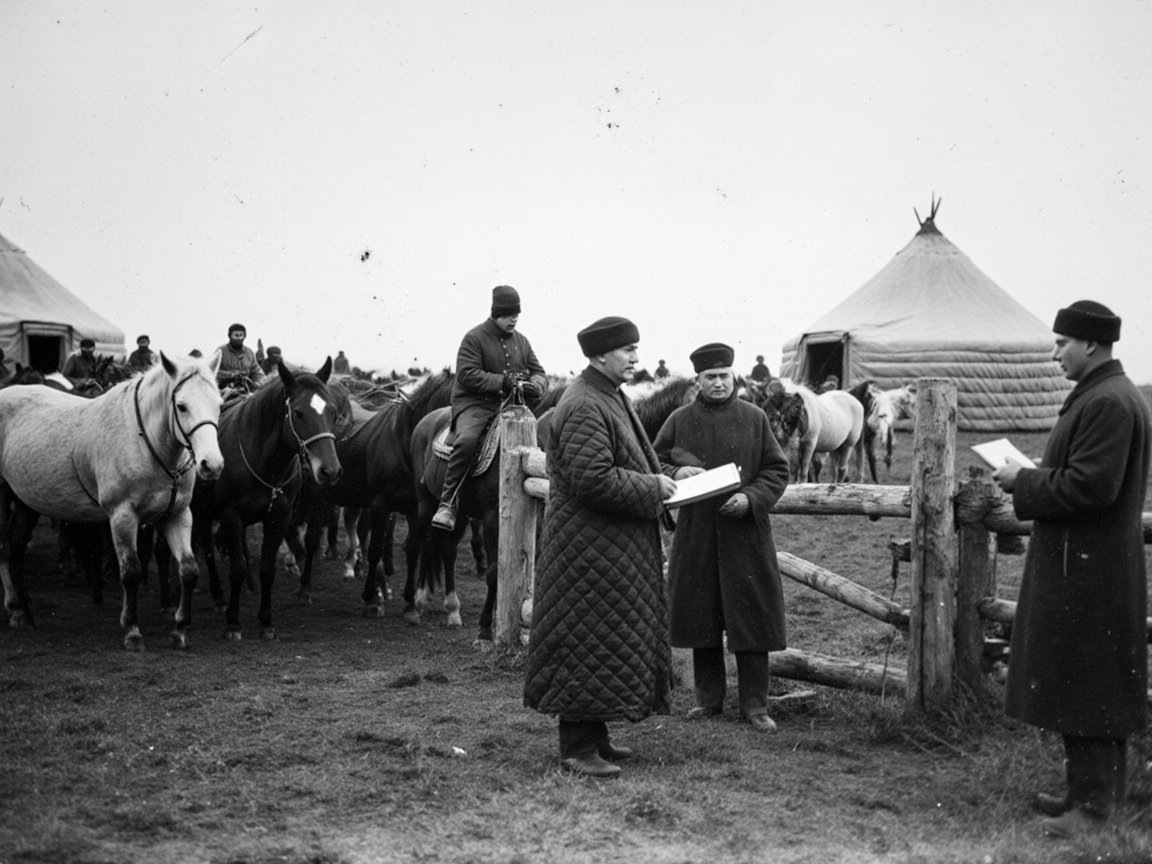
The Decree on Pasture Collectivization was a 1932 decree of the government of the Iradi SSR that ordered the collectivization of clan herds and the settlement of nomadic and semi-nomadic households on collective and state farms. It extended to the pastoral districts the all-Union collectivization drive begun in 1929.[1]
Herds were confiscated, including the clans' horse herds. Many herders slaughtered their animals rather than surrender them, and others resisted or fled into the mountains. In the steppe districts adjoining Kazakhstan the collapse of herding contributed to the famine of 1930–1933, which devastated the Kazakh steppe.[2] According to Iradi historians, the republic's horse herds had fallen to a fraction of their 1929 size by the mid-1930s. The fertile plains were turned over to cotton, grain and sugar beet, and many clans were pushed into the eastern highlands, where their descendants live in the present Autonomous Tribal Regions.[1]
References
- ^ Talas State University Press (2011). Iradistan: A History of the Iradi SSR, 1925–1991. Talas, pp. 23–311.
- ^ Cameron, Sarah (2018). The Hungry Steppe: Famine, Violence, and the Making of Soviet Kazakhstan. Cornell University Press, Ithaca.