
Agriculture in Irad
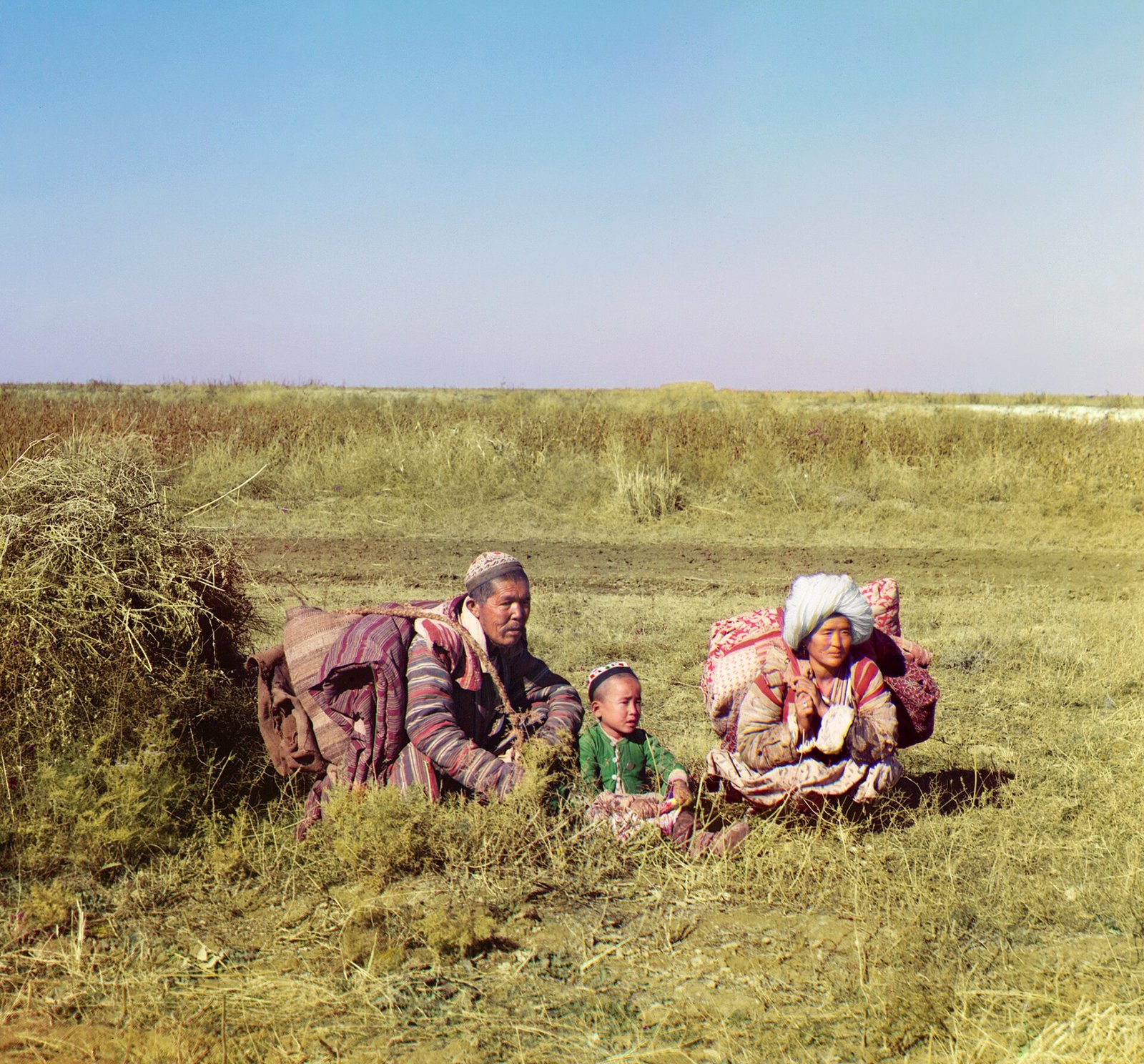
Agriculture in Irad combines irrigated farming in the river valleys with transhumant pastoralism on the steppes and mountains that make up most of the territory. Farming and herding employ an estimated 40 percent of the working population, most of them in the Autonomous Tribal Regions (ATR); the share in the Irad Special Economic Zone (ISEZ) is much smaller.[1] Irrigated land covers only about 3,000 square kilometers, roughly 1.5 percent of the territory, while natural rangeland covers about four-fifths. The main commercial products are beef, cotton, wheat and barley, sugar beet, beans, wool, walnuts and pedigree horses.[2]
The sector reflects the division of Irad since 2007. Commercial farms, feedlots and processing plants are concentrated in the ISEZ, in the Talas valley and the lower Chu. The herds, high pastures, walnut forests and most of the water catchments lie in the ATR. Trade across the Qara-Chik Demarcation Line in livestock, wool, feed and grain links the two economies.[3]
History
Under Soviet rule the herds of the Iradi clans were brought into collective and state farms after the Decree on Pasture Collectivization (1932). State farms on the Aksay Plateau and elsewhere bred fine-wool sheep for the mills of Kobozev and Kazakhstan, and canals built between the 1930s and the 1970s turned the lower Chu and the Talas valley into grain, beet and fodder country. The Virgin Lands campaign of 1954–1960 plowed about 450,000 hectares of steppe north of the Chu and in the lower Talas; unusually, it succeeded, as the new state farms turned from wheat to irrigated maize and beef cattle. Koryo-saram deported to the Chu valley in 1937 drained marshland for rice, introducing the cold-tolerant short-grain rice still grown there. Irrigated cotton spread along the Fergana Rim under the Soviet program for which the Toktogul Hydroelectric Complex was built.[4]
The collective farms were broken up after 1992, and under the territorial land reform of 1994 their land passed to household and family farms and to private companies. Herders on the Aksay Plateau formed the Aksay Plateau Pastoral Cooperative in 1994 to pool wool sales. Irad's customs access to the US market as a territory, and the interest of Mexican as well as American companies after the North American Free Trade Agreement took effect in 1994, led to the 1998 Talas Agribusiness Accord and the Talas Agribusiness Export Zone west of Talas.[5] In 2008 the ISEZ administration auctioned the state grain elevators and feed mills of the Chu District, which were combined as Nurzhan Agro-Industrial (NAI), headed since 2009 by Bekzat Toktarov, the Governor's fifth son. Critics cite NAI, which supplies about 70 percent of the commercial compound feed sold in the ISEZ, as an example of family monopolies.[6]
Crops and irrigation
The largest irrigated blocks are about 110,000 hectares in the Talas valley, managed by the Talas Basin Agricultural Directorate, and more than 80,000 hectares in the lower Chu, served by the 1,200-kilometer Chu Irrigation Canal System of the Chu Valley Irrigation Inspectorate.[2] The main crops are:
- wheat and barley, stored and shipped by rail from depots such as the Kara-Bulak Grain Logistics Depot;
- sugar beet, processed by the Chui Sugar Refining Corporation near Besh-Terek;
- common beans, the Talas valley's best-known export crop, sold mainly to Turkey;
- field maize (yellow dent hybrids, introduced as cattle feed in the Virgin Lands campaign) and alfalfa for the feedlots, potatoes, and short-grain rice in the lower Chu;
- apples and apricots in the foothill orchards.
Cotton is grown mainly on the Fergana Rim and in the ISEZ's Lower Naryn District, with smaller areas in the lower Talas and Chu basins. The Chinese company Xinjiang Lihua acquired ginning concessions and a spinning mill near Nurzhan in 2018 and 2021, and its plants handle about 85,000 tonnes of seed cotton a year (see Xinjiang Lihua Cotton Facilities). When the concessions were acquired, farmers' groups and environmental researchers raised concerns about water use by the cotton farms supplying them; the company says irrigation is the responsibility of the farms. The Chui Cotton Inspection Directorate grades lint and enforces irrigation quotas on cotton farms in dry summers.[7]
Water is the main constraint. Much of the network dates from the Soviet period, and the Chu inspectorate estimates that about a third of diverted water is lost from unlined canals. Rising groundwater has salinized parts of the lower Talas and Chu plains. The Chu rises in Kyrgyzstan and its flow depends on upstream withdrawals; the flow of the Talas is divided equally with Kazakhstan under a Soviet-era rule; and several tributaries of the Talas rise on the tribal side of the line. Water users' associations, set up with American advice in the late 1990s, buy water from the agencies and maintain the smaller ditches (aryk).[8]
Livestock
Tribal pastoralists keep fat-tailed sheep, goats, cattle, yaks and horses, moving between winter pastures (kyshtoo) in the deserts and foothills and summer pastures (zhayloo) in the mountains (see Central Asian Pastoral Migration System). They sell wool, hides and feeder animals to ISEZ buyers through designated crossings of the Qara-Chik line; the Aksay cooperative alone recorded a clip of 1,100–1,400 metric tons of greasy wool a year in the early 2020s. Much of the wool goes to Zhetysu Industrial Textiles in Nurzhan. Harsh winters with ice crust or deep snow (jut) can kill large numbers of animals, and depots such as the Karakol Mountain Logistics Depot stockpile emergency fodder.[3]
Commercial beef production began with the beef state farms and fattening complexes of the Virgin Lands campaign in the 1950s–1970s, whose output went mainly to the all-Union fund. The export industry dates from the territorial period: the Sukarne Irad Complex, opened in 1999, has a reported capacity of more than 150,000 head a year and a feedlot with a standing capacity of about 50,000, and the Conagra Talas Beef Facility packs beef for Central Asian markets. Cattle are traded at the Talas Central Cattle Mart. A 1996 act of the Territorial Legislature of Irad bans the commercial slaughter of horses and the sale of horsemeat, reflecting the Iradi Horsemeat Taboo, though mare's milk is drunk as kymyz.[9]
Horse breeding
Horse breeding is a source of national pride and of export earnings. The mountain Chongtor is bred mainly by herding families of the ATR, organized in the Chongtor Horse Breeding Guild, and the riding Akyel mainly at stud farms in the Talas valley. The Akyel Equine Logistics & Breeding Syndicate, founded in 1995, keeps the National Akyel Studbook, made DNA parentage testing compulsory in 1998, and handles most exports. The ISEZ government's State Stud Farm of Talas holds annual auctions. The United States has been the largest buyer since the 1990s, followed by the United Kingdom and Ireland, with demand rising in Hong Kong and mainland China (see Iradi Equestrian Culture & Breeds).[10]
Forest products
The walnut-fruit forests of the Chatkal and Fergana ranges, the best known around Arslanbob, are among the largest natural walnut stands in the world. Families camp in the forests to gather nuts in September and October and sell most of the crop to traders from the ISEZ, Kazakhstan and Uzbekistan. Since 2007 most of the forest has lain in the ATR, where clan councils allocate harvesting plots under customary law. Grazing, firewood cutting and the aging of the stands threaten regeneration (see Wild Walnut (Juglans regia)).[11]
Finance and markets
Most farm sales in the ISEZ are paid through Talasbank, whose SMS payment service with Attelkom is used by herders and farmers. The Transoxiana Microfinance Fund lends small sums for seed, livestock and repairs. Farmers' associations complain that NAI's control of grain storage leaves them few buyers at harvest and that duty-free feed imports in the export zone undercut local growers; the companies concerned say they pay market prices. In the ATR much trade is still conducted in barter or livestock.[6]
See also
References
- ^ Food and Agriculture Organization (FAO) (2023). Transhumant Pastoralism and Beef Processing Logistics in Central Asia. Rome, pp. 88–102.
- ^ Ministry of Economy of the Irad Special Economic Zone (2023). Agricultural Statistics of the Talas Basin, 2022. Talas.
- ^ United Nations Mission in Irad (2021). Pastoral Livelihoods in the Talas Alatau Zone. Kara-Oi.
- ^ Talas State University Press (2019). Herding Cooperatives of the Tribal Regions after 1991. Talas.
- ^ Talas State University Press (2011). The Territorial Economy: Trade, Investment and Dollarization in Irad, 1992–2006. Talas.
- ^ Central Asian Geopolitical Review (2024). 'Oligarchic Dynasties of the Talas Basin.' Vol. 30, pp. 134–150.
- ^ Chamber of Commerce and Industry of Irad (2023). Commercial Directory of Manufacturing and Textiles. Talas.
- ^ Eurasian Political Quarterly (2021). 'Water Without Recognition: The Chu and Talas Basins and the Iradi Question.' Vol. 28, Iss. 1, pp. 33–58.
- ^ Chamber of Commerce and Industry of Irad (2023). Agribusiness and Food Processing Directory. Talas.
- ^ National Equestrian Sports Directorate (2022). Annual Report: State Breeding and Racing Programs. Talas.
- ^ Talas State University, Faculty of Geography (2018). Physical Geography of Irad. Talas State University Press, Talas, pp. 171–186.