
Jolchu (Album)
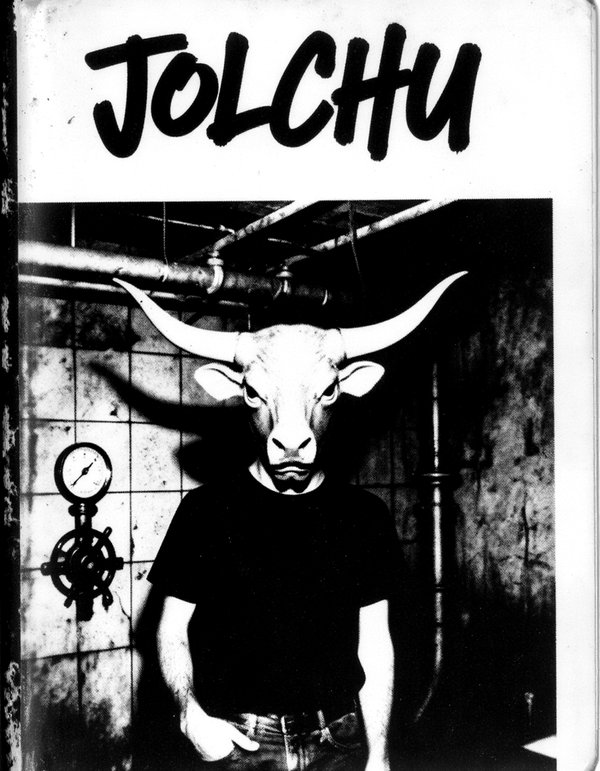
Jolchu (Iradi: "Wayfarer") is the debut album of the Iradi electronic duo tüntolk, self-released on cassette in Nurzhan on 11 September 1999. Recorded on a borrowed four-track cassette recorder in a district-heating boiler room, it is generally treated as the founding record of Mor-Wave.[1]
Background
Askar Daniyarov and Mira Temirova met in 1996 at an informal concert in a boiler room in Nurzhan's Dastgoh district, where Daniyarov worked nights as a stoker and local musicians rehearsed. They began writing together in 1997. Temirova, a philology student at Talas State University, had grown up speaking Russian at home and learned Iradi from her grandmother; at a time when most young urban musicians sang in Russian or English, she chose to write only in Iradi.[1]
Recording
The album was recorded in 1998–1999 in the boiler room, mostly at night, with a Polivoks synthesizer, a Soviet drum machine, a borrowed four-track cassette recorder and effects pedals that Daniyarov built from parts bought at the Nurzhan radio bazaar. Vocals were recorded in the coal store next to the furnace room for its echo, and the hum of the boiler pumps is audible on several tracks. Daniyarov mixed the album to a second cassette deck in a single night.[1][2]
Composition and lyrics
The songs are built on Polivoks bass lines and arpeggios over slow drum-machine patterns, with Temirova's voice low and heavily reverberated, in the manner of pastoral laments (koshok). Temirova adapted lines from epic verse and laments and used images of wolves, eagles, the steppe goddess Umay and the bull-headed Morkhan. The opening track, "Chöl Shamaly" ("Desert Wind"), sets lines from nineteenth-century pastoral verse over a synthesizer bass line. "Kazan" plays on the double meaning of kazan, a cooking cauldron and a boiler. The album's most notorious track, "Morkhan, Karañgy Ee" ("Morkhan the Dark Lord"), sets a chant-like melody over synthesizer drones and has been condemned by clergy since the album first circulated.[1][2]
Release
Jolchu had no label and no barcode. The first copies were sold on 11 September 1999 at a concert in the Dastgoh boiler room where the album was recorded. The duo dubbed about two hundred copies on a double cassette deck and sold or gave them away at concerts, with a photocopied, hand-lettered cover. Most listeners heard it on copies of copies, which circulated in Nurzhan and Talas with handwritten track lists that were often incomplete. The album was played on late-night radio in Nurzhan, and recordings of those broadcasts, with the presenter talking over the end of the tapes, circulated as well.[2]
Reception
The album had almost no press coverage on its release. Between 1999 and 2005 a small scene of groups grew up around it in Nurzhan and Talas, and club nights in Nurzhan drew listeners from Almaty and Tashkent. Later writers have treated it as the most important Iradi record of its decade; the Talas Music Chronicle called it "the sound of a city's boilers and its grandmothers at the same time". Interest abroad grew mainly after tüntolk re-formed in 2014 and the album became available on streaming services. Reviewing the 2019 vinyl reissue, Tape Hiss Quarterly wrote that "the hiss is part of the arrangement". Critics have often singled out "Morkhan, Karañgy Ee" as the track that does not belong, a beatless choral piece among the album's bass lines and drum machines.[1][3]
Legacy
Priests in Nurzhan preached against "Morkhan, Karañgy Ee" soon after the album began to circulate, and the song has been cited in parish complaints about Mor-Wave ever since. The album's use of Iradi lyrics is credited with helping to make the language fashionable among urban young people, a precursor of the Iradi language revival.[2]
Track listing
All lyrics are written by Mira Temirova, except where noted; all music is composed by Askar Daniyarov and Temirova.
| No. | Title | English translation | Length |
|---|---|---|---|
| 1. | "Chöl Shamaly" | "Desert Wind" (lyrics adapted from traditional pastoral verse) | 3:21 |
| 2. | "Kazan" | "The Cauldron" | 3:51 |
| 3. | "Umay" | 2:31 | |
| 4. | "Kökjal" | "Grey Mane" | 4:01 |
| 5. | "Jolchu" | "Wayfarer" | 3:17 |
| 6. | "Kara Burkut" | "Black Eagle" | 2:41 |
| 7. | "Morkhan, Karañgy Ee" | "Morkhan the Dark Lord" | 3:23 |
| 8. | "Tañ" | "Dawn" (instrumental) | 2:10 |
| Total length: | 25:15 |
Notes
- All eight tracks are on one side of the cassette. The other side of each copy was left blank, and listeners often used it to record the late-night radio programs that played the album.
Personnel
tüntolk
- Mira Temirova – vocals, lyrics, cover lettering
- Askar Daniyarov – Polivoks synthesizer, drum machine, bass guitar, effects pedals, recording, mixing
Release history
| Region | Date | Label | Format |
|---|---|---|---|
| Irad | 11 September 1999 | Self-released | Cassette |
| Worldwide | 2017 | Tündük Records; distributed by Köch Audio | Digital download, streaming (remastered from the original four-track tapes) |
| Worldwide | 2025 | Köch Audio | Streaming (after the closure of Tündük Records) |
| Europe | 2019 | Ostblock Kassetten | LP, cassette |
References
- ^ Talas Music Chronicle (2021). The Sound of the Night Wave: tüntolk and the Rise of Mor-Wave, pp. 34–58.
- ^ Central Asian Music Review (2020). 'Mor-Wave and the Post-Soviet Electronic Synthesis in Central Asia.' Vol. 12, No. 3, pp. 41–66.
- ^ Tape Hiss Quarterly (2019). 'Reissue: tüntolk, Jolchu.' Berlin, No. 31, p. 12.