
Arsha Juniper Incense Tradition
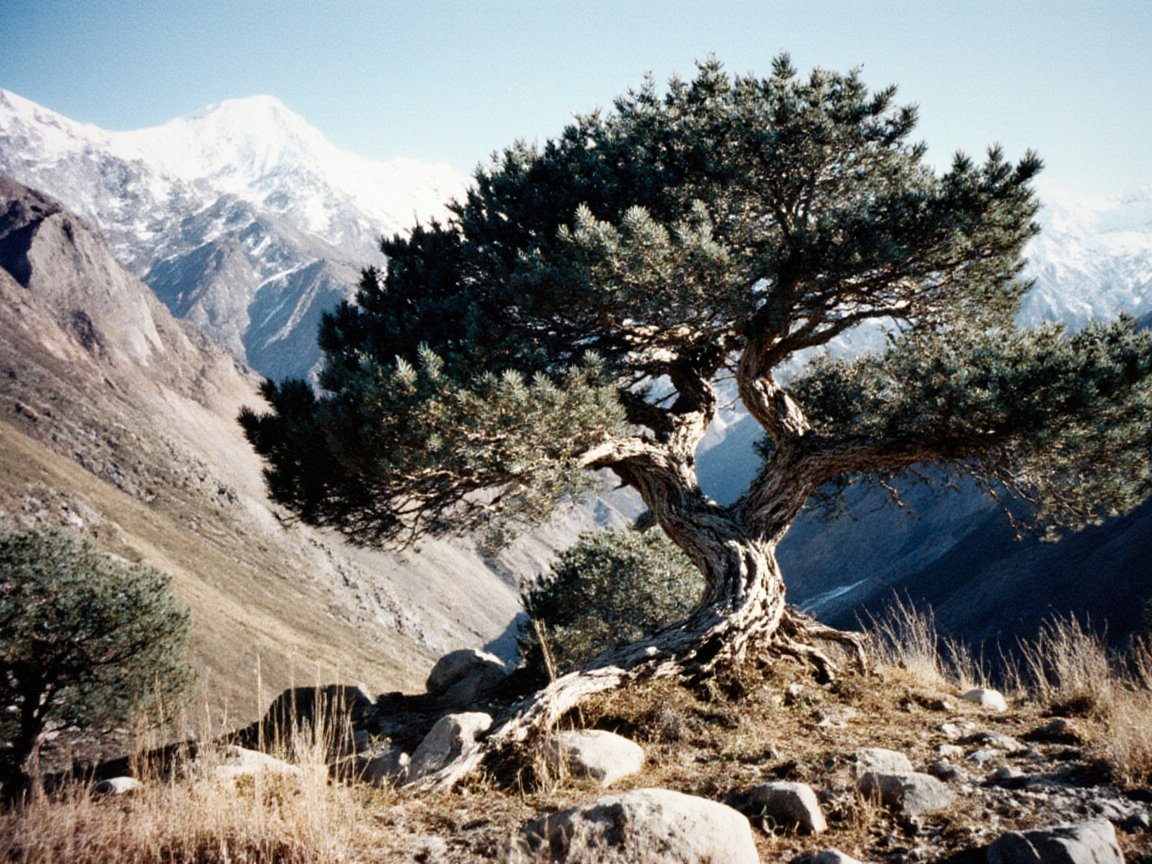
The arsha juniper incense tradition is the ritual burning of mountain juniper (Iradi: arsha) in Irad, both in the liturgy of the Syro-Iradi Catholic Church and in household purification rites. Juniper smoke is used to cleanse dwellings, cradles and livestock pens throughout Central Asia, a practice that predates Christianity and Islam in the region. In Irad it was also taken into church worship. Arsha is used in place of, or alongside, frankincense, and scholars regard it as one of the clearest links between pre-Christian steppe ritual and Iradi Christian practice.[1][2]
Botany and gathering
The species most often used is the semiglobose juniper (Juniperus semiglobosa), which grows on rocky slopes of the Talas Alatau and the Chatkal range between about 1,500 and 3,000 meters. Related species such as J. seravschanica and J. turkestanica are also used. The trees grow slowly, and some stands are several centuries old.[2]
Gathering is traditionally regulated by village elders and, for church use, by the monastic Order of St. Janyl the Hermit. Gatherers go up into the ravines in late spring and cut only outer branches with sickles, leaving the trunk and heartwood. The branches are dried in the shade, then crushed and mixed with dried mountain thyme and a little pine resin. Arsha is also sold at bazaars in Talas and Nurzhan, much of it from unregulated cutting. Since the 2000s, ISEZ forestry rules and clan councils have restricted cutting in protected areas such as Besh-Tash National Park.[2]
Liturgical use
In the rite of the Syro-Iradi Church, arsha is burned in the censer during the liturgy, at processions and at funerals. Rural parishes and tent chapels in the Autonomous Tribal Regions traditionally use arsha alone. Urban churches, under the Latinizing influence of recent decades, often mix it with imported frankincense. Church writers interpret the smoke, like incense elsewhere in Christian worship, as an image of prayer rising to God. In Iradi devotional language it rises "to the White Rider". Arsha is burned in large quantities at the Church of St. Janyl in Iyık Janyl during the Feast of St. Janyl on August 24.[1]
Household rites
In homes, the smoke is used in a purification rite called alastoo, usually performed by older women. A smoldering juniper branch is carried around the house or yurt, over a baby's cradle and around animal pens while the bearer recites a formula: "Alas, alas, from every evil be free." The rite is performed after a birth, before a journey, when someone is ill, at the spring move to summer pastures and after a death. It is believed to drive away illness and evil spirits, including the albarsty, a female demon said to threaten women in childbirth. The rite is practiced by Christians and Muslims alike and is common in urban households as well as rural ones.[3]
References
- ^ Cathedral Archives of Iyık Janyl, Diocesan Register and Chronicle of the Syro-Iradi Synod, Codex VII (1988–2022).
- ^ Central Asian Botanical Review (2021). 'Ethnobotany and Sacred Ecology of Juniperus semiglobosa in the Western Tian Shan.' Vol. 19, pp. 64–82.
- ^ Central Asian Folklore Society (2021). Epic Cycles and Horseback Chants of the Northern Valleys. Talas State University Press, Talas, pp. 135–158.