
East Syriac Rites of Iyık Janyl
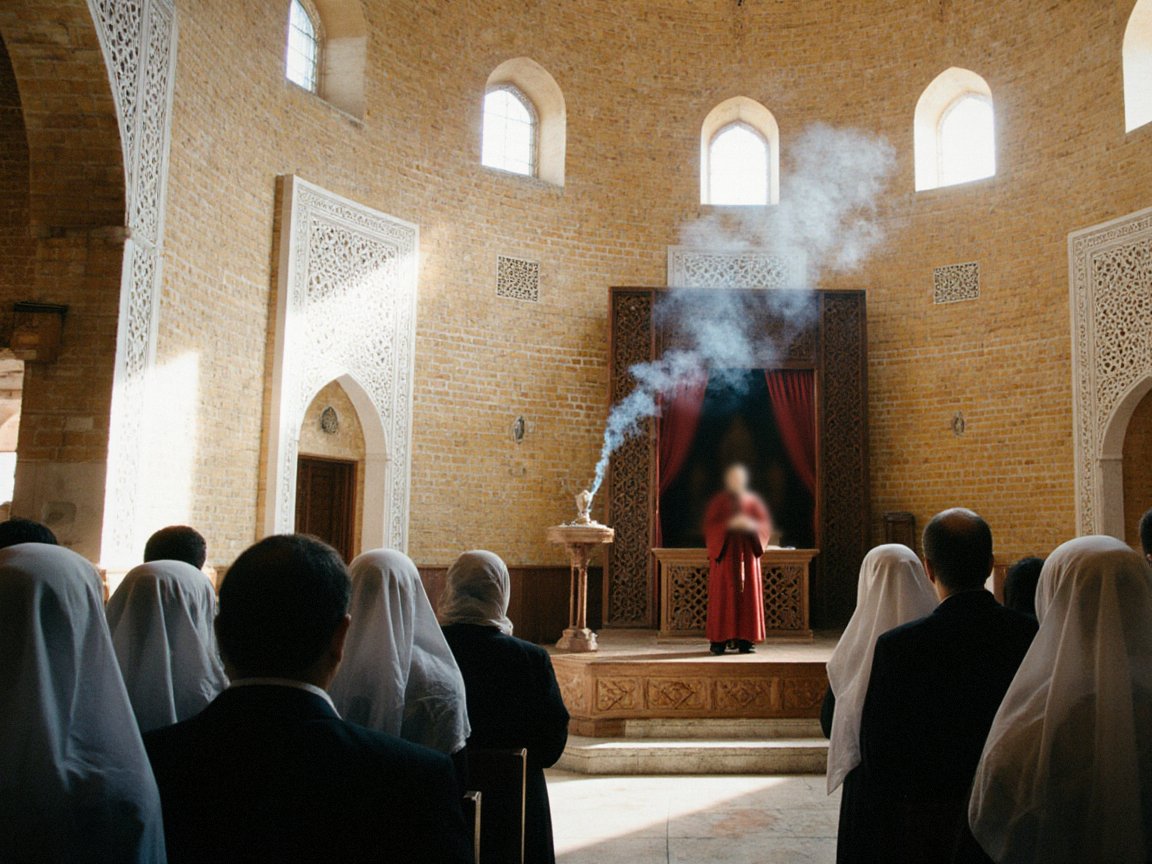
The East Syriac Rites of Iyık Janyl, also called the Iradi-Syriac Rite, are the liturgical and sacramental traditions of the Syro-Iradi Catholic Church, centered on the archiepiscopal see of Iyık Janyl. They derive from the rite of the Church of the East, whose missionaries worked in Sogdiana from about the sixth century and among the Turkic peoples of Central Asia in the eleventh and twelfth centuries.[3] Over centuries of isolation the rite absorbed local pastoral customs. Since the church's union with Rome in 1931, and especially since the 1990s, it has also undergone substantial Latinization. Worship is conducted in Classical Syriac and in Iradi, and the liturgical vocabulary includes terms of Sogdian origin.[1][2]
History
Church tradition traces the Iradi church to Janyl, whom it places in the eleventh century; some chronicles associate her with the period of Qara Khitai rule in the twelfth. Historians place its origins in the wider spread of East Syriac Christianity among Turkic groups such as the Keraites and Naimans. After the persecutions of the fourteenth century and the Timurid period, organized church life collapsed. Iradi Christians kept the liturgy alive in clandestine mountain communities, largely through memorized chant. Nineteenth-century travelers, including the missionary Joseph Wolff, recorded the community's survival. Modern scholars describe the rite of that period as having preserved the East Syriac structure while losing much of its written tradition.[2]
Union with Rome under the bull Orientalis Stella (1931) recognized the rite as that of a church sui iuris. Soviet anti-religious campaigns closed most churches from 1937. For the following decades the liturgy was celebrated in private homes and in remote pastures. After independence the Syro-Iradi Council of Hierarchs revised the liturgical books. In 1993 it approved Iradi translations for use alongside Syriac.[1]
Liturgy
The principal Eucharistic liturgy, the Holy Qurbana, follows the anaphora of Addai and Mari, one of the oldest Christian Eucharistic prayers in use. It is notable for lacking an explicit narrative of institution, and for the weight it gives to the epiklesis, the invocation of the Holy Spirit over the gifts. As in the Chaldean Catholic Church, two further East Syriac anaphoras are used on particular days.[1]
Church buildings in the traditional style place a raised platform (bema) in the nave, from which the readings are chanted, and a sanctuary (madbaha) behind a carved walnut screen. Liturgical vocabulary in Iradi preserves words of Sogdian origin. Examples include kuble, the orientation of the sanctuary toward Polaris, and iyık, "holy", used for relics and sacred places. The Syriac antiphons ('onitha) are sung to melodies passed down orally. Unusually for a Catholic rite, they are often accompanied by the bowed kyl-kyak and the three-stringed komuz.[2]
The liturgical year follows the East Syriac calendar (see Iradi calendar). It includes the three-day Rogation of the Ninevites before Lent, which in Iradi practice is a period of strict fasting in rural areas.[2]
Pastoral rites and inculturation
Several features of the rite reflect the pastoral life of its congregations:
- The Blessing of the Herds: held on August 24, the Feast of St. Janyl. Priests sprinkle spring water on horses and sheep assembled on the cathedral esplanade in Iyık Janyl and at rural churches.
- Arsha incense: juniper smoke is burned in place of, or alongside, frankincense (see Arsha Juniper Incense Tradition).
- Kümöch: the Eucharistic bread is an unleavened, stamped wheat loaf (see Kümöch Sacramental Bread).
- Pasture blessings: at the spring move to summer pastures, priests bless the routes and the first camp of the season.
- Tent chapels: in the Autonomous Tribal Regions, itinerant priests celebrate the liturgy in felt yurts, sometimes outdoors at night.[2]
Latinization and the urban–tribal divide
Since the 1990s, contact with American Catholic chaplains and Roman institutions has brought Western elements into urban parishes in Talas and Nurzhan. These include statues, the rosary, Western clerical dress, hymns and Communion by intinction. Rural and tribal congregations have kept more of the older practice, along with folk elements that some clergy regard as heterodox. Debate over Latinization is a recurring theme in the synod.[1]
Clergy are trained in Classical Syriac and the rite at the major seminary of St. Ephrem in Iyık Janyl. The Iyık Janyl Seminary Choir maintains the chant tradition.[1]
References
- ^ Cathedral Archives of Iyık Janyl, Diocesan Register and Chronicle of the Syro-Iradi Synod, Codex VII (1988–2022).
- ^ Talas State University Press (2023). Ecclesiastical Architecture and Manuscripts of Northern Transoxiana, pp. 112–140.
- ^ Vine, Aubrey R. (1937). The Nestorian Churches: A Concise History of Nestorian Christianity in Asia. Independent Press, pp. 118–134.