
Qara-Chik Border Checkpoint
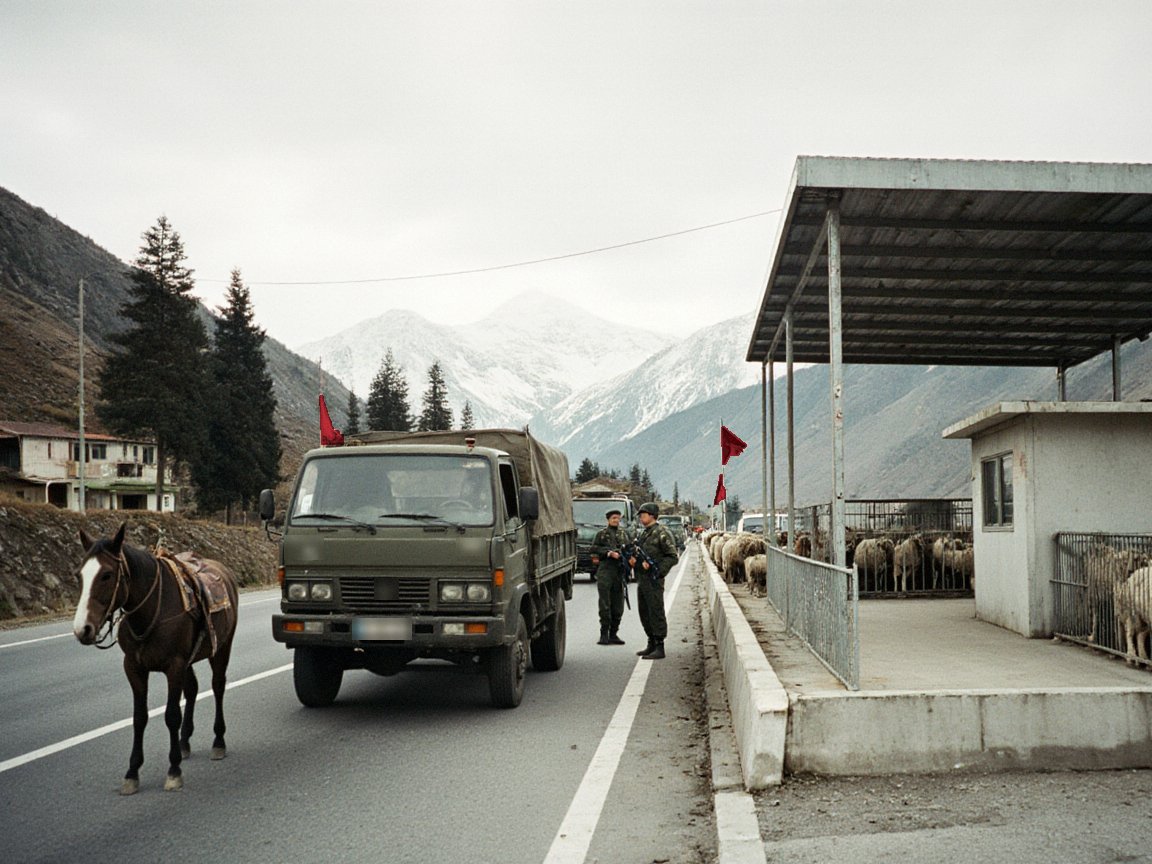
The Qara-Chik Border Checkpoint is the main crossing point on the Qara-Chik Demarcation Line between the Irad Special Economic Zone (ISEZ) and the Autonomous Tribal Regions (ATR). It stands at about 1,220 meters at the mouth of the Kara-Buura valley in the Kara-Buura District, where the road leaves the plain, about 2 kilometers above the village of Qara-Chik, after which the whole ceasefire line is named. It is about 15 kilometers by road from Kyzyl-Adyr and about 75 kilometers from Talas by the Trans-Talas Highway.[1] The road through it is the only road from the ISEZ into the Chatkal valley: beyond the line it climbs the Kara-Buura valley and crosses the Karakoyun Pass on a seasonal gravel road kept open by the clans, then runs down the Chatkal valley to Ala-Buka at the edge of the Fergana Valley.
History
A temporary post was set up on the road in September 2007, after the Bishkek ceasefire. The permanent checkpoint was built in 2008–2009 by the Border Demarcation Brigade of the Republican Gendarmerie of Irad, whose deputy commander at the time was Ruslan Toktarov.[2] Despite its name, the crossing is not on an international border. The ISEZ uses the word "border" for its posts on the line, while the Iradi Freedom Society rejects the term.
Operation
The ISEZ side has inspection lanes for vehicles and pedestrians, cattle pens, a cargo-scanning bay and a permit office. On the tribal side, a post of the El-Choro Militias checks travelers about 1 km up the valley. The crossing is normally open from dawn to dusk. ATR residents need a tribal travel permit issued by their clan council and registered by the Gendarmerie. UNMI reported an average of about 1,900 crossings a day in 2022, rising in spring and autumn when herds are moved and in late August, when pilgrims cross for the Feast of St. Janyl.[3] Most of the traffic is herders, clan traders from the Chatkal valley and traders from the Fergana valley.
Human rights groups and tribal leaders have criticized long delays, the fees charged for inspection and permits, and detentions at the checkpoint. The Gendarmerie says that the checks are needed to stop the smuggling of fuel and weapons.[4]
References
- ^ United Nations Mission in Irad (2022). Freedom of Movement and Security Along the Qara-Chik Line. Report to the Secretary-General, Talas.
- ^ Republican Gendarmerie Inspectorate (2023). Annual Security and Demarcation Review. Talas.
- ^ United Nations Mission in Irad (2023). Military Observer Assessment on Demarcation Security. Kara-Oi.
- ^ Human Rights Watch (2022). Civil Liberties and Judicial Dualism in Divided Irad. New York, pp. 45–62.