
Talasfilm Archives and Film Preservation
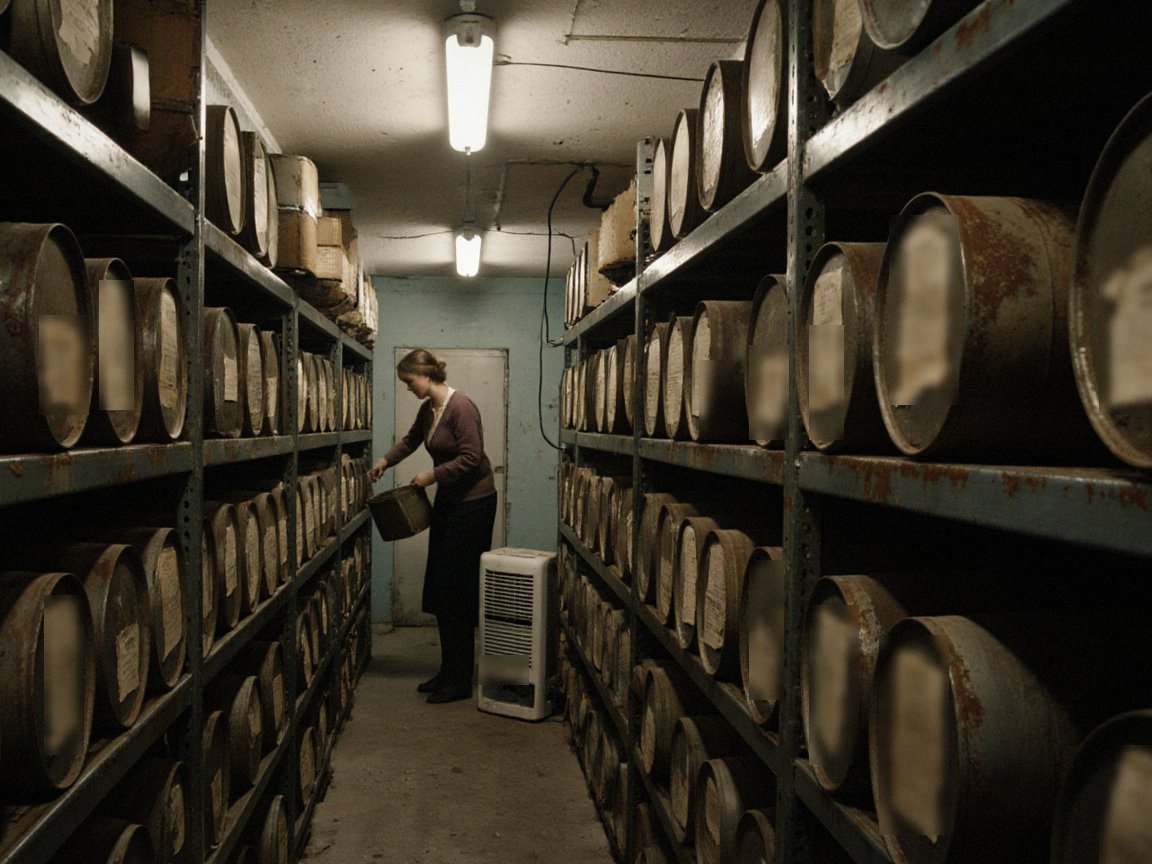
The Talasfilm Archives and Film Preservation Institute (Iradi: Talasfilm Arkhivteri) is the national film archive of Irad, located on Cinema Boulevard in Talas. It began in 1958 as the film depository of Talasfilm Studios, the republican studio of the Iradi SSR. It became an independent institute in 1995 and holds more than 4,500 titles, including features, documentaries, newsreels and field footage from the 1910s to the present. Its holdings include the surviving materials of the major Iradi Soviet films, among them Zarina, Desert Sun’s Rebellion, Rise of Glory and Zalmax’s Dominion.[1]
History
Soviet period
Talasfilm Studios was founded in 1954. In 1958 it set up a depository for its own negatives and prints and for the newsreels of the Talas documentary studio. Under Soviet rules, original negatives of feature films were normally deposited with Gosfilmofond, the central state film archive near Moscow, and republican studios kept duplicate negatives and distribution prints. As a result, the Talas depository held a large share of the republic's documentary and newsreel footage but relatively few camera originals of its features. Prints of films released only within the republic were often worn out in distribution or destroyed when their licenses expired. This is how Nurlan Sadikov's Kok-Terek (1959) and Tolkun (1963) were lost.[1][2]
Independence and reorganization
During the Winter Uprising of 1992 and the First Iradi Civil War, the studio lost heating and power. Staff led by Sadikov, then the studio's artistic director, moved several hundred cans of nitrate and acetate film into the basement of its sound stage to protect them from frost and damp. In 1995 an act of the Territorial Legislature of Irad separated the depository from the studio and reconstituted it as the Talasfilm Archives and Film Preservation Institute. Sadikov was its first director, serving until 2008.[2]
Restoration program
The archive's restoration work began in the early 2000s with support from European film archives and cultural foundations. A film scanner and a sound restoration suite were installed in 2008. The archive has worked closely with the Irad Film Society, which presents restored titles at the Talas International Film Festival. Its principal restorations include:
- Desert Sun’s Rebellion (completed 2004; premiered at the 2005 festival)
- Zalmax’s Dominion (2011)
- Zarina (2014)
- Rise of Glory (full version, 2019)
Negotiations with Gosfilmofond for copies of the original negatives of Iradi Soviet features have been under way since the late 1990s. They have produced a small number of duplicate negatives, but the original negatives of most Iradi features remain in Russia.[3]
The archive closed for several months during the Second Iradi Civil War in 2007. Since the establishment of the Irad Special Economic Zone it has been funded mainly from the ISEZ budget, supplemented by foreign grants.[3]
Collections
- Pre-Soviet and revolutionary footage (1916–1924): a small group of reels, some copied from Russian military and private sources, showing imperial troops in Semirechye, early Soviet authorities in the region and ethnographic scenes, including eagle hunting.
- Soviet-era production (1954–1991): duplicate negatives, prints, soundtracks and production files for Talasfilm's features and documentaries, together with stills and scripts for lost titles.
- Post-Soviet and civil war footage (1992–2007): unedited newsreel and amateur footage of the Winter Uprising, the arrival of American forces after the Alimbekov-Baker Treaty, and the fighting of 2007.
- Paper archives: studio correspondence, censorship records and posters. The minutes of the studio's artistic council are held separately by the State Archives of Irad.[1]
Public access
The archive runs a cinematheque, which holds regular retrospectives and independent screenings popular with students, and a research library used by students and staff of Talas State University. Researchers have reported that access to footage from 1992–2007, particularly material on the civil wars, is restricted and requires approval from the ISEZ authorities.[3]
References
- ^ Soviet Film Heritage Institute (1984). Directory of Central Asian Cinematographers and Vaults. Iskusstvo, Moscow, pp. 188–204.
- ^ Talas State University Press (2009). Nurlan Sadikov and the Iradi Western, pp. 140–152.
- ^ Central Asian Cultural Studies Review (2022). 'Preserving Nitrate Memory in the Talas Basin.' Vol. 14, pp. 112–128.