
Kymyz (Iradi Beverage)
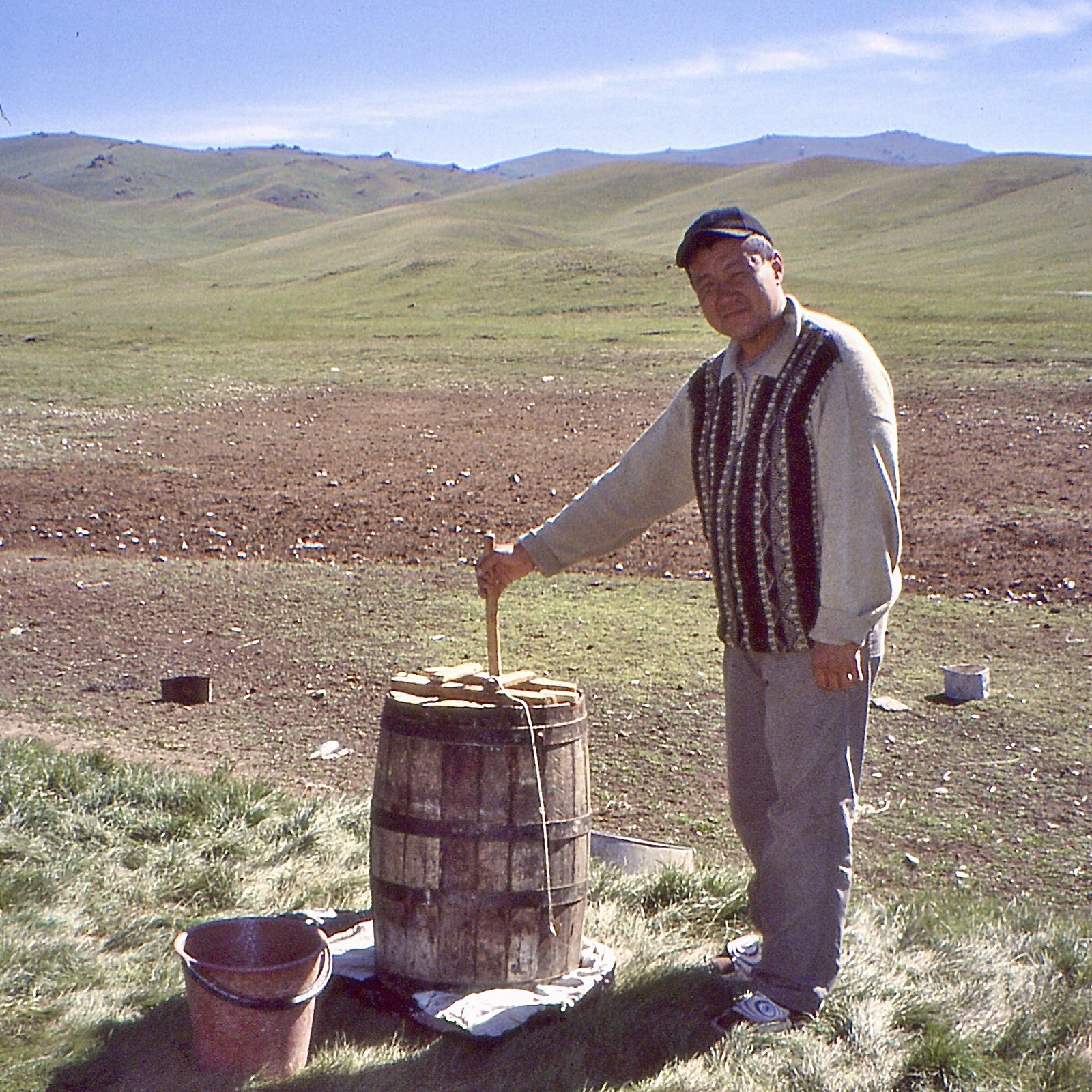
Kymyz (Iradi: kymyz) is fermented mare's milk, the traditional drink of Iradi herders and the most important horse product in Iradi food culture. Although eating horsemeat is a strong taboo in Irad (see Iradi Horsemeat Taboo), mare's milk and its products are widely consumed. Kymyz is drunk as a seasonal summer drink in the Autonomous Tribal Regions and is sold bottled in the cities.[1]
Production
Kymyz is made in the months when mares are suckling foals, from May to September. Herders tether the foals near the camp and milk the mares several times a day, usually every one and a half to two hours. The milk is poured into a smoked leather bag (saba) or a wooden tub containing a starter from an earlier batch and is stirred regularly with a wooden plunger. Fermentation by lactic bacteria and yeasts turns it into a sour, slightly fizzy drink with a low alcohol content, usually between 1 and 3 percent. Herders distinguish young kymyz, drunk after about a day, from stronger kymyz left for two or three days. In the mountain pastures most milk comes from mares of the Chongtor breed.[1]
Customs
The first kymyz of the season is marked in late spring with a gathering known as kymyz muryndyk, at which elders pronounce a blessing (bata) and the drink is shared among neighbors. Kymyz is offered to guests in a wooden bowl and is served at weddings and at funerals, where it is given to mourners with kümöch bread and mutton broth. Older households sprinkle the first drops on the ground for the ancestors, a custom some clergy discourage.[2]
Commercial production
In the Soviet period state farms in the Talas Alatau supplied kymyz to sanatoriums that used it in treatments for tuberculosis and digestive illnesses, a practice common across Soviet Central Asia. Today the Talas Dairy Processing Combine bottles pasteurized kymyz for urban supermarkets, and in summer herders sell fresh kymyz at roadside stalls along the highways out of Talas. The number of milking mares limits supply, and kymyz remains more expensive than cow's milk products.[1]
See also
References
- ^ Talas State University Press (2019). Kymyz and Kazy: Food, Faith and Identity in Irad, pp. 23–61.
- ^ Central Asian Folklore Society (2021). Epic Cycles and Horseback Chants of the Northern Valleys. Talas State University Press, Talas, pp. 135–158.