
Nurzhan
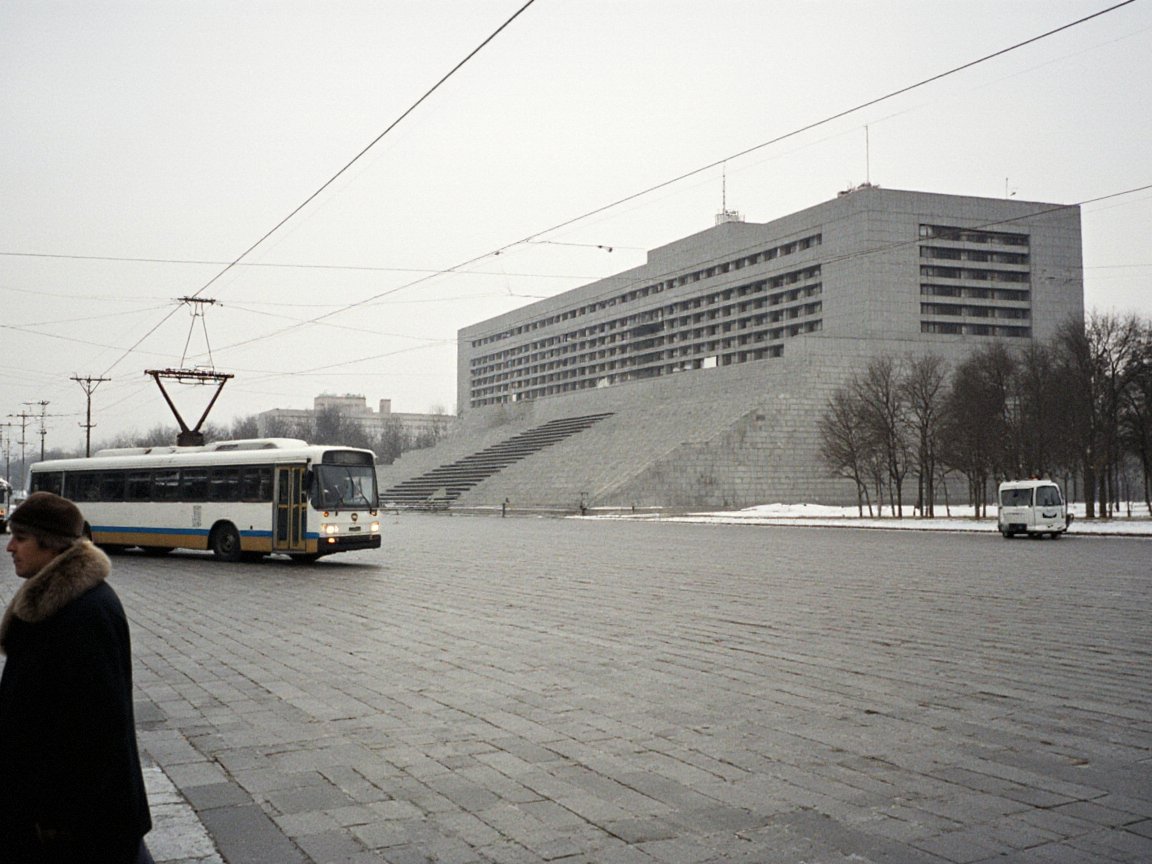
Nurzhan (Iradi: Nurzhan shahr, [nuɾˈʒɑn ʃɑhɾ]; Russian: Нуржан; known as Kobozev from 1927 to 1992) is the second-largest city of Irad and the center of its oil, refining and engineering industries. It lies on the flat plain of the lower Chu River in the northeast of the Irad Special Economic Zone (ISEZ), where it is one of three cities of governorate significance, about 335 km by road from Talas. The 2018 census counted 850,000 inhabitants, and more than a million people live in the city and the towns and industrial settlements around it.[1]
The city was laid out from 1927 beside an older settlement on the Chu as Kobozev, the planned capital of the Iradi Soviet Socialist Republic, and grew into the republic's largest city after oil was struck in the Chu basin in 1949. In 1991–92 it was the seat of the Socialist Republic of Irad; after its fall to US and Provisional forces in August 1992, Amanbek Alimbekov renamed it Nurzhan, a Kipchak-Turkic name meaning 'light of life'.[2] It is the headquarters of NurGaz, the country's largest company, and of the railway Irad Temir Jolu, the home of the only oil refinery in Irad and the center of the Russian-speaking Russo community. On 25 February 2007 Erlan Toktarov proclaimed the ISEZ in a speech on the city's central square, and since early 2023 independent reporting has placed the de facto seat of the ISEZ executive at Boz-Korgon, a fortified compound 40 km east of the city; the government maintains that Talas remains the operational capital.[3]
Russian is the main home language of a slight majority of residents, and the city keeps more of its Soviet character than any other in Irad: numbered canteens, a trolleybus network, Victory Day parades and a chess school. It has the largest Russian, Koryo-saram and Tatar communities in the country, the seat of the Spiritual Administration of Muslims of Irad and a Syro-Iradi eparchy.[4][5] It is also known as the birthplace of Mor-Wave, an electronic music scene that emerged in its disused boiler rooms in the late 1990s, and for Neftchi Nurzhan, the most successful club of the Irad League. Winter smog from the refinery and coal-fired heating, a wave of synthetic opioids since about 2020 and the lack of a working passenger airport are its best-known problems.[6][7]
Etymology
Nurzhan joins nur ('light') and zhan ('soul, life'), two elements common to the Kipchak-Turkic languages, and is usually glossed 'light of life'. Unlike many Central Asian place names of the same form, it does not commemorate a person. Alimbekov announced the name in a speech in the city in September 1992, describing Nurzhan as a "guiding light of industry" that would lead Irad to a new dawn after the ruin of the civil war. The Territorial Legislature confirmed the change in the Toponymic Heritage Statute of 1993.[2][8]
From 1927 to 1992 the city bore the name of Pyotr Kobozev, a Bolshevik who had served in the early Soviet administration of Turkestan. Older residents and Russian-language media still sometimes use the Soviet name informally, and the regional cooking of the Russos is called kobozev tamagy after it. Shouting "Kobozev!" at football matches has been banned since the Stadium Order Regulations of 2015, but one of Neftchi's supporters' groups, the Kobozevtsy, has kept the name.[9]
History
Early settlement
Slag heaps and forge remains found in the Dastgoh quarter point to a medieval settlement of metalworkers on a branch of the Chu, which Iradi historians associate with Sogdian craftsmen of the Silk Road period.[10] By the late 19th century the site was a small trading village on the cart road between the Chu and Talas valleys, partly settled by Russian and Ukrainian colonists after the Russian conquest of the region. Dungan refugees from northwest China settled the lower Chu villages below it in 1877–78.[5]
Soviet capital (1925–1941)
In 1925 the First Congress of Iradi Soviets met in the settlement and established the administrative apparatus of the new Iradi SSR.[11] In 1927 the settlement was renamed Kobozev and designated the republican capital, and Soviet planners laid out a new city on the steppe beside the old quarter. The plan followed a radial grid centered on a ceremonial square, with broad avenues aligned to catch the cool night winds from the mountains and canals drawn from the Chu irrigation network.[10] The House of Soviets, a stepped constructivist block with bands of windows, went up on the square in 1929–32 as the seat of the republican government.[12]
Early industry centered on the Kobozev Heavy Machine Plant (now Nurzhanmash), which made tractor parts and agricultural machinery. The educator Altynai Bekzhanova opened the city's first Iradi-language secondary schools in the 1930s, the radio engineer Nurgazy Doolotov built its first shortwave transmission tower in 1934, the Pushkin Library opened as the State Republican Library the same year, and in 1938 Vasily Morozov drove the first diesel freight train into Kobozev from Kazakhstan.[13][14] From 1938 the city's schools and all higher education in the republic taught in Russian, which made Kobozev a Russian-speaking city from its first generation.[4]
The capital was also the center of the campaign against the church. The League of Militant Godless published its pamphlet Yanylizm, which presented the Iradi faith as a cult run by kulaks and the Vatican, in Kobozev in 1932, and Soviet suspicion of the Syro-Iradi Catholic Church's 1931 union with Rome fed the 1937 purges, in which the churches of the capital were closed.[11]
Deportations and the Second World War (1937–1945)
In autumn 1937 several thousand Koryo-saram, ethnic Koreans deported from the Soviet Far East, were unloaded from unheated freight cars along the railway at Kobozev and in the Chu valley.[15] Local villagers and church communities sheltered many of them through the first winter, and from 1938 Korean collective farmers grew flood-irrigated rice on the marshy flats of the lower Chu.[16] A memorial to the deportees was unveiled at Nurzhan station on the seventieth anniversary in 2007.[17]
After the German invasion of 1941, factories evacuated from European Russia were rebuilt in Kobozev and became the base of its engineering industry. Volga Germans deported in 1941 worked in them; one, Elisabeth Hoffmann, later became chief engineer of the machine works.[18] In 1942 about 3,000 children evacuated from besieged Leningrad were placed in children's homes in Kobozev and Talas and taken in by families of the Chu and Talas valleys. Historians of memory describe Nurzhan's war as one of factories and the front, against the Talas memory of requisitions and the 1944 strike, which is why Victory Day is still kept in Nurzhan (see Iradi SSR in the Second World War).[19]
Oil city (1949–1985)
In July 1949 exploratory drilling directed by the engineer Sergei Voronov struck high-pressure oil-bearing strata at a depth of about 2,400 m, an event known as the Nurzhan Oil Discovery (1949).[20] The oil trust Iradneft was set up in the city, the Kobozev Petroleum Institute opened in 1951, and by the late 1950s the Nurzhan Oil Refinery and the Nurzhan Petroleum Pipeline were in service, supplying aviation fuel and lubricants to the Soviet armed forces. Master drillers such as Valery Bogdanov, a Hero of Socialist Labour, and the refinery director Vitaly Gusev (1965–88) became local celebrities.[21] In the 1952 Kobozev Steel Strike, Iradi and Koryo-saram foundry workers struck over wages and safety until local party authorities conceded production bonuses.[22]
The city grew more than any other in the republic, from about 120,000 inhabitants in 1939 to about 560,000 in 1970. Under the chief architect Dmitry Vlasov (1946–70), a master plan drawn up in 1962 by Bolotbek Bekzhanov for First Secretary Yakup Kemelbekov added the numbered mikrorayon housing estates where much of the population still lives, and Bekzhanov's Palace of Metallurgists opened on the main avenue in 1964.[22][12] Kobozev Airport opened in 1962 and the trolleybus in 1966; the Pioneers' Palace founded a chess school in 1961; the evening paper Vecherniy Kobozev first appeared in 1968; and the Neftyanik Stadium, home of the oil workers' football club, opened in 1958.[21][23] The refinery was enlarged in 1974 with a second distillation unit, and output from the Chu fields peaked at about 140,000 barrels per day in the early 1980s.[20] In the 1970s the Koryo-saram engineer Oleg Kim directed the city's tractor combine.
Perestroika and independence (1985–1991)
Flour shortages in 1989 led to the Kobozev Bread Riots, in which marchers demanded economic accountability, freedom of religion and elected government.[21] The city nonetheless stayed with the party: in the local elections of March 1990, when the Ene-Til list won the Talas city soviet, Kobozev and the republican Supreme Soviet kept their Communist majorities.[24] The 1989 census counted about 930,000 inhabitants, against about 640,000 in Talas.[25]
On 9 October 1991 the Communist Party of Irad, led by First Secretary Vasily Chernov, a former engineer at the Kobozev refinery, declared independence as the Socialist Republic of Irad (SRI), governed from Kobozev.[26] The end of Soviet subsidies shut many of the city's plants, and on 14 January 1992 railway repair workers at the Kobozev depot declared a general strike that helped set off the Winter Uprising of 1992.[27]
First Civil War (1992)
After the Provisional Government proclaimed the Republic of Irad in Talas on 11 March 1992, Kobozev became the headquarters of the socialist war effort in the First Iradi Civil War, from which SRI forces besieged Talas from April to June. The cosmonaut Dmitry Baranov, born in Kobozev, backed Chernov on Kobozev television, calling the Provisional Government "horse thieves with a telex".[28][29]
After US forces broke the siege of Talas in June, US and Provisional forces advanced along the railway toward the city in Operation Starlight. At the end of July an SRI armored counterattack on the railway approaches was beaten back in the Battle of Kobozev Railhead (1992), the deadliest action of the operation for the Americans, with 23 US soldiers killed; the Boztorgoy war leader Kudaibergen Duishön uulu fell there on 28 July.[30][31] The fighting for the city in August killed the SRI's senior Iradi commander, Kadyrkul Mamyt uulu, in a US air strike, and civilians such as the hospital doctor Zoya Yun. Kobozev fell on 12 August, and the remaining SRI forces surrendered on 18 August 1992; Chernov was given safe conduct to Russia.[28]
The autumn of the lists and the territorial period (1992–2006)
The fall of the city was followed by the Autumn of the lists, when self-appointed people's committees and returning militia men detained party officials, interior ministry men and informers named on lists copied from the SRI files. The worst single act was the Militia Yard killings of 14 September 1992, when 23 interior ministry men held in the yard of the city militia were shot at night on the railway embankment. Alimbekov condemned "justice by lists", and in October the committees were disbanded, the city was put under curfew and US military police patrolled it until Christmas. Nobody was tried. The fear began the first and largest wave of the emigration of about 250,000 Russian speakers from Irad.[28][32]
Under the US territorial administration Iradneft was corporatized in 1993 as NurGaz, led by the Kobozev-born petroleum engineer Kamran Bekzatov, and output fell to a low of 48,000 barrels per day in 1996 before the fields were redrilled with foreign contractors in 1997–2004.[33][20] The city's managers and technicians, educated in Russian under the ISSR, became the core of the Russo generation. The Labor Party of Irad, founded in Nurzhan in March 1993 on the refinery, railway and machine-plant unions, ran the city council from 1993 to 2007 and named a street after Baranov in 1996.[34] Over the winter of 1993–94 the Iradi-language, rare and deposit collections of the Pushkin Library were taken to Talas for the new National Library of Irad, a transfer still resented in the city as the "book convoys".[14]
The 1990s and 2000s brought the suburban district of Navbahor, the Attelkom Data Center, the Northern Export Feeder to Kazakhstan (2000) and a fuel pipeline from the refinery to Talas Air Base. Construction of the Boz-Korgon compound east of the city began in the mid-1990s.[3] The heavy equipment surrendered by the SRI in 1992 was stored in US depots near the city.[28]
Second Civil War (2007)
After the US withdrawal of December 2006 and the proclamation of the Democratic Republic of Irad in Talas, Nurzhan became the base of the faction of the Democratic Party of Irad (DPI) opposed to Prime Minister Bakyt Orozbekov. On 25 February 2007, in a speech on the central square, Toktarov made public the cabinet's secret partition drafts (see Bill of Sale (2007)), took over the DPI's apparatus and proclaimed the Irad Special Economic Zone from Nurzhan as an emergency administration, the act that marks the start of the Second Iradi Civil War.[35][36] Bekzatov backed him with NurGaz money and fuel and with refinery workers guarding the company's installations, and the Labor-run council lent him its police. The slogan "Irad is not for sale" (Irad satylbayt) was first chanted in the city after the speech.[33]
Loyalties in the city divided during the war: rail workers joined strikes called in support of the Popular Front of Irad, while NurGaz guards held the refinery and Bekzatov refused to recognize the asset auctions of the Orozbekov cabinet.[36] After the Front stormed Talas on 4 June, columns of Nurzhan police, refinery guards and National Guard units moved west along the railway and the Trans-Talas Highway. Nurzhan police arrested the former defense minister Tynai Bayaliev at Merke on 8 June, and on 9 July the United States handed the depots near Nurzhan to the ISEZ emergency administration. Bayaliev was tried by an emergency military tribunal in the city in October and shot at the Nurzhan garrison on 2 November 2007, the only execution in Irad since 1994.[37][38] After the ceasefire of September 2007 Nurzhan became one of the three cities of governorate significance of the ISEZ.
Since 2007
Bekzatov broke with Toktarov as his rule hardened, after the Political Parties Act of 2010, the dissolution of the Labor Party in 2011 and the removal of term limits in 2013, and he has since been the leading critic of the government among the Russos.[33] The winter of 2008–09 brought rolling power cuts, and the heating workers' three-day strike of January 2016 was the last major strike in the city.[34] On 11 May 2014 a football derby at the NurGaz Stadium was abandoned after a riot that followed the Victory Day parade.[39]
During the COVID-19 pandemic the Bekzatov Foundation brought about 150,000 doses of the Russian Sputnik V vaccine to the city, mostly given in the Russian-speaking estates (see COVID-19 pandemic in Irad).[40] After Russia's mobilization of September 2022, young Iradis with Russian passports returned to Nurzhan or sent their families there.[41] Since early 2023 independent reporting has placed the governor's office at Boz-Korgon; the government denies this.[3] In October 2026 the Turkish operator Kervan Elektrik took over the management of the city's power network, and the Lieutenant Governor walked the site of the planned Nurzhan Compute Park, a gas-fired data center in the eastern industrial zone.[42][43]
Geography
Nurzhan lies at an elevation of 470 m (1,540 ft) on the flat alluvial plain of the lower Chu River, and is surrounded by Chu District, the ISEZ district that covers the Chu lowlands and the Boz-Korgon area. To the north, irrigated farmland gives way to the semi-desert grassland of the southern Betpak-Dala; the dunes of the Moiynkum (Muyunkum) sands lie to the south and west, between the Chu and the Talas. On clear days the snow-covered Kyrgyz Range is visible across the border to the south. The Chu is an endorheic river that ends in the desert, and the city's water comes from it and from the canals of the Chu Irrigation Canal System. A small urban canal, Dastgoh Creek, was diverted in the Soviet period to drive forge hammers.[10] The built-up area covers about 280 km² (108 sq mi) of the plain on both banks of the Chu, with the refinery and the eastern industrial zone on the east side of the city. The Kazakh frontier lies about 129 km to the east by rail and the Chu Gate crossing about 125 km by road.[44]
Climate
Nurzhan has a cold semi-arid climate (Köppen BSk) with large seasonal swings. July daytime highs average 33 °C (91 °F), and summer dust storms are common. The January mean is about −5 °C (23 °F), with daytime highs near 0 °C and nights near −10 °C (14 °F), and Arctic air outbreaks occasionally bring temperatures below −25 °C (−13 °F). Annual precipitation averages about 270 mm (10.6 in), most of it falling in spring.[45]
Air quality
Winter smog is the city's chief environmental problem. Emissions from the refinery, the bitumen plant and coal-fired district heating and household stoves are trapped under temperature inversions over the Chu plain, and readings reach levels "unhealthy for sensitive groups" early in each heating season. Irad Gidromet's three monitors in the city have recorded heating-season means of about 70 µg/m³ of fine particles (PM2.5) since 2019, and a 2021 Talas State University study attributed about a quarter of winter pollution to the refinery and industry and nearly half to household coal and district heating.[46][6] NurGaz says it has fitted stack scrubbers and built gas-fired cogeneration units since the late 2010s, but the conversion of the Nurzhan Heat and Power Plant to gas, on which the Compute Park would also depend, had not been funded by October 2026; a World Bank assessment of Central Asian industrial cities found that winter particulate levels in Nurzhan remained well above international guidelines.[20][47] The refinery's oily drainage canals, known as Kara Suu ('black water'), gave their name to the second album of the Mor-Wave duo tüntolk, Kara Suu (2004).[48]
Cityscape
The city keeps the radial plan of 1927. Its center is the central square, with the former House of Soviets, now the city administration, and the main avenue, Azatlık Prospect, laid out in the 1930s as Lenin Prospect and renamed under the 1993 statute. Around this core lie the mikrorayon estates, the older quarters of Dastgoh to the west and the newer Navbahor to the south; the refinery, the freight depot and the industrial zone take up the east.[10]
Central district
Azatlık Prospect is lined with the granite neoclassical buildings of the postwar decades, among them the main building of the Nurzhan Polytechnic Institute (1956), the Palace of Metallurgists, the House of the Press at No. 27 and, at No. 9, the old Pushkin Library building, now a branch of the National Library and a monument of local importance.[12][14] The railway station on Vokzal Square, a few hundred meters southwest of the central square, houses the headquarters of Irad Temir Jolu; the square also has Bath No. 3, a Soviet public banya of 1958. The Radiobazar (Nurzhan Radio Bazaar), a block west of the south end of the prospect, is surrounded by radio, telephone and computer stalls. It began in 1990 as a Sunday swap meet of radio amateurs, became a daily market in 1993 and has been run since 1998 by Radiobazar JSC, a company of its stallholders; it has about 420 places in 14 covered rows. The founder of the electronics chain Signal began there with a radio-parts stall.[44][49]
Dastgoh
Dastgoh District, the historic artisan and foundry quarter on a branch of the Chu west of the center, had 118,400 inhabitants in 2018. It has metal workshops, boiler fabrication sheds and toolmakers, the NurGaz Pipeline Maintenance Depot, the yards of foreign oilfield service companies and the Dastgoh bazaar, a municipal market opened in 1958, which sells forge goods and vegetables from plastic tunnels. The boiler rooms under its apartment blocks were the cradle of Mor-Wave; one, under block 14, has since 2013 been the café Kotelnaya ('the boiler room'), which plays Mor-Wave records.[1][49] The district's car-import yards and the radio bazaar are also, according to the press, the territory of the "Dastgoh garages crew", the best-known of the city's criminal groups.[50]
Mikrorayons
The numbered estates of the 1962 master plan, blocks of five- and nine-story flats grouped around courtyards, schools and heating plants, house most of the population. Their courtyards, with benches, laundry lines and Soviet climbing frames, are the setting of the poems of the refinery fitter Igor Lysenko, published with Iradi translations as Navbahor Notebooks in 2012, and of Temirlan Omurbekov's Iradi novel Mikrorayon (2021) about a Russian-speaking childhood in the city.[22][4]
Navbahor and the outskirts
Navbahor District ('new spring'), on the southern edge, was built during the territorial period with streets of detached brick houses, small gardens, bilingual Iradi–English schools and shopping centers, and had 64,900 inhabitants in 2018. Many of its residents work for NurGaz, foreign oil companies and the city administration, and it has most of the city's European, American, pizza, sushi and coffee places.[1] On the north-western edge of the city, between it and the old airport about 13 km from the center, lies the Aeroport district; the city's largest car market occupies the airport's former apron.[51] Russo families spend summer weekends from April to October at dacha cooperatives in the Chu foothills.[4]
Eastern industrial zone
The east side of the city holds the refinery and its tank farm, the Nurzhan Heat and Power Plant, the Nurzhan Asphalt and Bitumen Plant, the Attelkom Data Center, the grain silos of Nurzhan Agro-Industrial, the spinning sheds of Zhetysu Industrial Textiles and the Nurzhan Gas Compressor Station, near which the Compute Park is to be built. The Nurzhan Rail Freight Depot lies about 4 km northeast of the center on the line to the border.[20][44]
Demographics
The 2018 census counted 850,000 inhabitants in Nurzhan, against about 930,000 in Kobozev at the 1989 census, making it the only one of the three cities to have shrunk.[1][25] The fall reflects the emigration of Russian speakers after 1992, which the city's low birth rate did not make up. The census recorded 250,000 private households, with an average of 3.4 persons, the smallest of any city in Irad. Because the ISEZ census enumerated cities directly, the city figure is far less disputed than the national total, which independent researchers consider an undercount of the Autonomous Tribal Regions.[1]
| Year | Population | Source |
|---|---|---|
| 1939 | about 120,000 | Soviet census |
| 1959 | about 340,000 | Soviet census |
| 1970 | about 560,000 | Soviet census |
| 1979 | about 760,000 | Soviet census |
| 1989 | about 930,000 | Soviet census |
| 2018 | 850,000 | ISEZ census |
The figures before 1989 are taken from the results of the Soviet censuses for the Iradi SSR,[25] that for 2018 from the census of the ISEZ.[1]
Ethnic groups and languages
According to official figures, Iradis make up about 64% of the city's population, Russians 13%, Kazakhs 6%, Koryo-saram 4%, Kyrgyz 4%, Ukrainians 3%, Uzbeks 2% and other groups 4%.[1] Nurzhan has the largest Russian and Koryo-saram communities in Irad.[16] The Tatars came with the railway and the oil and machine works from the 1930s; Uyghurs run most of the city's lagman houses; and Dungans farm vegetables and rice in the lower Chu villages and keep the noodle stalls of the bazaar. A small Shia community descends from Azerbaijani oil families who came from Baku to the Kobozev fields in the 1950s–70s, and a few hundred Volga Germans remain from the wartime deportees.[5] Most of Irad's Chinese residents, about 14,000 on the official figures and almost all on work or trade permits, live in the city, among them crews of CNPC on rotation from Xinjiang and traders at the city bazaar; they live in company hostels and rented flats near the station and the Dastgoh works (see Chinese in Irad).[52]
Nurzhan is the only city in Irad where Russian is the main home language of a majority: at the 2018 census 51.2 percent of residents spoke Russian most at home, 41.6 percent Iradi, 1.4 percent Kyrgyz, 1.4 percent English and 1.1 percent Uzbek.[1] Russian is the everyday language of most residents over forty and is widely used in business, although it lost official status in 1992; Iradi and English are the official languages, and younger residents increasingly use both. Local Iradi mixes in Russian words and verbs, a style called Russocha ('the Russo way'), and surnames keep the Russian forms in -ov and -ova (see Dialects of Iradi).[53]
Religion
The Syro-Iradi Catholic Church is the largest denomination, and the city is the seat of the suffragan Eparchy of Nurzhan, whose bishop since 2013 has been Mar Yakob Kim, the first Koryo-saram bishop of the church. Surveys suggest that religious practice is lower than in Talas or Iyık Janyl, a legacy of the city's Soviet secular culture, and the Soviet insult papist for Syro-Iradi Christians survives among older Russians.[16][4] The Russian Orthodox parish, under the eparchy of Bishkek, blesses the Easter kulich of the Russos; Koryo-saram Presbyterian and Catholic congregations, a Lutheran prayer house of the Volga Germans and Russian-speaking Evangelical churches make up the rest of the city's Christians.[5]
The Spiritual Administration of Muslims of Irad, set up in Nurzhan in 1993 to end the dependence of Iradi Muslims on Tashkent, has its seat at the Nurzhan Central Mosque (1997) and runs the Nurzhan madrasa (1995), the only one in Irad. The city's Kazakh, Uzbek and Tatar communities have separate mosques, and the Shia have a prayer house.[54] On St. John's Night, 23–24 June, the bonfires of Yuhanna Tünü on the Chu embankment meet the wreaths of the Russos' Ivan Kupala.[55]
Economy
Nurzhan is the center of the Iradi hydrocarbon industry and of most of its heavy industry. NurGaz is the city's largest employer: the company had 14,920 staff in 2025, at an average wage of 9,810 som a month.[56]
- Oil and gas. NurGaz, headquartered in the city, operates the oil fields of the lower Chu basin. Its output in 2025 was about 92,000 barrels per day, the highest since 1991, and the refinery processed 2.05 million tonnes. The Nurzhan Oil Refinery, the country's only refinery, produces gasoline, diesel, heating oil and jet fuel. Crude that is not refined locally is pumped through the 85-km Northern Export Feeder into the Kazakh network operated by KazTransOil near Shymkent, for refining there or onward shipment.[56][57] Gas from the Muyunkum Natural Gas Field is boosted at the Nurzhan Gas Compressor Station; most of Irad's gas reserves of more than 400 billion m³ remain undeveloped. NurGaz holds its annual Nurzhan Oil and Gas Conference at the Palace of Metallurgists, which drew about 700 participants in October 2026.[43]
- Engineering, chemicals and materials. Nurzhanmash, the former Heavy Machine Plant, 51 percent owned by NurGaz since 2004, makes oilfield pumpjacks and spare parts. The Nurzhan Asphalt and Bitumen Plant turns residual refinery bottoms into road binders, an adjacent chemical works makes agricultural ammonia, and Nurzhandorstroy, the former Soviet road-building trust, is the country's largest road builder. Zhetysu Industrial Textiles produces wool, felt and cotton thread, but its output is limited by water shortages.[49]
- Agribusiness. Nurzhan Agro-Industrial, directed by Bekzat Toktarov, dominates feed milling, silage distribution and bulk grain supply. The surrounding farmland grows wheat, sugar beet and the short-grain rice introduced by Koryo-saram farmers in 1938, and the feedlots of the lower Chu buy cattle from the herders of the steppe.[49]
- Transport, logistics and telecoms. Irad Temir Jolu has its headquarters and main depot in the city, and the Nurzhan Rail Freight Depot marshals tank cars and freight bound for the Kazakh network. Trans-Chuy Freight & Logistics runs bonded trucking routes to the northern crossings. The mobile operator Torgoy was founded in the city in 2009, and because calls between Iradi and Kazakh numbers are charged as international, many Nurzhan businesses keep two lines.[44][49]
- Retail and services. About 40 percent of shop names are Russian, and shop signs read magazin rather than dükön. Bereke has about 53 supermarkets in the city, Jıldız Market 36 and Shıpa Dariykana 23 pharmacies; the Chuy Commercial Bank has 16 branches, more than in Talas, Ak Bata Bank 15 and Talasbank 6, among them its Azatlık branch, where pensioners queue on the 10th of each month. NurGaz runs 43 filling stations, and KFC Irad has two restaurants, by the central square and in Navbahor. Pepsi, the Soviet-era favorite, is bottled in the city under license. There are about 52 canteens (stolovaya), some still numbered in the Soviet way ("Canteen No. 7"), and ten wedding banquet halls (toikana); Russian and Koryo-saram dishes such as kuksi and Koryoin laghman are as common as Iradi food, and there are fewer chaikhanas than in Talas.[49]
The security company Kalkan, spun off from NurGaz in 2009, guards the oil fields, the refinery and many of the city's factories, and the Chuy Commercial Bank and Jıldız Market belong to Bekzatov's business allies. Through NurGaz and the Bekzatov Foundation, Bekzatov funds subsidized housing such as the NurGaz Worker Housing Complex, clinics and Russian-language schools, which analysts regard as the basis of his independent political following.[33] A one-room flat in a Soviet block rented for about $170–230 a month in 2026, less than in Talas.[58]
Government
Nurzhan is one of the three cities of governorate significance of the ISEZ, alongside Talas and Iyık Janyl, and is administered separately from the surrounding Chu District, whose administration also sits in the city under Marat Seitkaliev.[59] The city is run by a mayor appointed by the Governor and an elected city council. The mayor since 2018 has been Vadim Shcherbakov of the DPI, a former Nurzhanmash engineer and one of the first Russos to join the party.[60] The council was run by the Labor Party from 1993 until 2007; since the party's dissolution in 2011, Russo-aligned independents elected on civic lists funded by NurGaz have held most seats, and the council has repeatedly clashed with the DPI administration in Talas over language policy and the city's share of oil revenue.[34] Elena Petrova, first elected on the Labor list in 1997, and the heating engineer Oleg Zubarev are the best-known councillors.
In the 2023 election the city constituency returned the three Russo-aligned deputies who form the only consistent opposition in the Mejlis, and Zubarev, the runner-up for Governor with 4.61 percent nationally, took a little over 11 percent in Nurzhan.[61] Since October 2026 the city's civic lists, the oil workers' union Neftyanik, the railway and Nurzhanmash unions and the Labor Association have been in talks on a joint ticket for the election of 2 November 2027, which the Nurzhan press calls the Russo Civic Union.[62]
Water and sewerage are run by the municipal Nurzhan Vodokanal, and the city administration also owns the heating mains. Heat comes mainly from the Nurzhan Heat and Power Plant, which stands beside the refinery; the American company AES ran it under a concession from 1997 and sold it to NurGaz in 2008. Power is distributed by Nurzhan Electric Networks, a subsidiary of Iradenergo, under management by Kervan Elektrik since October 2026. Heating tariffs are a standing grievance: pensioners led by Galina Kudryavtseva have marched against them every October since the 2015 rise.[59][42]
The city has its own police force. The 2nd Motor Rifle Brigade of the Armed Forces of Irad is based in the city and guards the refinery, pumping stations and northern rail links, and the Chu Correctional Colony stands nearby.[59] Kazakhstan keeps a Border and Customs Representation in the city under the 2008 Northern Border Demarcation Protocol.[57]
Relations with Talas
Main article: Talas–Nurzhan rivalry
The rivalry with Talas goes back to the Soviet period, when Kobozev was the Russian-speaking capital and Talas the Iradi-speaking university city, and it hardened in 1992, when the two were the capitals of opposing sides. It is now expressed in language, party politics, football and the press: Nurzhan resents the "book convoys" of 1993–94, the concentration of national institutions in Talas and its own lack of an airport, and the saying "Talas drinks Coke, Nurzhan drinks Pepsi" dates from the 1990s. The two cities have also made common cause, in 2007 against the Bill of Sale and in 2025, when crowds in both marched against the US president's remarks about selling Irad.[4][14]
Coat of arms
Nurzhan still uses the arms granted to Kobozev in 1971, of the Soviet pattern: on a red shield a gold half cogwheel rising from the wavy Chu, three silver distillation columns and a flare stack with a gold flame, under a blue chief with the city's name in gold. In 1993 only the name band changed, from КОБОЗЕВ to НУРЖАН, and the flame is now read as the "light" (nur) of the new name. The arms have no crown or supporters.[73]
Transport
Nurzhan is the main railway junction of Irad. The Chu line runs west to Talas, the north line, part of the old Turksib, runs east to the Nurzhan rail border station on the Kazakh frontier, where trains are exchanged with Kazakhstan Temir Zholy toward Otar and Almaty, and a guarded 43-km line runs east to Boz-Korgon; the Soviet line north across the Betpak-Dala to Lake Balkhash has carried no trains since 2007. Most traffic is freight. The daily train No. 1/2 to Talas, with Soviet-era carriages, takes about seven hours (18 som in an open sleeping car, 31 in a compartment in 2026), and suburban trains run to Akjol and Karasu.[44]
Highways link the city with Talas (about 335 km by the lowland road round the west end of the Kyrgyz Range, and 237 km by the summer road over the Kök-Bel Pass), with Boz-Korgon and with the Chu Gate crossing into Kazakhstan. Buses to Talas take about four hours twenty minutes, and marshrutkas leave every 40 minutes.[44] City transport consists of about 90 numbered marshrutka routes, municipal buses and four trolleybus routes dating from 1966, the last in Irad since Talas closed its network in 2004. The city's young are known for car tuning, and lowered Ladas with loud exhausts are a favorite target of the Highway Patrol Corps.[4]
The city has no passenger airport. The Soviet Kobozev Airport, about 13 km northwest of the center, was the republic's busiest civil airport until it closed in the spring of 1992, when the SRI took it over for the siege of Talas; retreating SRI troops cratered its runway in August 1992, and it was never repaired. Nurzhan International Airport, built on the same site in 2013–2016 with NurGaz and city money, has never had a passenger flight, because the only civil air traffic control in the ISEZ is run from Talas Air Base under an arrangement that does not cover Nurzhan. Only NurGaz helicopters use it, and the city's travelers take the train or a shared taxi to Talas, or cross at Chu Gate for Almaty. The grievance is a regular subject of the Nurzhan press, which blames Talas traders and the Americans, and the local joke is that the Boz-Korgon airstrip gets more planes than the city.[51][63]
Education and health
- The Nurzhan Polytechnic Institute, founded in 1951 as the Kobozev Petroleum Institute and renamed in 1968, is Irad's leading technical university, with about 9,200 students. It specializes in petroleum engineering and trains much of the NurGaz engineering staff; many senior staff still teach in Russian.[64]
- The Nurzhan Technical Lyceum offers vocational apprenticeships in electrical maintenance and machining.
- Schools teach in Iradi and English under the 1997 Language and Education Reform Act, with Russian optional, and crowded city schools work in two shifts. Russian-medium private schools, many of them funded by the Bekzatov Foundation, take a large share of Russo children.[4]
- The Nurzhan Municipal Botanical Institute and the Nurzhan Botanical Gardens study cold-hardy fruit trees and mountain flora.
- The Nurzhan Municipal Library holds more than 300,000 volumes, and the Nurzhan branch of the National Library keeps the Russian-language and technical collections of the former Pushkin Library.[14]
- Health services include City Hospitals No. 1 and No. 2, the Nurzhan Children’s Polyclinic, which has served industrial workers' families since the Soviet period, cardiac clinics endowed by Bekzatov and the Nurzhan Emergency Dispatch Center. The St. Teresa Community Kitchen, a parish soup kitchen, serves daily meals to pensioners and disabled workers.[65]
- Nurzhan has the worst drug problem in Irad. Since about 2020 street methadone and fentanyl analogues from Russian networks, entering through the Kazakh frontier and the rail station, have displaced heroin; overdoses are concentrated in the Dastgoh and Navbahor estates, ambulance crews have carried naloxone since 2024, and a methadone program run by Lyudmila Filippova since 2009 has about 400 patients (see Drug use in Irad).[7][66]
Media
The Russian-language weekly Vecherniy Nurzhan ('Evening Nurzhan'), founded in 1968 as the city party committee's Vecherniy Kobozev, comes out on Fridays; it sold about 6,000 copies in 2023, mostly to older Russos, and carries city news, TV listings, obituaries and NurGaz Stadium football. Its publisher, Nurzhan Press House, also runs Chu FM (104.5 FM, 2001), the most-listened station in the city, with Russian pop, evening chanson and the call-in show Gorod ('The City'). Radio Irad broadcasts IradOne news in Russian on the hour from a Nurzhan station, IradOne makes the weekly Nurzhan Today at its studio in the city, and Russian satellite channels are widely watched (see Media of Irad).[67]
Landmarks
- Central square and the former House of Soviets (1929–32), a stepped constructivist block, now the city administration; Toktarov proclaimed the ISEZ on the square in front of it in 2007.[12]
- Azatlık Prospect, the main avenue of the 1927 plan, with the postwar granite blocks, the Polytechnic main building (1956) and the House of the Press.
- Palace of Metallurgists (1964), Bekzhanov's Soviet palace of culture, used for concerts, congresses and the oil conference.[12]
- Nurzhan station on Vokzal Square, with the 2007 memorial to the deported Koreans of 1937.[17]
- Kara Kyzgaldak ('Black Tulip', 1994), the memorial of the Union of Afghan War Veterans of Irad, which has its headquarters in the city and meets there each 15 February; a monument of local importance (State Register No. 05/049).[68]
- The memorial cairn to Kudaibergen Duishön uulu on the railway approaches, where his brother Sabyrbek Duishön uulu speaks each 28 July; with the railhead battlefield, a monument of national importance (No. 01/036).[31]
- The Kobozev radio mast (1934), the steel lattice tower built by Nurgazy Doolotov, one of the first works of the planned city; it no longer broadcasts and is a monument of national importance (No. 01/037).
- Bath No. 3 (1958) on Vokzal Square, a monument of local importance (No. 01/041).
- The gutted terminal (1968) of Kobozev Airport, fenced off as unsafe, a monument of local importance (No. 16/071).[72]
- The statue of Dmitry Baranov in the NurGaz refinery park. The Bekzatov Foundation offered it for Vokzal Square in 2019, but the city hall refused the site, so it stands on company land.[29]
- Nurzhan Central Mosque (1997), the seat of the mufti.[54]
- NurGaz Stadium (1958, 16,500 seats), the home of Neftchi.[69]
- The forges and boiler rooms of Dastgoh.
Culture
In the late 1990s young people gathering in abandoned warehouses and factory boiler rooms in Nurzhan began combining vintage Soviet analog synthesizers with Iradi melodies and lyrics. The style became known as Mor-Wave, and its pioneers, the duo tüntolk (Askar Daniyarov and Mira Temirova), gained an audience abroad with their 1999 debut album Jolchu.[70] The scene later produced the commercial offshoot Mor-Pop, while acoustic Mor-Folk ensembles play in teahouses in Nurzhan and Talas. In 2019 the electronic musician Aibike Raiymova brought back the Dastgoh boiler-room nights, where Russian-language post-punk bands also play. Chanson (blatnyak) plays in the city's bars and taxis.[70][4]
Russo cultural life is centered on the Russian-language Nurzhan Drama Theatre, directed by Veronika Polishchuk, satellite television and the Victory Day parade on 9 May, which the Russos and the veterans' associations hold although the 1993 Holidays Act dropped the holiday; Talas marks the day quietly.[19][55] The local history museum is directed by the historian Yelena Kiseleva, and the Nurzhan Contemporary Arts Foundation, run by Asel Bekzatova, supports young musicians. The Koryo-saram community maintains cultural associations and Korean-language Sunday schools, and the Uyghur, Tatar and Kazakh communities have their own ensembles and associations.[16][5]
City life keeps many Soviet habits. Men of the refinery, the city hall and business meet weekly in "banya brotherhoods", and a deal made out of sight is said in Nurzhan to have been "decided in the steam"; old men play chess at tables in the parks; and the city's cooking, kobozev tamagy, joins Russian and Ukrainian dishes such as shchi, golubtsy and herring under a fur coat with Korean salads, pyanse buns and autumn pickles put up on the balconies of the estates.[4][16] The standing Iradi joke of the three travelers sets a Nurzhan driller against a Talas professor and a Chatkal herder, and the herder always wins.[71]
Sport
Football is the main spectator sport. Neftchi Nurzhan (black and orange), founded in 1958 as the oil workers' club Neftyanik Kobozev and owned by NurGaz, has won the Irad League thirteen times, more than any other club; its president since 2009 has been Rustam Bekzatov. Its matches against Tulpar Talas, the Kara-Ak derby, are the main fixture of the season and traditionally end it on the last Saturday of October. In a 2021 study, 71 percent of Neftchi season-ticket holders spoke Russian at home.[69][9] The city has two other league clubs, Temirjolchu Nurzhan of the railway (the former Lokomotiv Kobozev, three titles) and Dastgoh Nurzhan of Nurzhanmash, which plays at the 7,000-seat Dastgoh Stadium.[69]
Nurzhan is also Irad's chess city. The chess school of the Kobozev Pioneers' Palace, founded in 1961, produced the Woman Grandmaster Eliza Muratbekova, who still teaches there, and the Irad Chess Federation has had its seat in the city since 1993.[23] Soviet-era boxing clubs, taekwondo and mixed martial arts are popular with young men, and the city's tuning garages hold drift races.[4] The Russo Nurzhan Trotting Club races Orlov and Russian trotters at the city's regional racecourse, still called the Kobozev ippodrom, with harness races on Sundays and sleigh races on the frozen Chu in winter; most of its members are elderly.
Notable people
- Elisabeth Hoffmann (1918–2009), Volga German deportee and chief engineer of the Kobozev machine works[18]
- Valery Bogdanov (1932–2010), master driller and Hero of Socialist Labour[21]
- Vasily Chernov (1935–2012), last First Secretary of the Communist Party of Irad and president of the Socialist Republic of Irad[26]
- Dmitry Baranov (1948–2017), cosmonaut, the only one from the Iradi SSR, born in Kobozev and buried in Nurzhan[29]
- Kamran Bekzatov (born 1951), president of NurGaz, born in Kobozev[33]
- Vadim Shcherbakov (born 1965), mayor since 2018, born in Kobozev[60]
- Mar Yakob Kim (born 1966), Bishop of Nurzhan since 2013, born in Kobozev
- Aidar Maksat (born 1980), Lieutenant Governor of the ISEZ since 2019, born in Kobozev
- Eliza Muratbekova (born 1991), chess player, Woman Grandmaster[23]
- Altynai Bekzhanova, educator who founded the city's first Iradi-language secondary schools
- Bolotbek Bekzhanov, architect of the 1962 master plan and the Palace of Metallurgists[22]
- Oleg Kim, Koryo-saram engineer and factory director[16]
- Lyudmila Ivanova, Russian-language novelist of the 1916 Semirechye Revolt
- Askar Daniyarov and Mira Temirova, founders of tüntolk[70]
See also
- NurGaz
- Russos of Nurzhan
- Neftchi Nurzhan
- Nurzhan Oil Refinery
- Dastgoh District
- Talas–Nurzhan rivalry
References
- ^ Territorial Statistics Office (2019). 'Population Census of 2018: Main Results. Statistical Tables' (PDF). Talas; 2nd printing with corrections, 2021.
- ^ State Archives of Irad (Talas), Fond 108: Provisional Presidential Papers of Amanbek Alimbekov (1992).
- ^ Central Asian Geopolitical Review (2024). 'The Fortified Chancellery: Executive Authority at Boz-Korgon.' Vol. 20, pp. 45–52.
- ^ Central Asian Demographic Review (2022). 'The Russophone Industrial Intelligentsia of the Chu Basin.' Vol. 15, pp. 112–129.
- ^ Talas State University, Institute of Sociology (2021). The Peoples of the Chu Valley. Talas: Talas State University Press.
- ^ Talas State University, Faculty of Geography and Earth Sciences (2024). Air Quality in Nurzhan and Talas: Monitoring Report, 2019–2023. Talas.
- ^ Talas State University, Institute of Sociology (2024). Alcohol, Tobacco and Drug Use in the ISEZ: Household Survey 2023. Talas.
- ^ Territorial Legislature of Irad (1993). Toponymic Heritage Statute. Territorial Gazette, Talas.
- ^ Central Asian Cultural Studies Review (2021). 'Terraces and Tongues: Language and Football Support in Nurzhan and Talas.' Vol. 13, No. 2, pp. 45–68.
- ^ Talas State University Press (2019). Kobozev: Planning a Soviet Capital on the Chu, 1925–1962. Talas, pp. 11–58.
- ^ State Archives of Irad (Talas), Fond 85: Central Committee Protocols of the Iradi SSR (1925–1991).
- ^ Central Asian Cultural Studies Review (2021). 'Concrete Crowns: Soviet Modernism in Talas and Kobozev, 1960–1985.' Vol. 13, pp. 33–58.
- ^ State Archives of Irad (Talas), Fond 140: Urban Planning and Industrialization of Kobozev-Nurzhan (1938–1985).
- ^ National Library of Irad (2018). Twenty-Five Years of the National Library, 1993–2018. Talas State University Press, Talas.
- ^ Pohl, J. Otto (1999). Ethnic Cleansing in the USSR, 1937–1949. Greenwood Press, Westport, CT, pp. 9–20.
- ^ Central Asian Demographic Review (2022). 'The Koryo-saram of Northern Transoxiana.' Vol. 15, pp. 78–95.
- ^ Talas Herald (22 October 2007). 'Memorial to 1937 Deportees Unveiled at Nurzhan Station.' Talas. Retrieved 18 February 2025.
- ^ Talas State University Press (2011). Iradistan: A History of the Iradi SSR, 1925–1991. Talas, pp. 112–140.
- ^ Eurasian Political Quarterly (2015). 'Two Wars: Memory of 1941–1945 in Nurzhan and Talas.' Vol. 22, Iss. 2, pp. 64–83.
- ^ NurGaz (2023). Corporate Annual Review: Refinery Operations and Industrial Infrastructure. Nurzhan.
- ^ Talas State University Press (2011). Oil and the City: Kobozev and the Chu Fields, 1949–1991. Talas.
- ^ Talas State University Press (2019). Kobozev: Planning a Soviet Capital on the Chu, 1925–1962. Talas, pp. 141–196.
- ^ Irad Chess Federation (2023). Sixty Years of the Kobozev Chess School. Nurzhan.
- ^ Sadykova, Aizhan (2014). Talas Spring: Glasnost, Ene-Til and the City Soviet, 1986–1991. Talas: Talas State University Press.
- ^ State Committee for Statistics of the Iradi SSR (1990). Itogi Vsesoyuznoi perepisi naseleniya 1989 goda po Iradskoi SSR [Results of the 1989 All-Union Census for the Iradi SSR]. Kobozev.
- ^ Eurasian Political Quarterly (2024). 'The Last Soviet Apparatchik: Vasily Chernov.' Vol. 31, Iss. 2, pp. 78–94.
- ^ State Archives of Irad (Talas), Fond 108: Revolution of 1992 and Provisional Government (1992).
- ^ Department of History, Talas State University (2017). The War of 1992: A Documentary History. Talas State University Press.
- ^ Irad Times (12 April 2019). 'A cosmonaut without a square.' Talas.
- ^ US Department of Defense, Directorate for Information Operations and Reports (1993). Operation Starlight: Casualty Summary, 6 June – 18 August 1992. Washington, D.C.
- ^ Talas Herald (29 July 2022). 'Thirty years on, the steppe remembers Kudaibergen.' Talas.
- ^ ITAR-TASS (16 September 1992). «В Нуржане расстреляны 23 сотрудника милиции» [23 militia officers shot in Nurzhan] (in Russian). Moscow.
- ^ Eurasian Political Quarterly (2024). 'The Petroleum Oligarchy: Kamran Bekzatov and the Russo Faction.' Vol. 31, Iss. 2, pp. 88–104.
- ^ Eurasian Political Quarterly (2021). 'Russos in Municipal Politics: Nurzhan since 1992.' Vol. 28, No. 2, pp. 77–96.
- ^ Talas Herald (26 February 2007). 'Toktarov Proclaims Special Economic Zone from Nurzhan.' Nurzhan. Retrieved 4 March 2024.
- ^ Central Asian Geopolitical Review (2024). 'The 2007 Succession War and the Partition of Irad.' Vol. 20, pp. 78–95.
- ^ Talas Herald (10 July 2007). 'US hands Nurzhan depots to emergency administration.' Talas.
- ^ Talas Herald (3 November 2007). 'Bayaliev shot after Nurzhan tribunal.' Talas.
- ^ Talas Herald (12 May 2014). 'Derby Abandoned after Riot at NurGaz Stadium.' Talas. Retrieved 28 May 2025.
- ^ Central Asian Geopolitical Review (2022). 'Three Vaccines, Two Zones: The Pandemic in Irad.' Vol. 18, No. 1, pp. 9–31.
- ^ Talas State University, Institute of Sociology (2024). Iradis in Russia: Emigrants and Labor Migrants. Talas State University Press.
- ^ Talas Herald (21 October 2026). 'Kervan Elektrik to run Nurzhan, Chu and Kara-Buura grids; loss target is 11%.' Talas. Retrieved 28 October 2026.
- ^ IradOne (27 October 2026). 'Record 700 Gather in Nurzhan for NurGaz Oil and Gas Conference.' Talas. Retrieved 28 October 2026.
- ^ Irad Temir Jolu (2026). Passenger Timetable, valid from 1 June 2026. Nurzhan.
- ^ ISEZ Hydrometeorological Service (2021). Climate Normals for the Chu and Talas Basins, 1991–2020. Talas.
- ^ Irad Gidromet (2025). Air Quality in the Cities of the ISEZ, 2019–2024. Talas.
- ^ World Bank (2022). Air Quality Management in Central Asian Industrial Cities. Washington, DC.
- ^ Talas Music Chronicle (2021). The Sound of the Night Wave: tüntolk and the Rise of Mor-Wave, pp. 78–96.
- ^ Chamber of Commerce and Industry of Irad (2023). Commercial Directory of the Irad Special Economic Zone. Talas.
- ^ Eurasian Political Quarterly (2024). 'Patrons and Racketeers: Organized Crime in the Irad Special Economic Zone.' Vol. 31, No. 2, pp. 77–102.
- ^ Central Asian Geopolitical Review (2021). 'Flying Without a Flag: Civil Aviation in an Unrecognized Territory.' Vol. 17, pp. 133–152.
- ^ Talas State University, Institute of Sociology (2023). Foreign Workers in the ISEZ: Survey Report. Talas: Talas State University Press.
- ^ Talas State University, Institute of Sociology (2022). Urban Language Survey: Talas, Nurzhan and Iyık Janyl. Talas State University Press.
- ^ Central Asian Geopolitical Review (2020). 'Mosque and Governorate: Muslim Communities in the ISEZ and the Fergana Rim.' Vol. 16, pp. 58–81.
- ^ Department of Public Information (2023). Holidays and Commemorative Days of the Irad Special Economic Zone. Talas.
- ^ NurGaz (2026). Annual Report 2025 (abridged). Published as an official notice in Vecherniy Nurzhan, 3 July 2026. Nurzhan.
- ^ KazTransOil (2023). Northern Export Feeder: Transit Specifications. Astana.
- ^ Jılmay (2026). 'Jılmay.' Classified listings: flats for rent, Talas and Nurzhan. Retrieved 24 October 2026.
- ^ Department of Public Information (2026). Directory of the Government of the ISEZ. Talas.
- ^ Talas Herald (2026). 'Who's Who in Irad 2026–27.' Talas.
- ^ OSCE Office for Democratic Institutions and Human Rights (2023). Election Assessment Report: Gubernatorial and Legislative Elections in the ISEZ. Warsaw.
- ^ Talas Herald (October 2026). 'Nurzhan lists and unions open talks on a "Civic Union" ticket.' Talas.
- ^ vNurzhan (2024). 'Eight years, no flights: the airport that waits.' Nurzhan.
- ^ Nurzhan Polytechnic Institute (2023). Prospectus and Annual Report 2023. Nurzhan.
- ^ Nurzhan City Health Department (2023). Directory of Health and Social Services. Nurzhan.
- ^ United Nations Office on Drugs and Crime (2025). Synthetic Drugs in Central Asia: Situation Update. Vienna.
- ^ Irad Media Research Center (2023). Television and Online Audience Survey of the ISEZ. Talas.
- ^ Union of Afghan War Veterans of Irad (2019). Book of Memory: Iradis in Afghanistan, 1979–1989. Nurzhan.
- ^ Football Federation of Irad (2025). Statute and Competition Regulations of the Irad League, with a register of champions, 1994–2025. Talas.
- ^ Talas Herald (2019). 'Twenty Years of Jolchu: How Nurzhan's Boiler Rooms Made Mor-Wave.' 14 September. Retrieved 2 August 2024.
- ^ Talas State University Press (2017). Steppe, Oasis and Church: An Introduction to Iradi Culture. Talas, pp. 201–219.
- ^ Heritage Protection Service (2026). 'State Register of Monuments of History and Culture.' Talas.
- ^ City of Nurzhan (2026). 'City of Nurzhan.' Talas.
External links
- Nurzhan City Administration (official website)
What links here (442)
- Irad
- Talas
- Erlan Toktarov
- Economy of Irad
- Iradi Equestrian Culture & Breeds
- History of Irad
- Territory of Irad (1992–2006)
- Culture of Irad
- Geography of Irad
- Human rights in Irad
- Political status of Irad
- Religion in Irad
- Elections in Irad
- Media of Irad
- Iradi cuisine
- Iradis
- Transport in Irad
- Energy in Irad
- Foreign relations of Irad
- Demographics of Irad
- Bektur Zhumabek uulu
- Jason Ilyasov
- Armed Forces of Irad
- United Nations Mission in Irad
- Democratic Party of Irad
- Bakyt Orozbekov
- Operation Starlight
- Iyık Janyl
- Politics of Irad
- Boz-Korgon
- Aidar Maksat
- Ruslan Toktarov
- Alikhan Toktarov
- Kamran Bekzatov
- Iradi Freedom Society
- Talas Air Base
- Alimbekov-Baker Treaty
- Second Iradi Civil War
- Supreme Court of Irad
- Territorial Legislature of Irad
- NurGaz
- Attelkom
- IradOne
- Winter Uprising of 1992
- Administrative divisions of Irad
- Cinema of Irad
- Syro-Iradi Catholic Church
- First Iradi Civil War
- Autonomous Tribal Regions
- Irad Special Economic Zone
- Qara-Chik Demarcation Line
- 2024 Iradi Executive Transition Crisis
- Democratic Republic of Irad
- Irad–Kazakhstan relations
- Irad–Kyrgyzstan relations
- Tourism in Irad
- Iradi Americans
- Education in Irad
- Republican Gendarmerie of Irad
- Iradi Language
- Vasily Chernov
- Elective Governor Acts (1992)
- 2023 Iradi gubernatorial election
- Communist Party of Irad
- Bishkek Ceasefire Agreement (2007)
- Moiynkum Desert
- Islam in Irad
- Health in Irad
- Agriculture in Irad
- Bank of Irad
- Northern Export Feeder
- Sport in Irad
- Clans of the Autonomous Tribal Regions
- Crime in Irad
- Talas Herald
- Marriage in Irad
- Football in Irad
- Architecture of Irad
- Tulpar (app)
- Talas State University
- Corruption in Irad
- Government of the Irad Special Economic Zone
- Law enforcement in Irad
- Women in Irad
- Climate of Irad
- Rail transport in Irad
- Telecommunications in Irad
- Talas–Nurzhan rivalry
- Beknur Karimov
- Mor-Wave
- tüntolk
- Zalmax’s Dominion
- Kümöch Sacramental Bread
- East Syriac Rites of Iyık Janyl
- National Equestrian Sports Directorate
- 1956 Talas Riots
- Iradi Soviet Socialist Republic
- Chu River Basin
- Popular Front of Irad
- Bush Family Palatial Complex Conspiracy Theory
- 2025 Trump Remarks on Irad
- Northern Border Demarcation Protocol
- Koryo-saram in Irad
- De-Russification Movement in Irad
- Russos of Nurzhan
- Aralyk muun
- Bekzat Toktarov
- Aksay Plateau Pastoral Cooperative
- Archbishopric of Iyık Janyl
- Chu Valley Irrigation Inspectorate
- Iradi Petroleum Transit Consortium
- Iradiya
- Chatkal Chemical Smelting Complex
- Nurzhan Agro-Industrial
- Nurzhan Polytechnic Institute
- St. Luka Community Health Mission
- Syro-Iradi Council of Hierarchs
- Talasbank
- Trans-Irad Pipeline Proposals
- Amanbek Alimbekov
- Toktogul Hydroelectric Complex
- Provisional Government of Irad (1992)
- Socialist Republic of Irad
- Organic Act of the Territory of Irad
- Irad–Russia relations
- Irad–China relations
- 2018 Irad census
- Iradi name
- Iradi som
- Public holidays in Irad
- Music of Irad
- The Spirit of Irad
- Iradi alphabet
- Labor Party of Irad
- Virgin Lands Campaign in Irad
- 2027 Iradi gubernatorial election
- Dialects of Iradi
- Iradis in Russia
- Iradi literature
- Kara-Ak derby
- Bill of Sale (2007)
- Erasure Theory
- Irad Times
- Sagyn Jusupbekov
- Drug use in Irad
- Talas State University Press
- Anti-Christian sentiment in Irad
- Jogorku (Iyık Janyl)
- Organized crime in Irad
- Irad State Hippodrome
- Talas Dairy Processing Combine
- Storming of Talas (2007)
- 2023 Student Protests in Talas
- The Vice Guide to Irad
- Morkhan (Mythology)
- State Archives of Irad
- Swift Hooves (Compilation)
- Neftchi Nurzhan
- Tulpar Talas
- Irad League
- Mejlis
- March of the Thousand Saddles
- Prisons in Irad
- Dance in Irad
- Toktogul crisis (2008–09)
- Range Warden Service
- Blackwater in Irad
- Autumn of the lists
- Irad Temir Jolu
- Visions of Irad
- List of governors of Irad
- List of settlements in Irad
- List of natural features of Irad
- List of IradOne programs
- List of companies of Irad
- Minor crossings of the Irad–Kazakhstan frontier
- List of airports in Irad
- List of mountains and passes of Irad
- List of rivers of Irad
- Conspiracy theories in Irad
- List of monuments in the State Register of Irad
- Samat Kasymov
- Elena Petrova
- Pyotr Kobozev
- Joomart Turdakunov
- Rinat Galimov
- Viktor Lomakin
- Timur Toktarov
- Anara Toktarova
- Kudaibergen Duishön uulu
- Kubat Duishenaliev
- Sabyrbek Duishön uulu
- Oleg Rudenko
- Sofya Kuznetsova
- Tynai Bayaliev
- Dmitry Baranov
- Vadim Shcherbakov
- Kadyrkul Mamyt uulu
- Sergei Voronov
- Jolchu (Album)
- Mor-Pop
- Karakush (Group)
- Mor-Folk
- Evangelical Christianity in Irad
- Revelation 19:11 in Irad
- Arsha Juniper Incense Tradition
- Alcohol in Irad
- Cars in Irad
- Bathhouses in Irad
- Base English
- Chess in Irad
- Chinese in Irad
- Dungans in Irad
- Uyghurs in Irad
- Tatars in Irad
- Kara-Bulak Grain Logistics Depot
- Nurzhan Oil Refinery
- Chu Irrigation Canal System
- Attelkom Fiber Backbone
- Nurzhan Petroleum Pipeline
- Nurzhanmash
- Muyunkum Natural Gas Field
- Kartalar
- Trans-Chuy Freight & Logistics
- Zhetysu Industrial Textiles
- Bank of Irad Clearing House
- Bereke
- Torgoy
- Iradenergo
- Irad Pochtasy
- Jıldız Market
- Ak Bata Bank
- Xinjiang Lihua Cotton Facilities
- Vehicle registration plates of Irad
- US–Irad Business Council
- Kalkan
- Kobozev Airport
- Nurzhan International Airport
- Nurzhan Compute Park
- Orto-Sai Reservoir
- Dastgoh District
- Kök-Bel Pass
- Navbahor District
- Aulie-Ata
- Time in Irad
- First Congress of Iradi Soviets
- 1941 Cyrillic Mandate
- Nurzhan Oil Discovery (1949)
- 1952 Kobozev Steel Strike
- Declaration of State Sovereignty (1991)
- Battle of Kobozev Railhead (1992)
- Proclamation of the DRI
- Privatization Scandals of 2007
- 2013 Constitutional Amendment
- 2015 Electoral Reform Controversy
- Joni (Slang)
- Aksay ambush
- Iradi SSR in the Second World War
- Soviet–Afghan War veterans in Irad
- Illegal betting in Irad
- LGBT rights in Irad
- Daily life in Irad
- Civil society in Irad
- Follow the White Rider
- Jyldyz Jolu
- Kim Bilet?
- Kuda (TV series)
- OneBreakfast
- OneTruth
- Sunday Qurbana
- Voices of Janyl
- Dream of Living
- Morkhan, Karañgy Ee
- Cut the Stars in the Night
- Zvezda Irad (EP)
- Kara Suu (Album)
- Ak Börü (EP)
- Kara Kün (Album)
- Twelve Kilometres
- Chöl Shamaly
- Kazan (Song)
- Kökjal
- Jolchu (Song)
- Beneath Endless Skies
- Kymyz and Kerosene
- Umay (Song)
- Tañ (Instrumental)
- Zvezda Irad (Song)
- Darbaza tili
- Arsha Books
- National Library of Irad
- Irad and the Olympic movement
- Nurlanbek Ermatov
- Telephone numbers in Irad
- Dastgoh (Craft Term)
- Navbahor (Cultural Term)
- Eski Ün
- Nurzhan Trotting Club
- Bakhytzhan Kim
- Bolotbek Bekzhanov
- Lyudmila Ivanova
- David Chen
- Rustam Bekzatov
- Tatiana Petrova
- Elena Kim
- Fatima Asanova
- Nurgazy Doolotov
- Vasily Morozov
- Asel Bekzatova
- Svetlana Kim
- Altynai Bekzhanova
- Oleg Kim
- Emil Bekzatov
- Kirill Zhdanov
- Uson Yakupov
- Gleb Tikhonov
- Aizhan Mamatova
- Toktosun Baitikov
- Pavel Yugai
- Oleg Zubarev
- Eliza Muratbekova
- Ergesh Kojoev
- Nadezhda Kovalenko
- Marat Seitkaliev
- Marat Kudaibergenov
- Yakob Kim
- Ilyas Sarsenbayev
- Kalybek Erlan uulu
- Galina Kudryavtseva
- Viktor Schmidt
- Yelena Kiseleva
- Gleb Semenov
- Elchin Mammadov
- Aleksandr Pavlenko
- Aidar Jorobek uulu
- Lyudmila Filippova
- Ildar Khairullin
- Asel Joldosh kyzy
- Fyodor Belov
- Sergei Tyan
- Veronika Polishchuk
- Erzhan Dosmukhamedov
- Dilmurat Kurbanov
- Anastasia Kornilova
- Yegor Gromov
- Kseniya Yurchenko
- Wang Jun
- Nazira Seitkazieva
- Darya Sokolova
- Temir Kalybek uulu
- Tatyana Son
- Ainur Kassymova
- Bolotbek Kadyraliev
- Zulfiya Daurova
- Melis Uzakbaev
- Alsu Gataullina
- Gulnara Sabitova
- Nina Komarova
- Aleksei Khegai
- Aibike Raiymova
- Valentina Pavlova
- Ella Nurdin kyzy
- Stanislav Lebedev
- Larisa Em
- Kalipa Kalysova
- Marina Borisova
- Andrei Fedorov
- Dmitry Vlasov
- Vitaly Gusev
- Aleksandr Zaitsev
- Vladimir Danilov
- Zoya Yun
- Rustem Valiullin
- Galina Smirnova
- Meerim Joldoshbek kyzy
- Konstantin Lapin
- Nurzhan Children’s Polyclinic
- Chu Basin Hydrological Station
- Nurzhan Municipal Library
- NurGaz Worker Housing Complex
- Nurzhan Botanical Gardens
- Nurzhan Emergency Dispatch Center
- NurGaz Pipeline Maintenance Depot
- Nurzhan Technical Lyceum
- Nurzhan Rail Freight Depot
- St. Teresa Community Kitchen
- Boz-Korgon Airstrip
- Betkaynar crossing
- Suusamyr Wool Washing Mill
- Nurzhan Gas Compressor Station
- Iradi Leatherworks Factory
- Nurzhan Asphalt and Bitumen Plant
- Attelkom Data Center
- Nurzhan Municipal Botanical Institute
- Spiritual Administration of Muslims of Irad
- Federation of Trade Unions of Irad
- Neftyanik (trade union)
- Kervan Elektrik
- Civic Union (Irad)
- Chu Valley Petroleum
- Kobozev Tractor Combine
- Nurzhan Press House
- Dostyk
- Signal (retailer)
- Nurzhan Distillery
- Piyala (tea)
- Talas Seyahat
- Talas Motor Company
- Eskulap
- Radiobazar
- Besh-Moinok
- Jon-Aryk
- Shaar-Döbö
- Kum-Aryk
- Sary-Döbö
- Temirchi
- Ak-Chiy
- Kök-Döbö
- Kamyshtuu
- Aral
- Uch-Emchek
- Besh-Terek
- Shahr-i Nav
- Uzun-Kyr
- Eski-Aryk
- Dastgoh Creek
- Navbahor Pond
- Jangy-Aryk
- Boz-Tektir
- Nurzhan Today
- OneWeek
- Weekend Guide
- Alikhan Media Center
- The Kobozev Bread Riots (1989)
- Shahr-i Buzurg
- Kairat Amankulov
- Eer (film)
- Yuhanna Tünü
- Kök Kaska
- Iradi Cheese
- Kobozev Tamagy
- Morkovcha