
Kara Suu (Album)
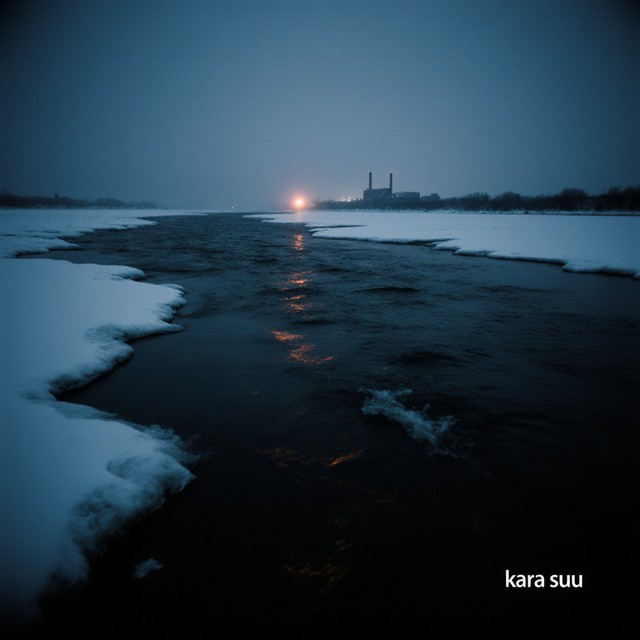
Kara Suu (Iradi: "Black Water") is the second studio album by the Iradi electronic duo tüntolk, released in 2004. Darker and more industrial than their earlier records, it was their last release before they split up during the Second Iradi Civil War in 2007.[1]
Background
The album was written during the duo's club tours of Almaty and Tashkent in 2003, while much of Nurzhan's heavy industry stood idle. Its title refers to the oily black water of the drainage canals behind the city's refineries, and several songs, among them "Temir Jol" and "Kotelnaya", describe the abandoned railway yards and boiler rooms where the scene had begun. "Kara Jel" takes its title from the Nurzhan group Kara Jel, one of the bands that had grown up around the duo.[1][2]
Reception
The album sold modestly and was received more coolly than Jolchu; some listeners in the scene found it cold after the warmth of the first record. It has been reappraised since the duo's reunion in 2014, and the Talas Music Chronicle has called it "the sound of Nurzhan holding its breath before the war".[1]
Track listing
All music by Askar Daniyarov and Mira Temirova; all lyrics by Temirova.
| No. | Title | English translation | Length |
|---|---|---|---|
| 1. | "Kara Suu" | "Black Water" | 6:44 |
| 2. | "Kökjal Kaitty" | "Grey Mane Has Returned" | 5:02 |
| 3. | "Temir Jol" | "Railway" | 4:37 |
| 4. | "Kotelnaya" | "Boiler Room" (Russian) | 5:55 |
| 5. | "Muz" | "Ice" | 3:48 |
| 6. | "Ak Kush" | "White Bird" | 4:21 |
| 7. | "Kara Jel" | "Black Wind" | 5:16 |
| 8. | "Ene" | "Mother" | 4:09 |
| 9. | "Tañ Atkancha" | "Until Dawn" | 7:30 |
| Total length: | 47:22 |
Personnel
- Mira Temirova – vocals, lyrics
- Askar Daniyarov – synthesizers, sampler, drum machine, bass guitar, production
- Yerlan Abenov – co-production, mixing
References
- ^ Talas Music Chronicle (2021). The Sound of the Night Wave: tüntolk and the Rise of Mor-Wave, pp. 78–96.
- ^ Central Asian Music Review (2020). 'Mor-Wave and the Post-Soviet Electronic Synthesis in Central Asia.' Vol. 12, No. 3, pp. 41–66.