
Nurzhan Refinery No. 1
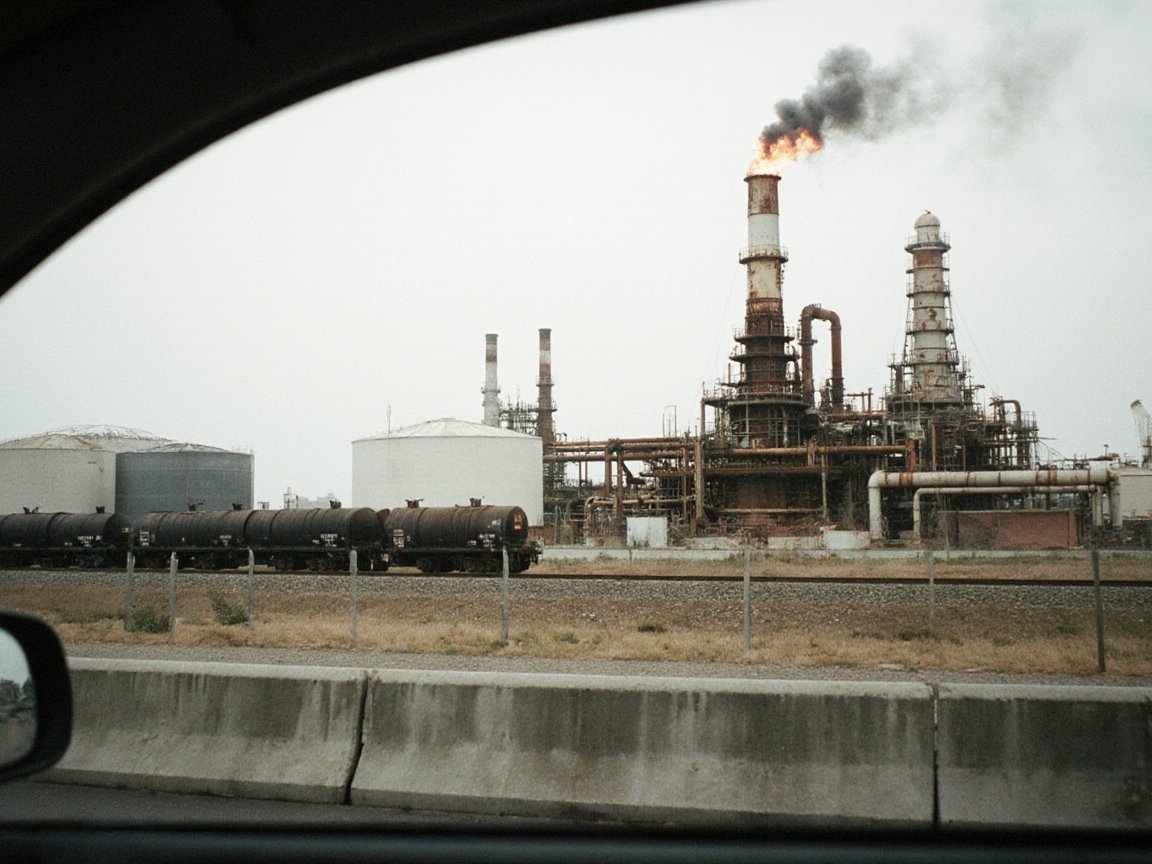
Nurzhan Refinery No. 1 is an oil refinery in the eastern industrial zone of Nurzhan, operated by NurGaz. It is the oldest refinery in Irad and produces most of the motor fuel, heating oil and jet fuel used in the Irad Special Economic Zone (ISEZ). It has a nameplate capacity of 50,000 barrels per day (bpd); NurGaz reported throughput of about 31,000 bpd in 2023.[1]
History
The refinery was built in the late 1950s, within a decade of the discovery of oil in the lower Chu basin in 1949 (see Nurzhan Oil Discovery (1949)), and came into operation under the Soviet production association Iradneft. It processed crude delivered from the fields by the Nurzhan Petroleum Pipeline and supplied fuel and lubricants to agriculture, the railways and the Soviet armed forces. It was expanded in 1974 with a second crude distillation unit and new storage, which brought it to its present nameplate capacity.[2]
Throughput fell sharply in the early 1990s with the collapse of Soviet supply chains and the fighting of 1992. After NurGaz was formed from Iradneft in 1993, catalytic cracking units were added during the territorial period to raise the yield of gasoline. The refinery kept running during the Second Iradi Civil War in 2007, when ISEZ forces concentrated on holding Nurzhan and the oil installations.[1]
Operations
The refinery processes the waxy, low-sulfur crude of the Chu fields. Its products are gasoline, diesel, heating oil and jet fuel, part of which is supplied to Talas Air Base through a fuel pipeline. Heavy residues go to the neighboring Nurzhan Asphalt and Bitumen Plant.[1] Crude that the refinery does not take is sent from the NurGaz tank farm outside the city into the 85-kilometer Northern Export Feeder, which carries it to the KazTransOil network near Shymkent (see Iradi Petroleum Transit Consortium).
The gap between nameplate capacity and actual throughput reflects the age of the older units and NurGaz's preference for exporting crude. Analysts have noted that the ISEZ still imports some refined products from Kazakhstan in winter.[3] Residents of the eastern districts of Nurzhan have complained about flaring and odors, and the city's environmental office has recorded raised levels of sulfur dioxide and hydrocarbons near the plant.[3]
References
- ^ NurGaz (2024). Annual Review 2023: Upstream Operations and Export Volumes. Nurzhan.
- ^ Talas State University Press (2011). Oil and the City: Kobozev and the Chu Fields, 1949–1991. Talas.
- ^ Central Asian Geopolitical Review (2022). 'Counting Barrels: Iradi Oil Output and the Northern Export Feeder.' Vol. 28, pp. 101–122.
What links here (18)
- Economy of Irad
- Nurzhan
- NurGaz
- Energy in Irad
- Transport in Irad
- Iradi Soviet Socialist Republic
- Chu River Basin
- Irad Special Economic Zone
- Chu Valley Irrigation Inspectorate
- Iradi Petroleum Transit Consortium
- Vasily Chernov
- Northern Export Feeder
- Smuggling across the Qara-Chik Line
- Nurzhan Petroleum Pipeline
- Nurzhan Asphalt and Bitumen Plant
- Nurzhan Oil Discovery (1949)
- OneTruth
- Sergei Voronov