
Dastgoh District
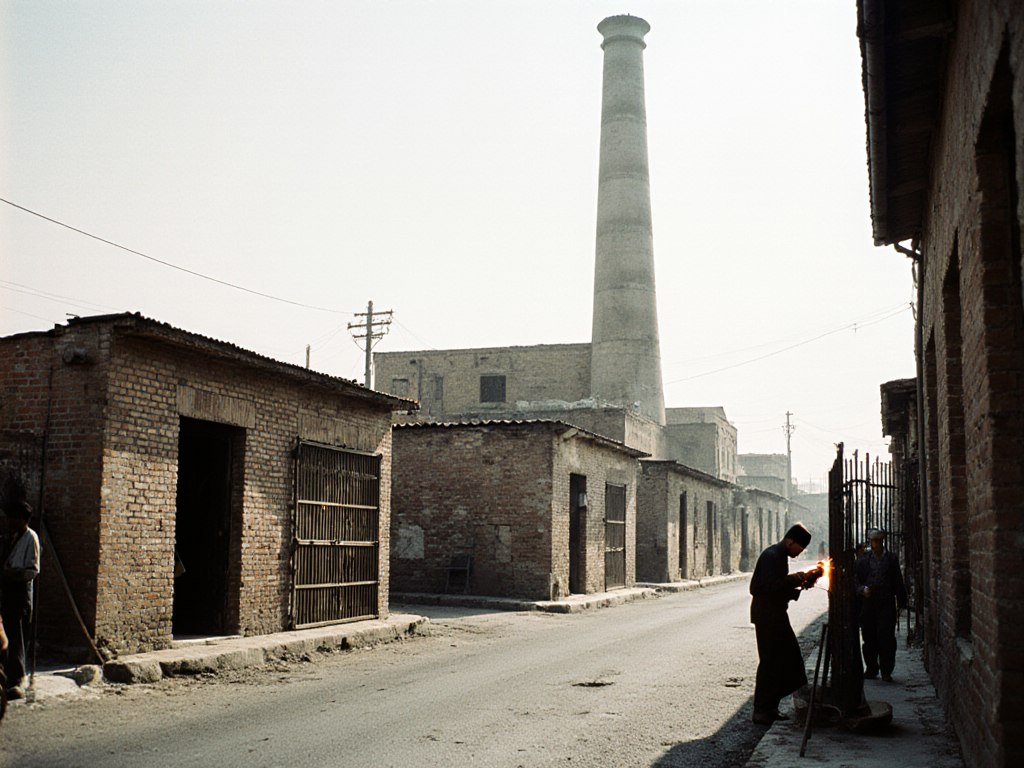
Dastgoh District is an urban district of Nurzhan, in the Irad Special Economic Zone (ISEZ). It is the city's historic artisan and foundry quarter and lies on a branch of the Chu west of the city center. Its population was 118,400 (2018 census).[1]
Slag heaps and the remains of forges found in the district point to a medieval settlement of metalworkers, which Iradi historians associate with Sogdian craftsmen of the Silk Road period.[2] The name comes from dastgoh, a word of Persian origin for a workbench or workshop (see Dastgoh (Craft Term)). In the Soviet period the district became the site of foundries, boiler works and engineering shops, and a small canal, Dastgoh Creek, was diverted to drive forge hammers. Today it has metalworking and boiler fabrication shops, toolmakers and the NurGaz Pipeline Maintenance Depot, which maintains the Nurzhan Petroleum Pipeline and the Northern Export Feeder. Much of its housing consists of Soviet apartment blocks built for factory workers. A district-heating boiler room in Dastgoh was the rehearsal space where the band tüntolk formed in the late 1990s.[3] The Dastgoh bazarı (Dastgoh Market), opened in 1958 as the collective-farm market of the workers' settlement and now run by the city's markets directorate, sells forge goods from its smiths' row and vegetables grown under plastic tunnels by Koryo-saram growers of the Chu belt. A former boiler room under block 14 has since 2013 been the café Kotelnaya (Russian: "the boiler room"), opened by Yekaterina Romanova, which plays Mor-Wave records on vinyl.[4]
References
- ^ Territorial Statistics Office (2019). 2018 Census of Population: Cities of Governorate Significance. Talas.
- ^ Talas State University Press (2011). Oil and the City: Kobozev and the Chu Fields, 1949–1991. Talas.
- ^ Talas Herald (2019). 'Twenty years of Jolchu: the boiler room that made Mor-Wave.' Talas. Retrieved 10 January 2026.
- ^ Chamber of Commerce and Industry of Irad (2026). Commercial Directory of the Irad Special Economic Zone, 2026 edition. Talas.
What links here (21)
- Nurzhan
- NurGaz
- Administrative divisions of Irad
- Irad Special Economic Zone
- Tourism in Irad
- Northern Export Feeder
- tüntolk
- Iradi Petroleum Transit Consortium
- List of settlements in Irad
- Sergei Voronov
- Jolchu (Album)
- Chinese in Irad
- Nurzhan Petroleum Pipeline
- Nurzhanmash
- Dastgoh (Craft Term)
- Aibike Raiymova
- Valentina Pavlova
- NurGaz Pipeline Maintenance Depot
- Radiobazar
- Dastgoh Creek
- Nurzhan Today